


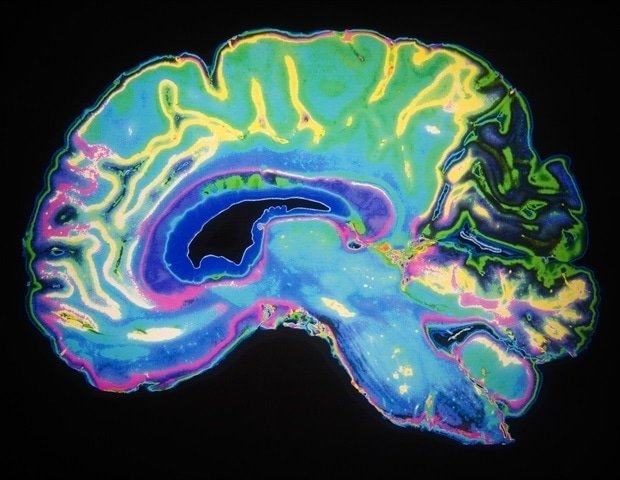
The brain doesn’t just cooperate; It also conflicts. This is what an international study by Oxford University, Cambridge University, Pompeu Fabra University, and Canada’s Montreal Neurological Institute concludes. natural neuroscience. The study revealed that the human brain and the brains of macaques and mice function thanks to a constant balance between these two forces. Using advanced whole-brain computer modeling, the researchers showed that while specialized circuits work together internally, there are long-range competitive interactions between circuits to manage limited resources. Reproducing this balance brings us closer to creating a digital copy of an individual’s brain. This is an important advance in precision medicine and will help develop AI models with greater computational power.
Models with competitive interactions consistently perform better than purely cooperative models, based on the everyday experience that you can’t pay attention to everything at once. This describes the collaboration of specialized areas for cognition and behavior. According to the authors, excessive cooperation can lead to excessive synchronization that would not occur in reality. In contrast, competition acts as a stabilizing force. Competition prevents uncontrolled activity and allows different brain systems to take turns shaping the overall dynamics of the brain.
Analysis of more than 14,000 neuroimaging studies reveals that models involving competitive interactions produce patterns of activity that more closely resemble real cognitive processes, such as those involved in attention and memory. “Competition between lines allows certain networks to be prioritized over others depending on their relevance at that moment. This explains phenomena such as decision-making,” explains Gustavo Deco, ICREA research professor at Pompeu Fabra University, one of the study’s senior authors.
This suggests that competition is important for enabling the brain to flexibly activate the appropriate combinations of areas that are characteristic of intelligent behavior. ”
Morten Klingelbach, Professor at the University of Oxford and lead author of the study
Efficient models for diagnosis, improvement, and cure
Using data about the structure and function of a person’s brain, this new model can recreate the unique activity patterns of an individual’s brain and better capture what distinguishes one person’s brain from another. According to the study’s lead author, Dr. Andrea Luppi from the University of Oxford, this brings us closer to creating “realistic digital twins of specific brains, digital twins that match your brain better than any other.”
Not only can the model digitally recreate the brain, Deco said, but it also “provides much better information than traditional measurements for predicting disease and symptoms.” In addition to diagnosis, Luppi reports, “these models could be used to simulate an individual’s brain response to stimuli, medications, and diseases, and to tailor treatments to each individual’s brain.”
The fact that the cooperative-competitive structure is consistently found in humans, macaques, and mice suggests that it is a fundamental feature of mammalian brain organization. More broadly, it may reflect fundamental principles of intelligent system operation.
The study also found that networks that combine cooperation and competition have better computational power in neuromorphic computing (brain-inspired AI). These networks process and integrate information more effectively, confirming that the balance of the two forces is essential for intelligent computation.
sauce:
Pompeu Fabra University – Barcelona
Reference magazines:
Luppi, AI, others. (2026) Competitive interactions shape the dynamics and computation of mammalian brain networks. natural neuroscience. DOI: 10.1038/s41593-026-02205-3. https://www.nature.com/articles/s41593-026-02205-3
