


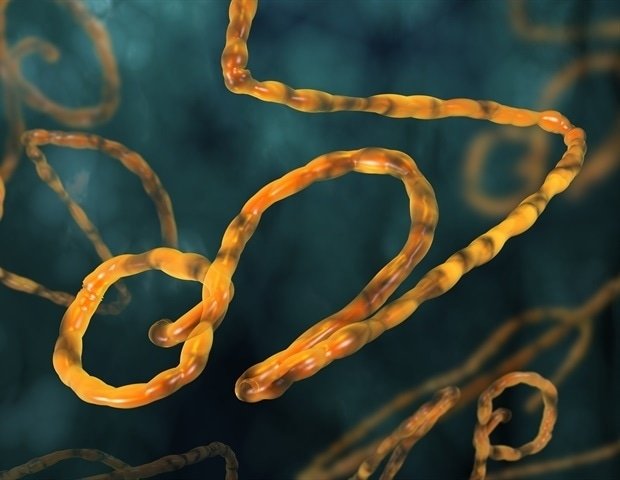
Borna disease virus 1 (BoDV-1) infects humans very rarely, but when it does, the outcome is severe, most often causing fatal encephalitis or brain inflammation. This zoonotic virus belongs to the eye MononegaviralesThis includes the deadly viruses that cause Ebola, measles, and rabies.
Because these viral nucleoprotein-RNA complexes protect genomic RNA and support viral RNA synthesis, understanding the structure of this complex is essential for targeting viral replication. Although structural characterization of some of the Mononegaviridae families that more commonly infect humans has been completed, detailed information about the families has not yet been found. Bornaviridae It has not been sufficiently considered.
After previous structural studies on the Ebola virus nucleoprotein-RNA complex, a research team from Kyoto University, Osaka Dental University, and Osaka Metropolitan University recognized this important open question and decided to work together to tackle it.
Although less well known than many other human RNA viruses, bornavirus represents the last major cold case for nucleoprotein RNA structure analysis among the mononegaviruses that infect humans. Bridging this long-standing gap and linking structural biology and virological function was a major motivation for our team. ”
Yukihiko Sugita, first author
The researchers used cryo-electron microscopy to obtain high-resolution images of BoDV-1 nucleoprotein-RNA complexes and performed computational classification to separate and reconstruct the different assembly states of each complex in the sample. We then tested the RNA residues of the nucleoprotein using mutational and functional assays to assess their role in viral RNA synthesis and assembly.
The results give the team the first detailed structural description of this family of nucleoprotein-RNA complexes. Bornaviridae. Their observations revealed the three-dimensional structure of this nucleoprotein-RNA complex, showing ring-shaped assemblies and viral RNA bound in an inner groove. They also found that each subunit of the nucleoprotein accommodates eight RNA nucleotides, suggesting a different binding mode than that reported for other related viruses.
The researchers were surprised to observe that mutations that impair RNA binding interfere with viral RNA synthesis, but that nucleoprotein assemblies can form even in the absence of RNA. Taken together, these findings suggest an incremental model in which nuclear protein assembly and RNA engagement are separate but coordinated processes.
This study Bornaviridae The structure of the nucleoprotein and RNA is similar to that of other Mononegaviruses, supporting broader questions about the principles governing nucleoprotein-RNA interactions. It also lays the foundation for future antiviral research targeting viral replication through nucleoprotein-RNA interactions.
Next, the team hopes to analyze complexes that originate from infected cells or have longer RNA segments. They also plan to integrate structural analysis and biochemical approaches to observe the state of formation of the intermediate complex and compare it with that of related viruses.
sauce:
Reference magazines:
Yuya Sugita others. (2026). Structure and assembly of the Borna disease virus type 1 nucleoprotein-RNA complex. scientific progress. DOI: 10.1126/sciadv.aeb0835. https://www.science.org/doi/10.1126/sciadv.aeb0835
