

Close Menu

    Subscribe to Updates

    Get the latest creative news from FooBar about art, design and business.

    What's Hot

    New CellCelector CLD takes you from thousands of candidates to top clones faster

    April 10, 2026

    Scientists finally find out why promising anti-cancer drugs keep failing

    April 10, 2026

    Dragonflies can see colors that humans can’t see, which could change medicine

    April 10, 2026
    Facebook X (Twitter) Instagram
    Facebook X (Twitter) Instagram
    Health Magazine
    • Home
    • Environmental Health
    • Health Technology
    • Medical Research
    • Mental Health
    • Nutrition Science
    • Pharma
    • Public Health
    • Discover
      • Daily Health Tips
      • Financial Health & Stability
      • Holistic Health & Wellness
      • Mental Health
      • Nutrition & Dietary Trends
      • Professional & Personal Growth
    • Our Mission
    Health Magazine
    Home » News » Dragonflies can see colors that humans can’t see, which could change medicine
    Nutrition Science

    Dragonflies can see colors that humans can’t see, which could change medicine

    healthadminBy healthadminApril 10, 2026No Comments3 Mins Read
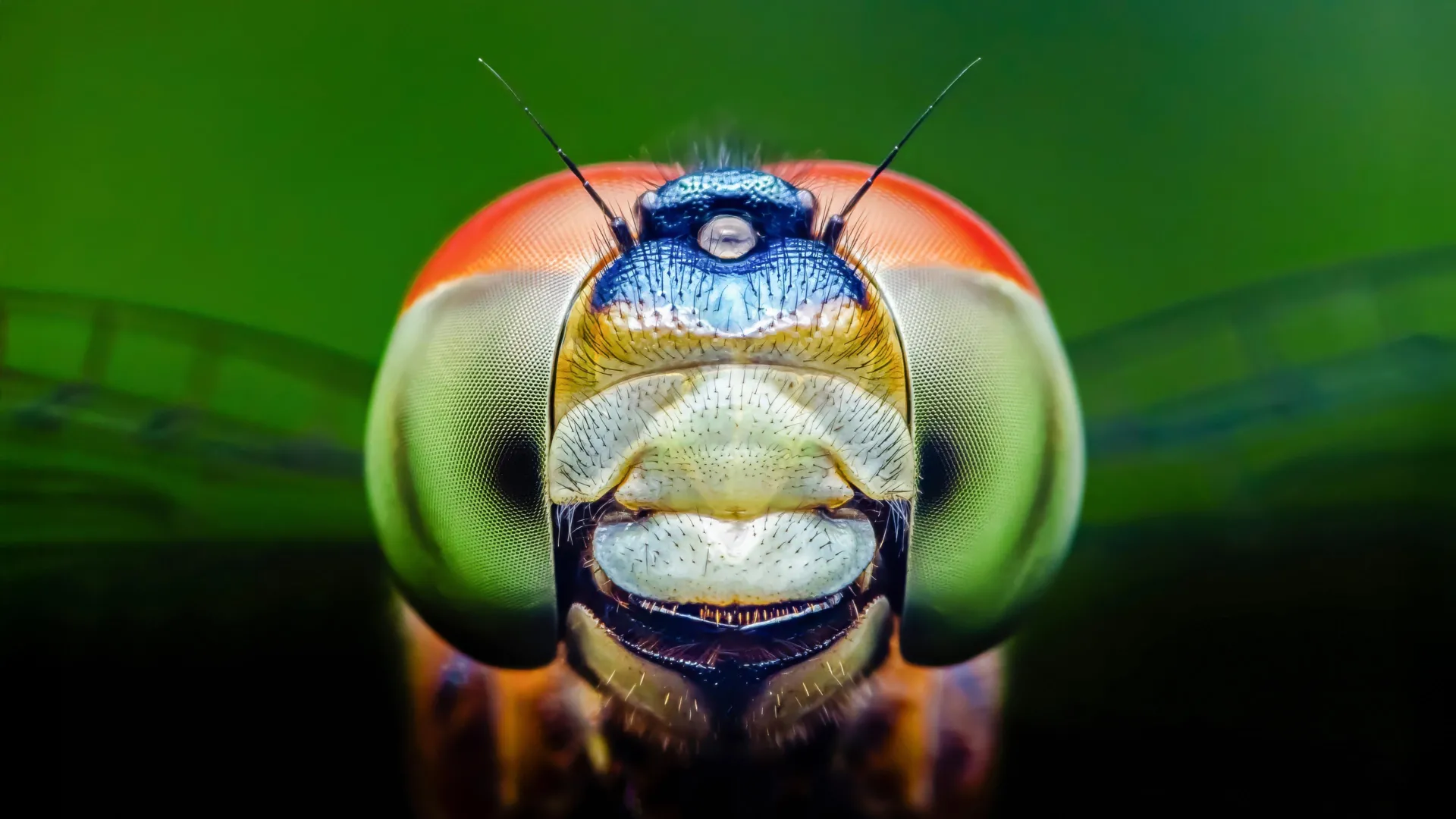
    Dragonflies can see colors that humans can’t see, which could change medicine
    Share
    Facebook Twitter Reddit Telegram Pinterest Email


    Different species may independently arrive at the same biological solution. This is a phenomenon known as parallel evolution. Researchers at Osaka Metropolitan University (OMU) have discovered that dragonflies detect red light in a way that is very similar to how mammals, including humans, do. This discovery could have implications far beyond insect biology, as many medical techniques rely on red light.

    Human vision relies on eye proteins called opsins. These proteins allow us to recognize different colors. We have three main types, each tuned to blue, green, or red wavelengths, which when combined provide full-color vision.

    Dragonflies are unique among insects for their ability to detect red light. A research team led by Professor Mitsumasa Koyanagi and Professor Akihisa Terakita of the OMU Graduate School of Science has identified a specific opsin in dragonflies that responds to light around 720 nm. This wavelength is beyond the deepest red that humans can normally see.

    “This is one of the most red-sensitive visual pigments ever discovered,” Terakita said. “Dragonflies are probably able to see red light more deeply than most insects.”

    Why deep red vision is important to dragonflies

    Scientists have proposed that this increased sensitivity helps dragonflies find mates. To explore this idea, they looked at reflectance, which refers to how much light a surface reflects. In the case of dragonflies, reflected light plays an important role in how individuals see each other.

    The results of the measurements revealed that there are clear differences between males and females in the way they reflect light from red to near-infrared. This suggests that males may rely on these subtle visual cues to quickly identify females during flight.

    An amazing example of parallel evolution

    “Surprisingly, the mechanism by which dragonfly red opsin senses red light is identical to that of red opsin in mammals, including humans. This is an unexpected result and suggests that the same evolutionary process occurred independently in distantly related lineages,” said first author Ryu Sato, a graduate student.

    Insects and mammals are very distant relatives, but both seem to have arrived at the same molecular strategy for sensing red light.

    medical engineering dragonfly vision

    The research team also uncovered important details that could make this discovery useful for technology and medicine. They identified a single location within the opsin protein that determines how the protein responds to light. By changing this position, they were able to shift the protein’s sensitivity further toward longer wavelengths, closer to the infrared range.

    They then engineered a version of the protein that responds to even longer wavelengths and demonstrated that cells containing this modified opsin could be activated by near-infrared light.

    Potential applications in optogenetics

    This research is believed to be particularly valuable in optogenetics, a field that uses light-sensitive proteins to control and study cells within living tissues. Longer wavelength light can penetrate deeper into the body, so having proteins that respond to near-infrared light could allow researchers to reach cells that are otherwise difficult to access.

    “In this study, we succeeded in shifting the sensitivity of the modified near-infrared opsin of the Odonata family to longer wavelengths, and confirmed that the modified near-infrared opsin can induce cellular responses in response to near-infrared light,” Professor Koyanagi said. “These findings demonstrate that this opsin is a promising optogenetic tool that can detect light even deep within organisms.”

    This research Cell and molecular life science.


    Source link

    Visited 1 times, 1 visit(s) today
    Share. Facebook Twitter Pinterest LinkedIn Telegram Reddit Email
    Previous ArticleGoodbye colonoscopy? New stool test detects 90% of colorectal cancers
    Next Article Scientists finally find out why promising anti-cancer drugs keep failing
    healthadmin

    Related Posts

    Scientists finally find out why promising anti-cancer drugs keep failing

    April 10, 2026

    Goodbye colonoscopy? New stool test detects 90% of colorectal cancers

    April 10, 2026

    Scientists have discovered a hidden ‘drainage channel’ in the human brain

    April 9, 2026

    Your brain can be tricked into liking artificial sweeteners

    April 9, 2026

    The world is getting brighter at night, but it’s getting darker in some places

    April 9, 2026

    Scientists discover hidden gut trigger behind ALS and dementia

    April 9, 2026
    Add A Comment
    Leave A Reply Cancel Reply

    Categories

    • Daily Health Tips
    • Discover
    • Environmental Health
    • Exercise & Fitness
    • Featured
    • Featured Videos
    • Financial Health & Stability
    • Fitness
    • Fitness Updates
    • Health
    • Health Technology
    • Healthy Aging
    • Healthy Living
    • Holistic Healing
    • Holistic Health & Wellness
    • Medical Research
    • Medical Research & Insights
    • Mental Health
    • Mental Wellness
    • Natural Remedies
    • New Workouts
    • Nutrition
    • Nutrition & Dietary Trends
    • Nutrition & Superfoods
    • Nutrition Science
    • Pharma
    • Preventive Healthcare
    • Professional & Personal Growth
    • Public Health
    • Public Health & Awareness
    • Selected
    • Sleep & Recovery
    • Top Programs
    • Weight Management
    • Workouts
    Popular Posts
    • the-pros-and-cons-of-paleo-dietsThe Pros and Cons of Paleo Diets: What Science Really Says April 16, 2025
    • Improve Mental Health10 Science-Backed Practices to Improve Mental Health… March 11, 2025
    • How Healthy Living Is Transforming Modern Wellness TrendsHow Healthy Living Is Transforming Modern Wellness… December 3, 2025
    • Kankakee_expansion.jpgCSL releases details of $1.5 billion U.S.… March 10, 2026
    • urlhttps3A2F2Fcalifornia-times-brightspot.s3.amazonaws.com2Fc32Fcd2F988500d440f2a55515940909.jpegA ‘reckless’ scrapyard with a history of… October 24, 2025
    • Healthy Living: Expert Tips to Improve Your Health in 2026Healthy Living: Expert Tips to Improve Your Health in 2026 November 16, 2025

    Demo
    Stay In Touch
    • Facebook
    • Twitter
    • Pinterest
    • Instagram
    • YouTube
    • Vimeo
    Don't Miss

    New CellCelector CLD takes you from thousands of candidates to top clones faster

    By healthadminApril 10, 2026

    Sartorius announces the launch of CellCelector CLD, an automated imaging and cell separation platform designed…

    Scientists finally find out why promising anti-cancer drugs keep failing

    April 10, 2026

    Dragonflies can see colors that humans can’t see, which could change medicine

    April 10, 2026

    Goodbye colonoscopy? New stool test detects 90% of colorectal cancers

    April 10, 2026

    Subscribe to Updates

    Get the latest creative news from SmartMag about art & design.

    HealthxMagazine
    HealthxMagazine

    At HealthX Magazine, we are dedicated to empowering entrepreneurs, doctors, chiropractors, healthcare professionals, personal trainers, executives, thought leaders, and anyone striving for optimal health.

    Our Picks

    Goodbye colonoscopy? New stool test detects 90% of colorectal cancers

    April 10, 2026

    Targeted diet helps reprogram aggressive neuroblastoma in mice

    April 10, 2026

    New 3D organoid model advances pediatric glioma research and treatment

    April 10, 2026
    New Comments
      Facebook X (Twitter) Instagram Pinterest
      • Home
      • Privacy Policy
      • Our Mission
      © 2026 ThemeSphere. Designed by ThemeSphere.

      Type above and press Enter to search. Press Esc to cancel.