


How does the brain eliminate waste products? It relies on a specialized drainage network known as the lymphatic system. Scientists have been working to understand how this system works, pushing brain imaging techniques to new limits in the process.
New research published in iscience Researchers at the Medical University of South Carolina (MUSC) have provided the first direct evidence in humans of a previously unknown control point in this system. That structure is the middle meningeal artery (MMA), and it is now thought to play an important role in how the brain removes fluid and waste products.
Real-time MRI reveals brain fluid flow
The research team, led by Dr. Onder Albayram, used advanced real-time MRI tools made available through a collaboration with NASA. These imaging techniques were originally designed to study how spaceflight changes the movement of fluids in the brain.
Using this technique, the research team monitored the movement of cerebrospinal fluid and interstitial fluid along the MMA in five healthy people over a six-hour period. What they observed was unexpected. Unlike blood, which flows quickly and dynamically, fluid moves slowly and steadily. This slow pattern suggests that the fluid is part of the lymphatic system rather than the circulatory system.
“We observed a flow pattern that did not behave like blood flowing through an artery; it was slower and more like drainage, indicating that this blood vessel is part of the brain’s purification system,” said Albayram, an associate professor in the MUSC Department of Pathology and Laboratory Medicine.
Rethinking the connection between the brain and body
The brain and spinal cord are protected by layered membranes called meninges. Scientists have long believed that these membranes separate the brain from the body’s immune and lymphatic systems. That perspective has changed significantly over the past decade.
Albayram has spent years studying lymphatic vessels within the meninges. His research suggests that these blood vessels act as channels that transport waste products from the brain to the body’s extensive lymphatic network, where they can be removed.
It is very important to understand how fluids move between the brain and other parts of the body. It could help researchers develop better ways to prevent and treat neurological and psychiatric disorders.
Imaging tests confirm true lymphatic pathway
As reported in a 2022 paper, Alvirum previously contributed to the visualization of meningeal lymphatic vessels in humans. nature communications study. In this new study, the team captured the movement of fluid deep within the brain’s lymphoid structures in real time.
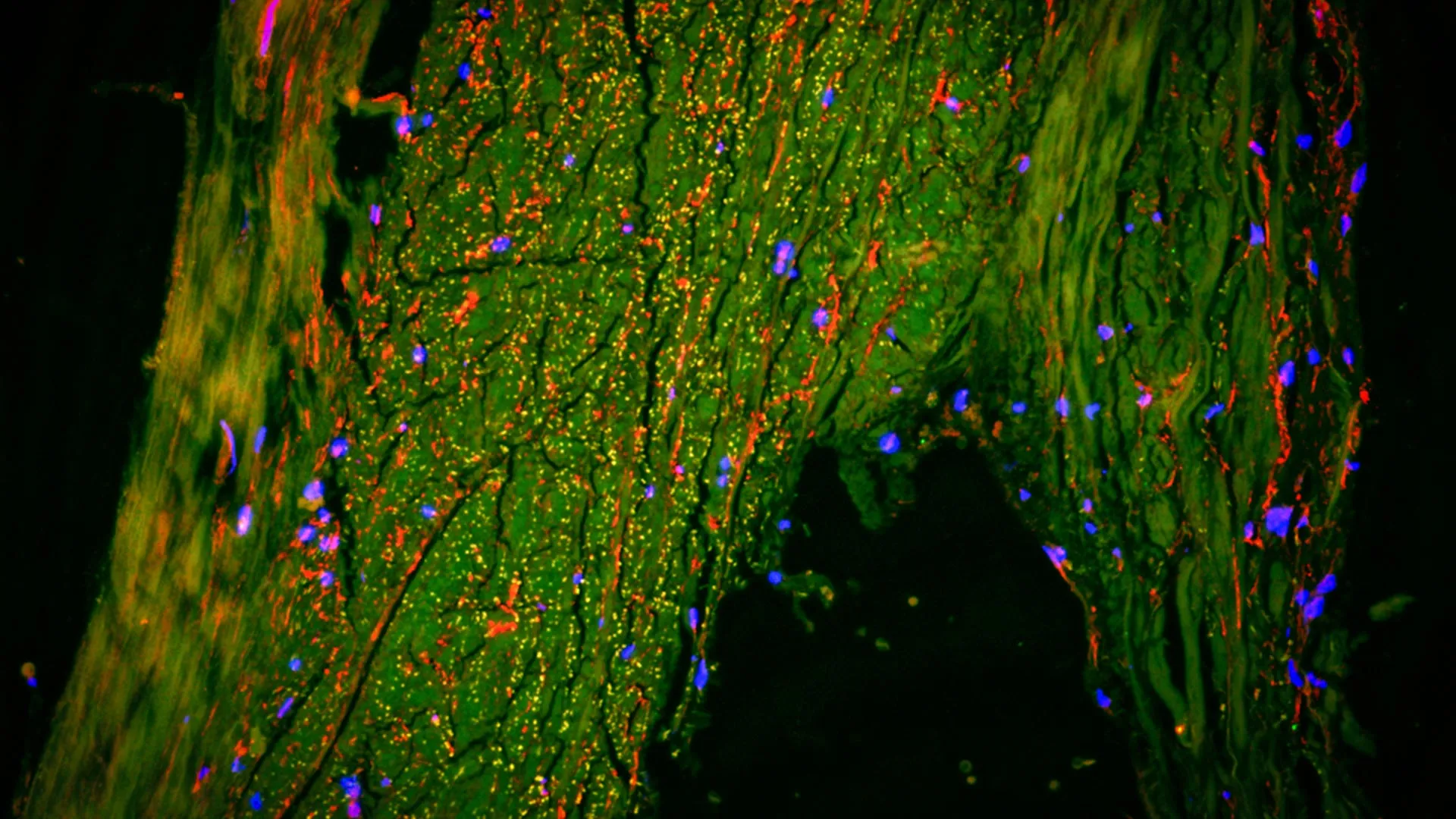
To verify their findings, the researchers also examined human brain tissue using ultra-high resolution images. Working with scientists at Cornell University, they used a method that allows them to observe multiple cell types simultaneously.
This detailed analysis showed that the area surrounding the MMA contained cells normally found in lymphatic vessels. These are the same type of structures that are responsible for removing waste products throughout the body.
Together, the imaging and tissue data confirm that the slow-moving fluid seen on the MRI is traveling through lymph vessels rather than blood vessels, directly linking the scans to the biological evidence.
Why is it important to study healthy brains?
The main feature of this study is that it focuses first on studying healthy humans, rather than starting with animal models. This approach allows scientists to establish a clear baseline for how the system behaves under normal conditions.
This baseline is essential for identifying changes in the disease. For example, disruption of this drainage system can have implications after traumatic brain injury and in neurodegenerative diseases.
Alzheimer’s disease and its impact on brain disorders
This discovery could have far-reaching implications. This could help scientists better understand aging, brain inflammation, injury, Alzheimer’s disease, and psychiatric conditions.
Alviram is already building on these findings by studying how this drainage system works in people with neurodegenerative diseases. The long-term goal is to improve early diagnosis, develop prevention strategies, and develop more effective treatments.
“A big challenge in brain research is that we still don’t fully understand how a healthy brain functions and ages,” Albayram said. “If we understand what ‘normal’ looks like, we can recognize early signs of disease and design better treatments.”
