


Researchers at the Johns Hopkins School of Medicine report that a new National Institutes of Health-funded study is helping advance a potential new approach to treating Alzheimer’s disease. The focus is on proteins in the brain that produce small but important gases.
The protein, called cystathionine gamma lyase (CSE), is best known for producing hydrogen sulfide, a gas that smells like rotten eggs, and appears to play an important role in memory formation. Study leader Dr. Bindu Paul, associate professor of pharmacology, psychiatry, and neuroscience at Johns Hopkins University School of Medicine, said the findings were made through experiments on genetically engineered mice.
This research Proceedings of the National Academy of Sciencesaims to better understand how this protein functions and whether increasing its activity could help protect brain cells and slow the progression of neurodegenerative diseases such as Alzheimer’s disease.
Hydrogen sulfide may protect brain cells
Previous research suggested that hydrogen sulfide helps protect neurons in mice. However, this gas is toxic in large quantities, so it is not safe to deliver it directly to the brain. Scientists are instead trying to understand how to safely maintain the tiny levels naturally present in neurons.
New findings show that mice engineered to lack the CSE enzyme develop problems with memory and learning. These mice also showed increased oxidative stress, DNA damage, and reduced blood-brain barrier integrity, all characteristics commonly associated with Alzheimer’s disease, said Paul, the study’s corresponding author.
Built on years of research
The current study builds on previous research led by Solomon Snyder, MD, PhD, PhD, professor emeritus of neuroscience, pharmacology, and psychiatry. In 2014, his team reported that CSE supports brain health in mice with Huntington’s disease. The researchers used mice lacking the CSE protein, which was first developed in 2008 to be associated with blood vessel function and blood pressure regulation.
In 2021, a research group discovered that CSE does not function properly in mice with Alzheimer’s disease, and that injections of very small doses of hydrogen sulfide can help protect brain function.
These early studies focused on mice with additional genetic mutations associated with neurodegenerative diseases. More recent research has isolated the role of CSE itself.
“This latest study shows that CSE alone plays a major role in cognitive function and may provide a new avenue for treatment pathways in Alzheimer’s disease,” said co-author Snyder, who retired from Johns Hopkins University School of Medicine in 2023.
Memory loss associated with CSE deficiency
To better understand how CSE affects memory, scientists compared mice lacking the protein to normal mice using the same strain developed in 2008. They tested spatial memory (the ability to remember directions and follow cues) using a setup called the Barnes maze.
In this test, rats learn to find hidden shelters and escape from bright light. At 2 months of age, normal mice and mice lacking CSE behaved similarly, finding shelter within 3 minutes. However, by six months, the CSE-deficient mice struggled to find an escape route, while the normal mice continued to succeed.
“Deterioration in spatial memory is indicative of the progressive onset of neurodegenerative diseases, and this may be due to CSE loss,” says Swarna Chakraborty, a researcher in Paul’s lab and first author.
Brain changes mirror Alzheimer’s disease
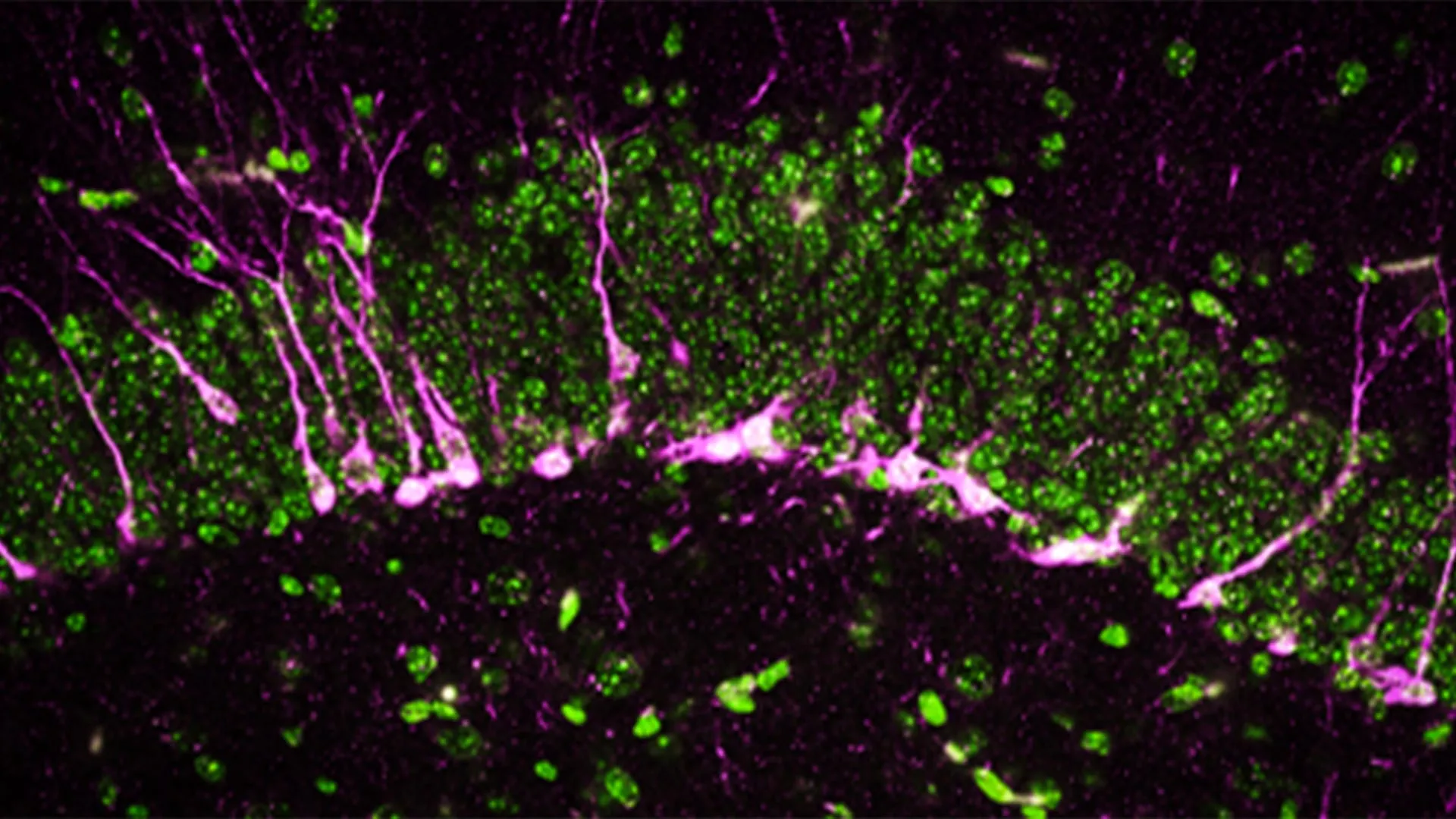
The researchers also looked at how the lack of CSE affects the brain at a cellular level. The hippocampus is an important region for learning and memory and depends on the formation of new neurons. Disruption of this process is a known hallmark of neurodegenerative diseases.
Using biochemical and analytical methods, the research team found that proteins involved in neurogenesis were reduced or absent in mice without CSE.
Scientists used high-powered electron microscopy to observe structural damage to the brains of these mice. They found large tears in the blood vessels, indicating damage to the blood-brain barrier, another hallmark of Alzheimer’s disease. Furthermore, the newly formed neurons had difficulty reaching the hippocampus, which normally contributes to memory formation.
“Mice lacking CSE were infected at multiple levels, and this correlated with symptoms seen in Alzheimer’s disease,” said co-author Sunil Jamuna Tripathi, a researcher in Paul’s lab.
Toward a new Alzheimer’s disease treatment
According to the Centers for Disease Control and Prevention, more than 6 million people in the United States have Alzheimer’s disease, and that number continues to grow. Currently, treatments have not been consistently shown to stop or slow the disease.
Researchers say targeting CSE and its production of hydrogen sulfide could provide new avenues for developing treatments aimed at protecting brain function and slowing disease progression.
Funding and research contributors
Funding support for this research was provided by the National Institutes of Health (1R01AG071512, P50 DA044123, 1R21AG073684, O1AGs066707, U01 AG073323, AG077396, NS101967, NS133688, P01CA236778) and the Department of Defense. (HT94252310443), American Heart Association, AHA-Allen Initiative in Brain Health and Cognitive Disorders, Solve ME/CFS Initiative, Johns Hopkins University Catalyst Award, Valor Foundation, Wick Foundation, Department of Veterans Affairs Distinguished Service Award (I01BX005976), Louis Stokes Cleveland Medical Affairs Veterans Center, Mary Alice Smith Neuropsychiatric Research Fund, Lincoln Neurotherapeutic Research Fund, and Gordon and Evie Safran Neuropsychiatric Fund. and the Leonard Krieger Fund of the Cleveland Foundation.
In addition to Paul, Snyder, Chakraborty, and Tripathi, contributors included Richa Tyagi and Benjamin Ausburn of Johns Hopkins. Edwin Vasquez-Rosa, Kalyani Chaubey, Hisashi Fujioka, Emiko Miller, and Andrew Piper of Case Western University; Thibault Vignane and Milos Filipovic of the Leibniz Institute for Analytical Sciences, Germany; Sudarshana Sharma of Hollings Cancer Center. Bobby Thomas of Derby Children’s Research Institute and Medical University of South Carolina, and Zachary Weil and Randy Nelson of West Virginia University School of Medicine.
