


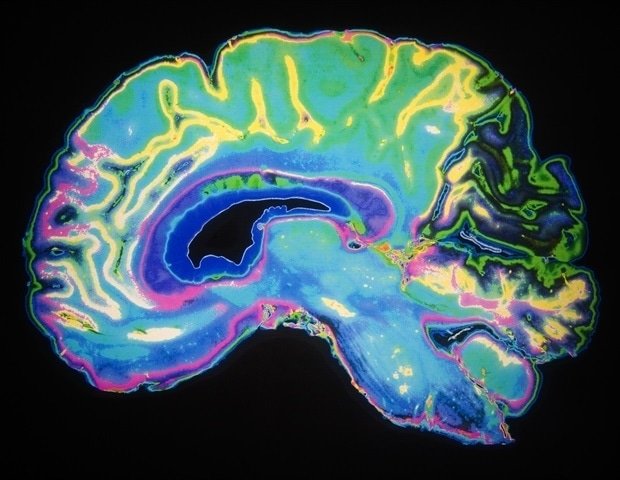
The default mode network (DMN) is a distributed set of interconnected brain regions that has long been associated with inward-directed cognition, such as remembering the past, thinking about the future, and thinking about oneself. Accumulating evidence also indicates that the DMN is engaged during tasks involving external perceptual input, such as language comprehension and social cognition. However, the mechanisms by which the same network supports both internally and externally directed cognition remain unclear.
Now, a research team led by ZHANG Meichao from the Department of Psychology at the Chinese Academy of Sciences (CAS) has identified organizational principles within the DMN that help explain how the network supports both internal and external cognition.
This study PNAS The April 7 paper reveals that different subregions within the DMN act as “senders” and “receivers” of information, allowing flexible transitions between perception and memory-driven thinking.
To understand how the DMN functions, researchers combined analysis of directional functional connectivity, intrinsic network configuration, and task-induced brain activity across multiple independent datasets. Their findings revealed that the DMN is not functionally homogeneous but is composed of subregions with distinct connectivity biases.
Specifically, receiver-like DMN subregions biased toward afferent (input) inputs exhibit stronger connectivity with heteromodal association networks, a profile that may support information integration during perception. Conversely, sender-like subregions biased toward efferent (outward) projections show stronger connections with distributed sensorimotor systems, a profile that may guide memory-based behavior.
Consistent with this interpretation, these subdivisions correspond to systematically different cognitive modes. Receiver-like subregions are preferentially involved during perceptually-based face decisions, that is, decisions based on visual information from the face, and sender-like subregions are preferentially involved during memory-based decisions.
These findings suggest that DMN involvement in both external and internal cognition is rooted in microarchitectural differentiation into complementary receiver- and sender-like zones. ”
Dr. ZHANG Meichao, corresponding author of this study, Institute of Psychology, Chinese Academy of Sciences
This study provides a new organizational framework for understanding how the association cortex supports both external perception and internal thought. This provides a multilevel explanation of how the brain facilitates the transition between perception and memory-based cognition.
This research was supported by the National Natural Science Foundation of China, CAS, and the European Research Council.
sauce:
Chinese Academy of Sciences
Reference magazines:
Chan, M. others. (2026). Sender and receiver subdivisions of the default mode network in perceptual and memory-guided cognition. Proceedings of the National Academy of Sciences. DOI: 10.1073/pnas.2528851123. https://www.pnas.org/doi/10.1073/pnas.2528851123
