


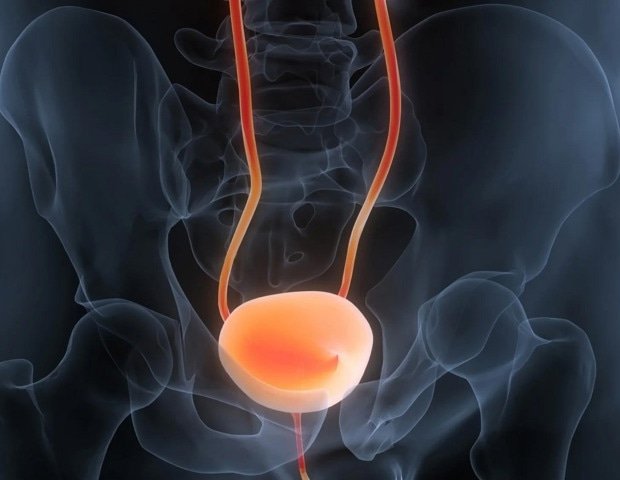
Bladder cancer starts in the lining of the bladder, the organ that stores urine, and is one of the most common cancers in the United States. Most patients are diagnosed at an early stage, called non-muscle invasive bladder cancer (NMIBC), when the tumor is confined to the lining of the bladder. Despite early detection, the disease frequently recurs.
Bladder cancer has a high recurrence rate, making treatment strategies routine and uncertain for the more than 60,000 patients diagnosed with NMIBC each year. After a surgery called transurethral resection of a bladder tumor, patients with high-risk features are recommended to have bacille Calmette-Guerin (BCG), a decades-old immunotherapy, instilled into the bladder six times a week to reduce the risk of recurrence. Some patients are cured with surgery alone, but others relapse even with the addition of BCG. Until now, doctors had no reliable way to tell the difference.
The stakes are high. BCG can cause serious side effects, and there have been repeated shortages worldwide. And for patients destined for recurrence, waiting for the tumor to visibly recur can mean lost time and missed opportunities.
New research published in cell A team of researchers in the Stanford Department of Urology and Radiation Oncology is working closely with colleagues at the Stanford Cancer Institute to propose a powerful new approach. It uses a non-invasive urine test to determine at a molecular level who will benefit from additional treatment and who will not. The findings suggest that clinicians may soon be able to personalize treatment decisions, escalate treatment to the highest-risk patients early, and protect other patients from unnecessary interventions. This research was primarily supported by funding from the National Cancer Institute.
A smart way to detect hidden cancer
Liquid biopsy is a highly sensitive test that detects fragments of tumor DNA in body fluids and has strong potential to transform cancer monitoring. For bladder cancer, tumor DNA can be measured in the urine, providing a non-invasive test to see if the disease remains after treatment.
But a team of researchers at Stanford University discovered an important biological complication. Even healthy people can carry cancer-related mutations in the bladder lining, and these mutations become more common as we age. Researchers called this “clonal cystogenesis.” These non-cancerous cells can release altered DNA in the urine, which can be mistaken for cancer by sensitive tests. To solve this problem, the research team developed a statistical method to filter out these background mutations, allowing the test to more accurately detect true signs of residual cancer.
Our test can noninvasively detect minimal residual disease after bladder cancer treatment while accounting for mutations present in normal urothelium, which complicated previous studies. For the first time, we were able to differentiate between patients who are likely to be cured with BCG and those who are likely to be cured with surgery. ”
Joseph Liao, MD, Kathryn Simmons Stamey Professor of Urology, co-senior author of this study
The purified urine test proved to be surprisingly predictive when applied to a group of patients scheduled to undergo BCG after surgery. Patients with detectable tumor DNA after BCG completion were almost certainly at risk of recurrence. Patients whose tumor DNA was removed had excellent outcomes.
In many cases, even when routine cystoscopy appears normal, urinalysis has identified recurrence risk, suggesting that recurrence may be detected earlier than current standard surveillance.
Three different treatment response patterns
By analyzing urine samples before, after surgery, and after immunotherapy, researchers identified three distinct molecular response patterns. 1) Surgical responders: Patients whose tumor DNA disappeared only through surgery. 2) BCG responders: Patients with residual tumor DNA after surgery and decreased after immunotherapy. 3) Non-responders: Patients with persistent or increased tumor DNA after BCG.
Correcting for field effects turns out to be central to this distinction. “We improved the specificity of urine tumor DNA liquid biopsies by correcting for field effects, a known confounding factor in mutation-based bladder cancer detection,” said co-first author William Shi, MD/PhD student at Stanford School of Medicine. “This allowed us to molecularly differentiate the relative contributions of surgery and BCG to disease control.”
“Being able to distinguish between responders and non-responders to the two treatments also allowed us to study which molecular characteristics make which tumors likely to benefit from each treatment,” said Max Dean, MD, PhD, Jack, Lulu and Sam Wilson Professor of Radiation Oncology and co-senior author of the study. This analysis revealed that the biological responses that drive response to surgery are distinct from those that drive response to immunotherapy. Tumors that were resistant to surgery showed gene activity associated with cell proliferation and invasion. In contrast, tumors that respond to BCG have a higher mutational burden and pre-existing immune activity, and are essentially more “visible” to the immune system.
The authors hypothesized that previous studies may have been unable to distinguish between surgical cure and immunotherapy responders, hindering their ability to identify reliable biomarkers of BCG response.
Why this matters – in clinical and beyond
The real-world implications are profound.
Currently, almost all intermediate-to-high risk patients receive BCG after surgery because clinicians cannot reliably identify patients who still have microscopic disease. This study suggests that field-effect-based urine tests may: 1) Patients who are cured at the molecular level after surgery can be protected from unnecessary immunotherapy. 2) Prioritize those most likely to benefit from BCG – especially important amidst global shortages. 3) Escalate treatment early to patients at highest risk, before visible tumor recurrence. 4) Guide enrollment in clinical trials of new treatments. 5) Reduce anxiety and invasive procedures caused by false-positive results.
“These kinds of predictive biomarkers are very important,” says Ayla Skinner, MD, Thomas A. Stamey Research Professor of Urology and chair of the Department of Urology at Stanford University. “The new treatments we are using are expensive and carry risks of side effects. We want to personalize treatments so each patient receives the best treatment for their cancer.”
From a practical perspective, this means acting sooner for patients whose cancer is likely to recur, potentially preventing progression to more aggressive disease, while reducing overtreatment of other patients.
This discovery has broader scientific implications beyond bladder cancer. The “field effect” phenomenon has also been observed in other tissues, including the epithelium of the lung and colon. As liquid biopsy expands beyond cancer types and body fluids, accounting for age-related background mutations may be essential to maximizing test accuracy.
If this approach is tested in large-scale studies, it has the potential to move bladder cancer treatment from a one-size-fits-all strategy to a truly individualized model. There, regular urine samples can help determine who can safely stop treatment and who needs more aggressive intervention before it’s too late.
sauce:
Reference magazines:
Sea, Wyoming Others. (2026). Urine liquid biopsy based on electric field effect for bladder cancer. cell. DOI: 10.1016/j.cell.2025.12.054. https://www.cell.com/cell/abstract/S0092-8674(25)01503-X
