


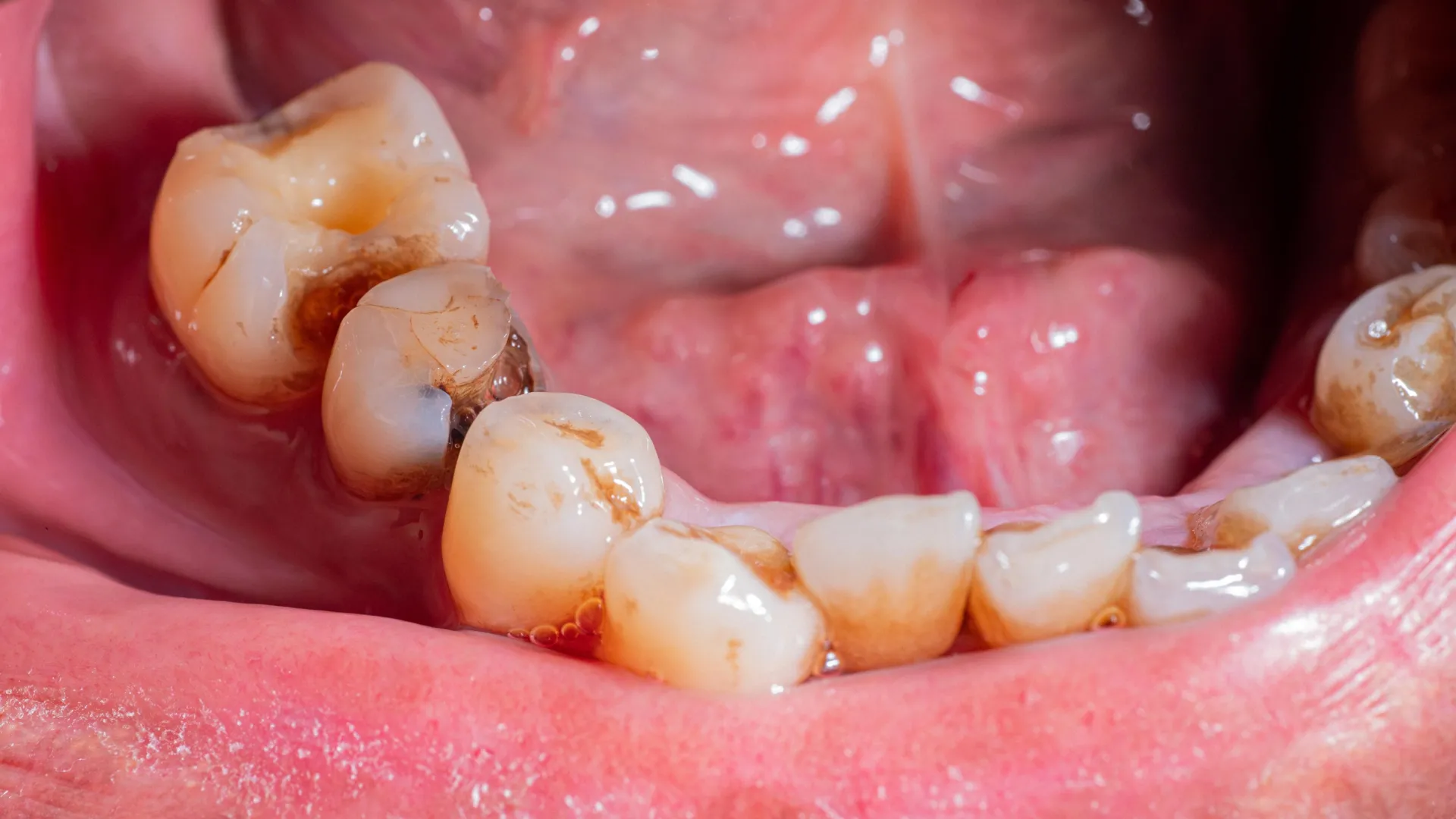
A new type of artificial saliva made using a lab-modified sugarcane protein called CANECPI-5 and delivered as a mouthwash could help protect the teeth of head and neck cancer patients. These patients often receive radiation therapy near the mouth, which can damage the salivary glands and reduce saliva production. Saliva plays an important role in controlling bacteria and maintaining oral health, so loss of saliva can lead to serious dental problems.
Researchers from Brazil’s University of São Paulo Bauru School of Dentistry (FOB-USP) have discovered that CANECPI-5 creates a “shield” that protects teeth. This layer helps protect your enamel from acids found in drinks such as juices and alcohol, as well as acids from your stomach. The study results were published in the Journal of Dentistry.
International research collaboration and research design
This study was carried out during Natala Díaz Gómez da Silva’s doctoral course at FOB-USP. The project involved collaboration with scientists from the Federal University of São Carlos (UFSCar) in Brazil, the University of California, San Francisco in the United States, and Yonsei University School of Dentistry in South Korea.
This study is part of the thematic project “Regulation of the acquired pellicle that controls tooth mineral loss: elucidating the mechanisms that enable treatment”, coordinated by Professor Marilia Afonso Rabelo Buzaraf of FOB-USP.
“We tested the mouthwash developed in CANECPI-5 by applying this solution to a small piece of an animal’s tooth for 1 minute once a day. Based on these results, we plan to conduct further studies so that we can consider possible uses for this product,” added Silva, lead author of the paper.
How artificial saliva strengthens tooth enamel
“This is the first product to use the concept of an acquired pellicle (a thin protective layer that quickly forms on the tooth surface) to treat xerostomia, the sensation of dry mouth caused by a lack of saliva. We are using a substance that reformulates the composition of the proteins that bind to the teeth,” explains Bouzarav.
“We have developed a process by which CANECPI-5 binds directly to the tooth enamel, helping to make the tooth more resistant to the action of acids produced by bacteria,” Silva points out.
This study showed that CANECPI-5 is most effective when combined with fluoride and xylitol. In experiments, artificial saliva sprays reduced bacterial activity and slowed tooth demineralization, a process in which teeth lose calcium and phosphate, making them more susceptible to cavities.
Potential solution to severe tooth decay after cancer treatment
This development is particularly important as there are currently no dedicated products available to treat the severe dental caries that commonly occurs after radiation therapy for head and neck cancer.
“Artificial saliva improves the sensation of dry mouth and canker sores. It reduces discomfort and also helps in the fight against bacteria. In some cases, this type of product can only be used for a short period of time. In other cases, it can be used permanently, as many people lose the ability to produce saliva.”
The CANECPI-5 protein is already patented. The next step is to scale up production by partnering with companies interested in bringing this technology to market.
“We have already tested this solution as a mouthwash, a gel, and an orodispersible film. It is a type of plastic that melts and releases the protein when placed on the tongue. We have tested it in several media and found that CANECPI-5 works very well in all media. We will continue to test other technologies within thematic projects to use not only this protein, but others as well,” says Buzharav.
Discovery of CANECPI-5 from sugarcane research
Professor Flavio Enrique Silva from UFSCar’s Department of Genetics and Evolution, who contributed to the development of CANECPI-5, said the work stems from earlier work on cystatins (a family of proteins involved in various biological processes) carried out as part of the Sugarcane Genome Project (SUCEST, FAPESP).
“At that time, our group identified and produced the first sugarcane-derived cystatin recombinantly in bacteria, which we named CANECPI-1. We identified and produced cystatin. Through our research, we realized that this protein binds strongly to smooth surfaces, such as the quartz cuvettes used for activity measurements. This led us to collaborate with Professor Marilia Bouzarav to carry out tests on the binding of the protein to tooth enamel.”
The researchers say CANECPI-5 is particularly promising because it helps both protect enamel and regulate oral bacteria, making it valuable for future dental treatments.
“CANECPI-5 is also used in the research of other colleagues in the field of dentistry, in particular periodontitis. We are also conducting a joint project with colleagues at the Federal University of Uberlandia, using subcutaneous sponge implants in mice. “We have shown that 5 can reduce inflammation and promote angiogenesis (formation of new blood vessels) and fibrinogenesis (formation of fibrin, a protein essential for blood clotting), which are important processes in tissues that repair, making it a candidate molecule for use in wound healing,” Silva points out.
Next steps for artificial saliva and dental applications
Within the thematic project, researchers will continue to investigate how CANECPI-5 interacts with other compounds.
One direction, Buzharav said, is to combine CANECPI-5 with peptides derived from stazarin, a protein found in saliva, to determine whether this hybrid can better protect teeth from acid produced by the stomach. Another goal is to investigate its potential role in the prevention of periodontal disease.
“Another aspect of the thematic project is the association of CANECPI-5 with vitamin E, as this vitamin acts as a carrier and brings the protein into contact with the teeth. We believe this will make it easier for patients to apply the product directly at home,” the researchers said.
