


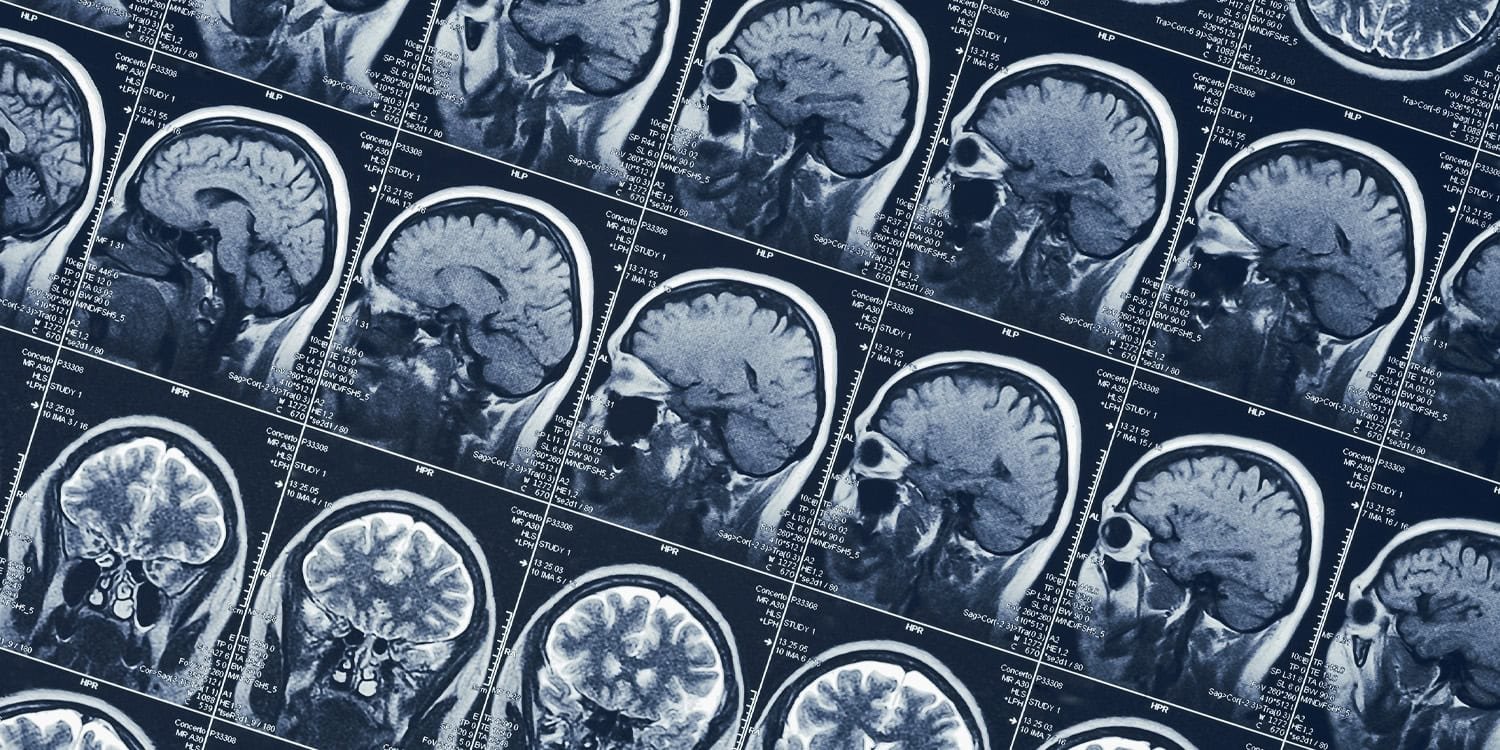
Neuroimaging studies have investigated the brain activity of individuals who can spontaneously enter transcendental fantasy states, which are rare and non-ordinary states of consciousness. The researchers found that during this state, the participants’ brain connections were fundamentally reorganized. Visual and somatosensory connectivity decreased, and connectivity increased in fronto-parietal control regions of the brain. The paper was published in neuroimage.
Non-ordinary states of consciousness are mental states that differ significantly from normal waking consciousness in terms of perception, cognition, emotion, and sense of self. Such a state can occur through a variety of means, including meditation, sensory deprivation, extreme stress, sleep, and the use of psychoactive substances (such as psychedelics). These usually involve changes in time perception, enhanced imagery, and a decreased sense of boundaries between self and environment. Some non-ordinary conditions are considered pathological, while others are culturally valued or deliberately cultivated for spiritual purposes.
One particular type of non-ordinary state of consciousness is the transcendental fantasy state. This condition is characterized by vivid, often symbolic or archetypal images and a strong sense of insight or revelation. People with this condition frequently report experiencing a reality that feels more meaningful or “true” than their normal perception. These experiences may include visions of entities, landscapes, or abstract patterns, often accompanied by intense emotions such as awe and oneness. In many religious and mystical traditions, transcendental fantasy states are interpreted as encounters with higher realities or divine beings.
These conditions have historically been difficult to study scientifically. Psychedelics and anesthesia can induce altered states, but they chemically alter the brain, making it difficult to separate the pure mechanics of the experience from the drugs themselves. Furthermore, drug-induced states are often chaotic and unpredictable.
Study author Gabriel de la Vera and his colleagues conducted a case study to circumvent these limitations. Researchers used functional magnetic resonance imaging (fMRI) to examine brain activity in self-taught participants who were able to intentionally enter transcendental visual hallucination states on command without the use of drugs. This individual was able to reliably reproduce this state over multiple scanning sessions and reported features similar to those seen in psychedelic, hypnotic, and trance states, including visual imagery, altered embodiment, altered time perception, and ego dampening.
The study participant (referred to as AVP) is a 37-year-old woman who provided an extensive reflective report and is also listed as one of the study’s authors. She described experiencing vivid inner imagery, changes in body schema, changes in subjectivity, and a deep sense of oneness. Importantly, she retained a high degree of voluntary control and temporal stability during the self-induced trance state.
“In AVP, this trajectory (self-inducing a transcendental fantasy state) unfolds spontaneously and reproducibly throughout the session, starting with complex geometric and bright imagery and culminating in a clear and expansive state of unity and calmness…At the time of data collection, she was not involved in study design, hypothesis formulation, data analysis, or interpretation. She was blind to the specific aims of the study and participated ‘simply as a volunteer,'” the study authors explained.
Participants had no formal training in techniques for inducing non-ordinary states of consciousness. Her practice developed intuitively and independently from early adolescence. At the age of 24, she experienced spontaneous visual phenomena that she later learned to reproduce spontaneously. Over time, she gradually honed this ability through reasoning and introspection. (She also reports stable lifelong associations between letters, numbers, and colors, consistent with mild grapheme-color synesthesia).
For this study, AVPs were interviewed multiple times using microphenomenological techniques and completed 20 fMRI sessions over a 5-month period. To confirm that the observed brain changes were specific to trance states, the researchers also scanned a control group of 10 women who were instructed to close their eyes and imagine vivid visual scenes.
The results showed clear and reproducible trajectories. At the beginning of each session (baseline phase), participants entered the scanner in normal mental mode and engaged in daily thoughts. Then she purposefully relaxed, scanning her body, relaxing her muscles and gradually feeling lighter. The transition phase that followed was laborious, unstable, and required active attention.
During the transition, she reported that her dark vision was replaced by a purple color, followed by a gradual appearance of a yellow-purple hexagonal grid, which she perceived as a structured pattern floating “in the air” around her. She emphasized a distinct sense of “double consciousness.” She was fully aware that she was inside an MRI scanner, but she also felt connected to a broader realm of experience, characterized by stillness, unity, and less fragmentation of time.
After crossing the threshold and reaching a fully developed transcendental fantasy state, her experience stabilized. She reported a deep stillness, an expansion of space, and a fading of physical boundaries. She described an “eternal present,” a continuous flow of time with minimal fragmentation. A hexagonal network coupled with rhythmic purple pulses remained the most stable phenomenological motif across the 20 sessions.
Neuroimaging data reflected these subjective reports. During the transition phase, brain connectivity becomes highly unstable, indicating that her normal network organization has become temporarily unstable. When she entered a transcendental fantasy state, the overall connectivity between different brain networks was significantly reduced. Her visual cortex had significantly reduced connectivity with auditory, sensorimotor, orbitofrontal, thalamic, and cerebellar regions, effectively isolating visual processing from the outside world and allowing internal images to become dominant. Similarly, her somatomotor dorsal brain network became disconnected from her auditory and language cortices, consistent with her report of a loss of bodily sensation.
However, while the sensory network was disconnected, her frontoparietal and salience networks (which govern internal focus, cognitive control, and interoception) showed increased connectivity with the precuneus/posterior cingulate cortex and multimodal temporal cortex. This is consistent with her subjective report of sustained inward attention, stable absorption, and complete clarity and control. Additionally, her brain activity during trance shifted to lower entropy (less random noise) and higher statistical complexity (highly structured and rich patterns) before returning to baseline levels once the session ended.
These profound network reorganizations were not observed in a control group that simply imagined visual scenes.
“This study shows how self-induced NOCs (non-ordinary states of consciousness) can be characterized as a coherent yet reorganized mode of conscious experience with reproducible large-scale features closely aligned with a phenomenological order,” the study authors concluded.
This study provides an invaluable contribution to the understanding of non-ordinary states of consciousness, demonstrating that the human brain can fundamentally reorganize large-scale networks to create deeply altered psychedelic realities without pharmacological intervention.
However, this was an in-depth case study with only one participant with a very unique neurocognitive profile (including synaesthesia). This is justified by the fact that individuals who can spontaneously enter non-ordinary states of consciousness on command are extremely rare, but further studies involving diverse participants are needed to determine which of the observed changes in brain activity are general features of such states and which are unique to the individual.
The paper “Neurophenomenology of a self-induced transcendental vision state: a case study” was authored by Gabriel dela Vera, Agustina Vélez Picat, Dante Sebastian Galván Real, Sebastian Cukier, Gustavo Foa Torres, Magalie Catanzariti, Diego Mateos, Pedro Lamberti, Etzel Cardena, and Pablo. Bartfeld.
