


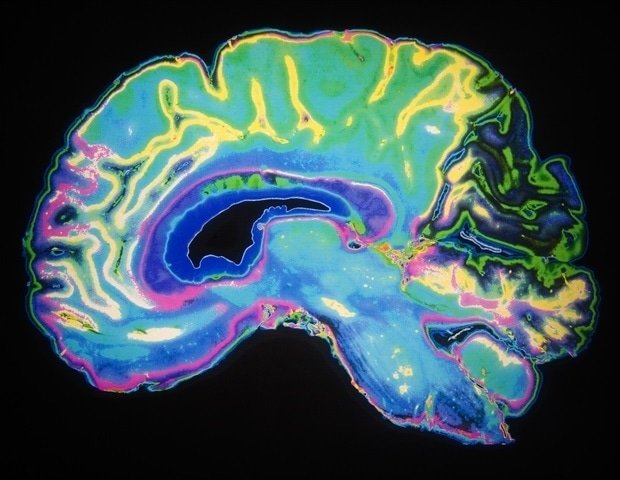
How is Jannik Sinner able to hit the ball at exactly the right time and with incredible precision? And how do we perceive the duration of events around us in everyday life? The answer lies in how the brain constructs our perception of time, as shown in a study published in PLOS Biology by Valeria Centanino, Gianfranco Fortunato, and Domenica Buetti. Starting with what we see, such as the approach of a ball, temporal information is processed by the brain through progressively more complex stages: occipital visual cortex, parietal and premotor areas, and finally frontal areas.
By using high-field functional magnetic resonance imaging (fMRI) and measuring time perception in healthy volunteers, researchers have uncovered what happens in the brain when estimating the duration of a visual stimulus. “Our results show that time perception is not a single process, but the result of multiple processing stages distributed throughout the cerebral cortex,” the authors explain. “From encoding physical duration to constructing a subjective experience of time, each stage contributes in a different way.”
Initially, the occipital visual cortex encodes duration through graded (monotonic) neural responses. The longer the stimulation, the stronger the neural response. This information is then translated into selective (unimodal) representations in the parietal and premotor cortices, where different neural populations respond preferentially to certain durations, allowing for a ‘reading’ of time. Finally, higher-order regions such as the frontal cortex and anterior insular cortex are involved in subjective categorization of duration and shape how we perceive time.
PLOS biology research not only identifies where time is processed in the brain, but also proposes a mechanistic model of how temporal information is processed instead. This new framework not only advances our understanding of time perception, but also opens new avenues for investigating how the brain constructs subjective time and why this experience is sometimes distorted.
sauce:
International Institute for Advanced Study
Reference magazines:
DOI: 10.1371/journal.pbio.3003704
