


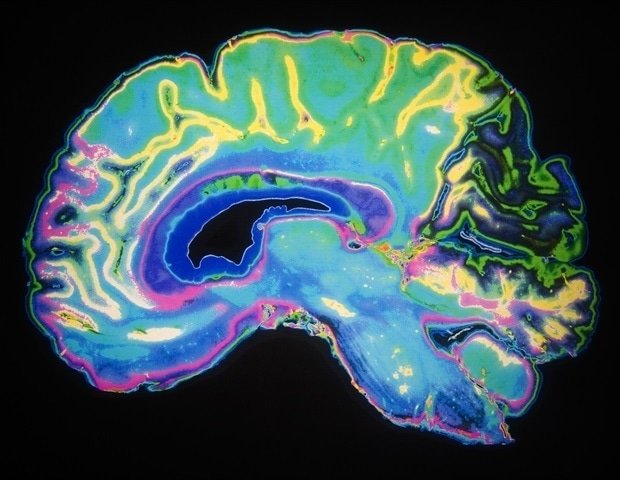
New research from Trinity College Dublin’s Global Brain Health Institute (GBHI) reveals that brain health has important implications for prevention, public health and policy.
An international study published in 34 countries shows that the biological age of the brain can be accelerated or delayed by environmental risks (air pollution, social housing conditions) and protective factors (socioeconomic equality, access to health care). More powerful influences arise from the interaction between environmental, social, and political conditions. The paper is published today (Friday, April 3, 2026) in the journal Nature Medicine.
How do the complex environments in which people live together shape the pace at which the human brain ages? This study uses data from 18,701 people in 34 countries to find out that the exposome (the cumulative environmental, social, and sociopolitical exposures that individuals experience over their lifetimes) is synonymous with The study shows that two or more health problems occur together, interact with each other, and make each other worse, with multiple exposures that occur at the same time having such profound effects that they shape brain aging in both healthy people and people with neurodegenerative diseases.
The researchers quantified 73 different environmental factors measured with country-level indicators across multiple indicators of air pollution, climate change, green space, water quality, socio-economic inequality, and political and democratic context. Modeling these factors in combination explains up to 15 times more variation in brain aging than exposure alone. This finding highlights an important shift: environmental influences on brain health are cumulative and nonlinear, and interactions between domains amplify their biological effects.
Principal investigator and corresponding author Agustín Ibáñez said: “We aimed to test whether a synergistic combination of environmental exposures could better explain variation in brain aging across populations than individual exposures or a single clinical diagnosis.”
This study identified distinct but complementary brain markers. A combination of physical exposures (increased pollution, extreme temperatures, and lack of green space) was primarily associated with structural aging of the brain, particularly affecting areas central to memory, emotional regulation, and autonomic function. These structural changes are consistent with mechanisms such as neuroinflammation, oxidative stress, and vascular dysfunction, all of which may contribute to tissue degeneration.
In contrast, social factors such as poverty, inequality, and lack of support can have strong effects on brain aging. These pressures are associated with accelerated aging of brain regions that control thinking, emotion, and social behavior.
This can happen because the brain is constantly adapting to long-term stress. In fact, the combination of these social challenges may have an even greater impact on brain aging than diseases such as dementia and cognitive impairment. Overall, this effect is consistent across different brain measures, clinical groups, and longitudinal assessments.
“The study’s lead author, Agustina Regas, Atlantic Fellow at GBHI and researcher at the University of San Andres, said: “provide A quantitative framework for understanding how multiple environmental exposures jointly shape brain aging beyond individual determinants.
Co-author Sebastian Mogilner, Atlantic Fellow and Harvard Research Fellow, added: “Combining multimodal brain imaging with nonlinear modeling allows us to identify the complex factors that link large-scale environmental exposures and brain connectivity.”.
Hernan Hernandez, co-lead author of the study and researcher at the Latin American Brain Health Research Institute (BrainLat), emphasized: “The inclusion of multiple countries and clinical groups highlights the global diversity of syndromic effects on brain health.”
What are the implications and potential for change from these findings?
The findings have important implications for prevention, public health, and policy. Current strategies to promote healthy brain aging often focus on individual behavior (diet, exercise, cognitive training) and treatment of the disease when symptoms appear. Although these approaches are very important, they only address part of the risk landscape. Many of the causes of brain aging operate at broader structural levels, such as environmental conditions, social inequalities, and institutional stability.
Policies that reduce air pollution, expand access to urban green spaces, improve water quality, and strengthen social protection systems are therefore likely to have tangible benefits for brain health at the population level.
Promoting brain health requires coordinated multidisciplinary action that goes beyond the medical system alone.
Effective strategies need to be integrated:
– Environmental regulations (reducing black carbon emissions and improving urban design),
– social policy (ensuring basic welfare, improving access to education and resources), and
-Strengthening institutions (supporting democracy by strengthening citizen participation and expanding local representation);
These results call for coordinated efforts across public health, environmental, urban, and policy fields to reduce cumulative exposome burden and support healthier brain aging trajectories at both the individual and population levels.
sauce:
Reference magazines:
Regas, A. others. (2026). Exposome of brain aging in 34 countries. natural medicine. DOI: 10.1038/s41591-026-04302-z. https://www.nature.com/articles/s41591-026-04302-z
