


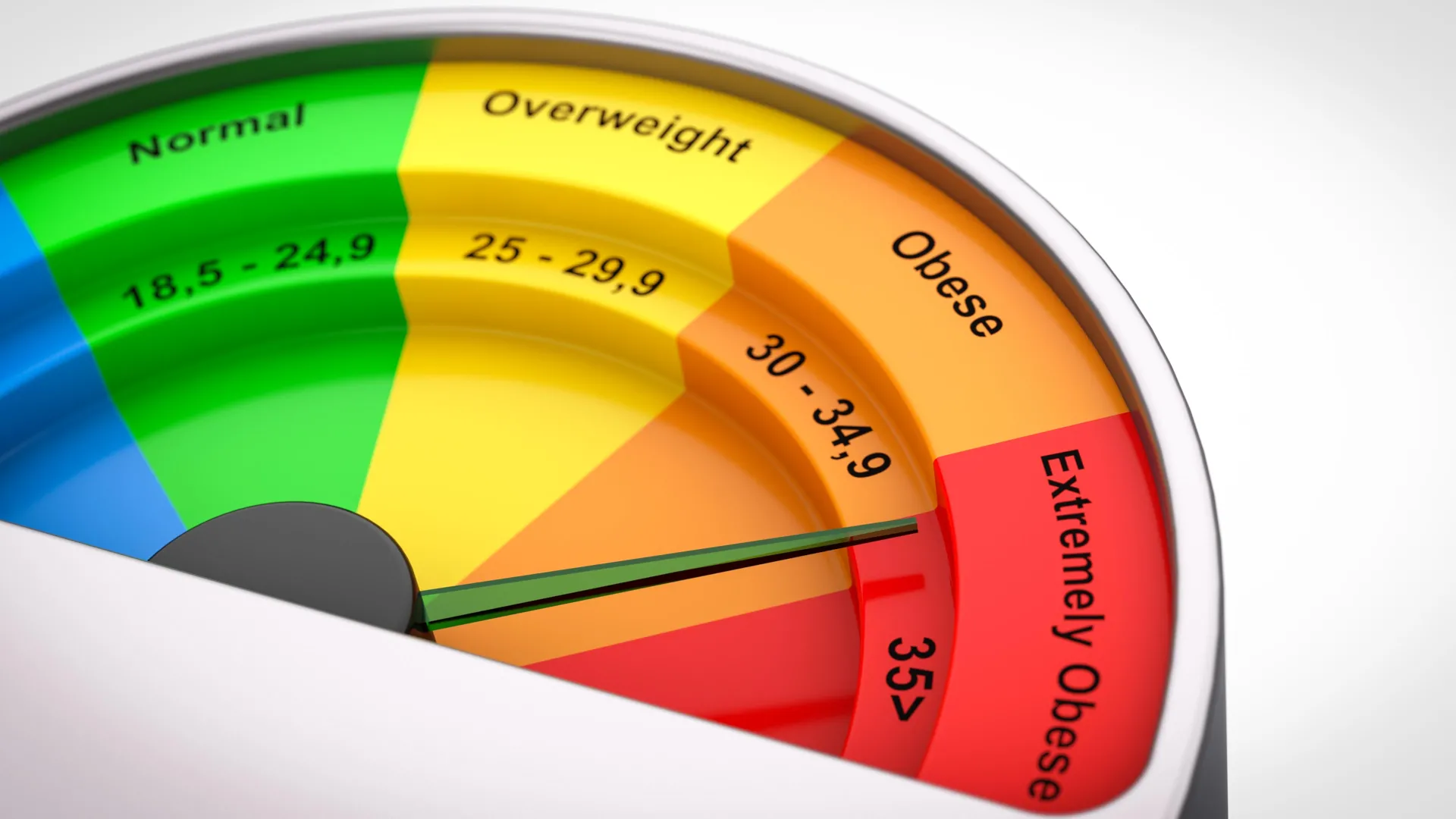
A new study published in Italy suggests that the widely used body mass index (BMI) system may be misclassifying many people. The findings were presented at the European Obesity Conference (ECO 2026, Istanbul, Turkey, May 12-15). nutrientsshow that when body fat is measured using dual-energy X-ray absorptiometry (DXA), which is considered the gold standard method, BMI often incorrectly classifies individuals as overweight or obese.
BMI has come under increasing criticism in recent years because it does not directly measure body fat or describe the distribution of fat in the body. This limitation makes it difficult for BMI to accurately reflect obesity, explains Marwan El Goho, a professor at the Department of Biomedical, Metabolic and Neurosciences at the University of Modena-Reggio Emilia. Despite these concerns, BMI is still widely used in both clinical care (i.e., general practitioners) and non-clinical settings (i.e., insurance and health plans).
Research using DXA to reevaluate BMI classification
To better understand the reliability of BMI, researchers from the University of Verona and the University of Beirut studied a general population that measured body fat using DXA. This method classifies weight status based on age and body fat percentage, providing a more direct assessment of obesity.
The study involved 1,351 adults between the ages of 18 and 98, of whom 60% were women. All individuals were referred to the Department of Neuroscience, Biomedical and Exercise Sciences of the University of Verona. All participants were Caucasian, reflecting known differences in BMI between ethnic groups.
Using WHO standard BMI categories, 19 participants (1.4%) were classified as underweight (BMI <18.5), 787 (58.3%) as normal weight (BMI 18.5-25), 354 (26.2%) as overweight (BMI 25-30), and 191 (14.1%) as obese (BMI ≥30). This resulted in a combined overweight and obesity rate of approximately 41%, consistent with data from Italy's Veneto region. The researchers then reassessed the participants using body fat percentage (BF%) measured by DXA.
Significant misclassification was found in BMI
A comparison revealed notable differences. Of the individuals classified as obese by BMI, more than one-third (34%) were actually in the overweight category based on DXA results. Misclassification was even more pronounced among those classified as overweight by BMI, with more than half (53%) placed in the wrong category. Of these, about three-quarters were actually within the normal weight range, while the remaining one-quarter met criteria for obesity.
BMI and DXA showed better agreement among individuals in the normal weight range (BMI 18.5-25), with both methods concordant in 78% of cases. However, 22% of these individuals were assigned to a different category when assessed by DXA (9.7% underweight, 11.4% overweight, and 0.8% obese).
The greatest discrepancy appeared in the underweight group. Two-thirds (13 of 19, 68.4%) of those classified as underweight (<18.5) by BMI were reassigned to another category when analyzed using DXA and should have been considered normal weight.
Overall, DXA results showed a combined prevalence of overweight and obesity of approximately 37% (overweight 23.4%, obesity 13.2%) compared to 41% using BMI.
Experts call for changes to weight assessment guidelines
Professor El Gogh, who led the study, said: “Our main findings highlight the fact that relying on the traditional WHO BMI classification misclassifies a large proportion of the Italian general population, more than a third of adults, into the wrong weight status category. As a result, the prevalence of underweight, overweight and obesity is overestimated when compared to classification based on body fat percentage measured with the gold standard technique of dual-energy X-ray absorptiometry.” (DXA). ”
Co-author Professor Chiara Milanese from the University of Verona said: “Another important finding of our study is that even though both systems identify similar overall prevalence of overweight and obesity, we are in some cases talking about different people. In other words. For example, individuals identified by DXA are not all the same as those derived from BMI classification. This is due to the lack of agreement between the WHO BMI and DXA-derived BF% classification systems in determining weight status within the general population weight. Ranges and age groups for both men and women. ”
The researchers conclude that Italian public health guidelines should be updated to include additional tools in addition to BMI. These may include direct measurements of body composition or simpler alternative measurements such as subcutaneous fat measurements or body circumference indicators such as waist-to-height ratio. They also suggest that similar patterns of misclassification are likely to exist in white Caucasian populations in Europe and other countries around the world. However, further research is needed to determine whether these findings apply to different ethnic groups and regions.
