


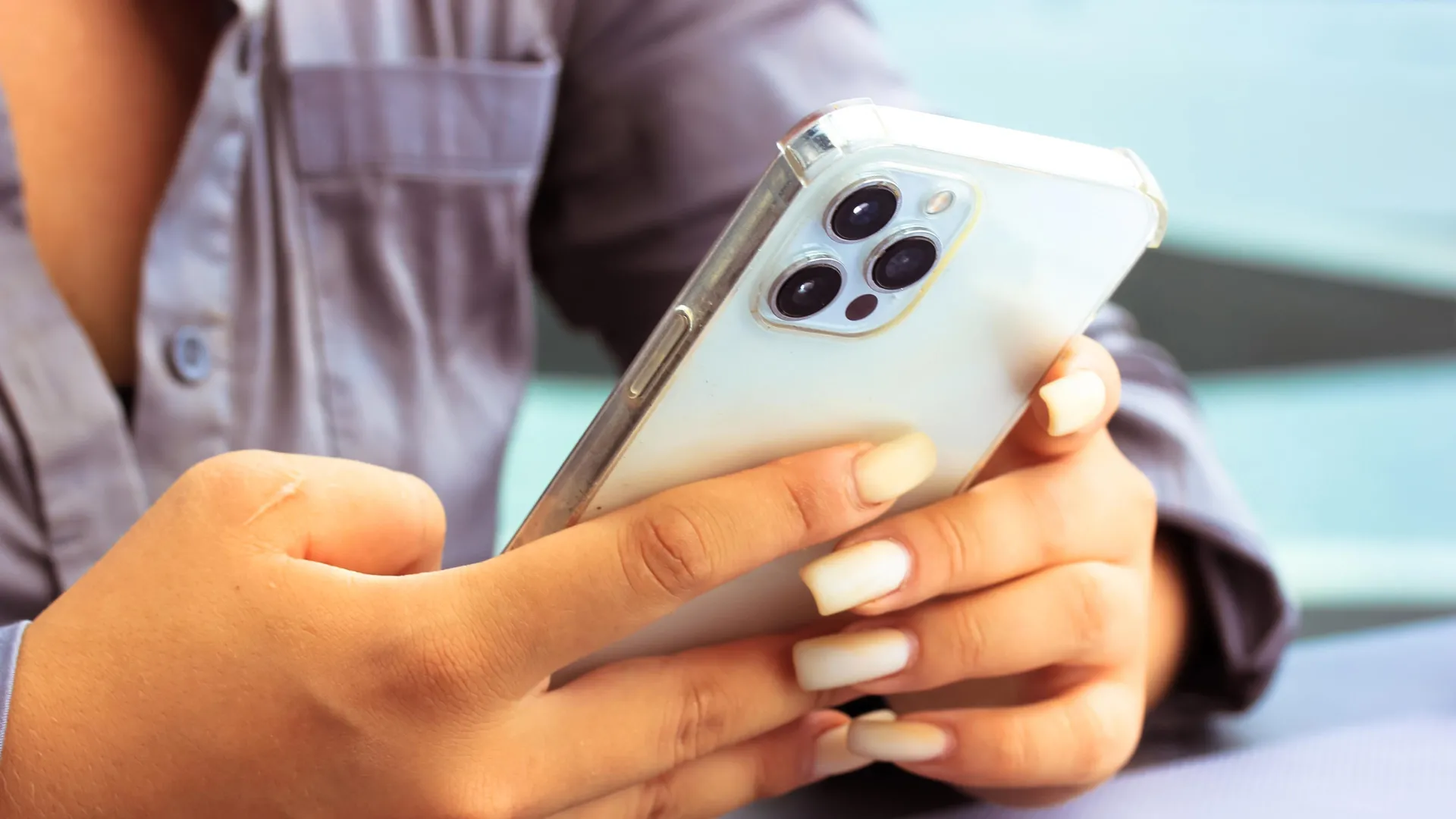
If you’ve ever tried to use a smartphone or tablet with long nails, you know that it can take some adjustment. Rather than tapping naturally with your fingertip, you often have to tilt your finger awkwardly just to make contact with the screen. What if you could use your fingernails instead? Researchers are currently working on a transparent nail polish that could do just that by turning your long fingernails into a touchscreen-compatible stylus.
A team from Centenary University in Louisiana will present their findings at the spring meeting of the American Chemical Society (ACS). ACS Spring 2026 will feature approximately 11,000 presentations across a wide range of scientific disciplines.
How the idea came to fruition
The project began when Manasi Desai, an undergraduate student interested in cosmetic chemistry, approached research advisor Joshua Lawrence in search of a project. Lawrence, an organometallic chemist, says, “Chemists are here to solve problems and make the world a better place.” They began looking for everyday problems that chemistry might help solve.
They quickly realized how difficult it was to use a smartphone for people with long nails, including the phlebotomist they met during a blood test appointment. When I asked if the solution helped, I got an enthusiastic “Yes, please!” That moment inspired the direction of Desai’s research.
Why touchscreen doesn’t work with fingernails
Most modern devices rely on capacitive touch screens. These screens generate a small electric field across their surface. When a conductive object, such as a fingertip or a drop of water, interacts with the field, the capacitance of the screen changes. The device detects the change and interprets it as a touch.
However, non-conductive materials such as your fingernail or pencil eraser do not change the electric field, so the screen will not react. For a nail to work, it must be able to carry a small amount of electrical charge.
Avoid dark and dangerous additives
Previous attempts to solve this problem have included adding conductive materials such as carbon nanotubes or metal particles to nail polish. Although these approaches worked, they raised safety concerns as the materials could be dangerous if inhaled during manufacturing. It also resulted in a dark or metallic finish, which limited the range of cosmetic options.
Desai and Lawrence aimed to create a polish that would remain transparent while being safe for both the user and manufacturer.
Testing the ingredients of transparent conductive polish
To find a formulation that balanced transparency and conductivity, Desai tested many combinations through trial and error. She experimented with 13 commercially available clearcoats and over 50 additives. Over time, she identified two promising ingredients. It is a type of taurine, an organic compound commonly sold as a dietary supplement, and ethanolamine, another simple organic molecule.
Ethanolamine provides the desired conductivity and worked well within the polish, but there are some toxicity concerns. Modified taurine is not toxic but has a slightly cloudy appearance. When used together, these ingredients produce a formula that allows smartphones to recognize the touch of a fingernail, an early critical success.
“Our final clear polish can be applied over any nail polish or bare nails, and may even be helpful for people with calluses on their fingertips, meaning it has both cosmetic and lifestyle benefits,” explains Desai.
different chemical mechanisms
Unlike previous approaches that relied on inherently conductive materials, the researchers believe their formulation works through acid-base chemistry. The idea arose from the powerful ability of ethanolamine-based mixtures to release protons that aid in charge transfer.
They propose that when the abrasive interacts with the touchscreen’s electric field, these protons move between molecules. This creates a small change in capacitance, just enough for the device to detect a touch.
More work to come and promising results
Although promising results have been obtained so far, the abrasive is not ready for commercial use. Even the best performing ethanolamine-taurine formulations still do not work consistently when applied to the nails. Additionally, ethanolamine evaporates quickly, so the polish’s effectiveness only lasts a few hours after application. The research team also hopes to replace it with a completely non-toxic alternative.
Despite these challenges, researchers are currently continuing to test new compounds to better understand how the formulation works and improve performance.
“We’re doing the hard work of finding things that don’t work, but if you keep at it long enough, you’ll eventually find things that do,” Lawrence says.
This research was funded by Louisiana Centenary University, the Albert Sklar Family, and the Sklar Chemistry Chair. The research team has also filed a provisional patent for this work.
title
Modification of nail polish formulation for conductivity to operate capacitive touch screens
abstract
Most smartphones use capacitive touchscreen technology, which relies on the conductivity of your skin for operation. This is difficult for users with long manicures or zombie fingers. We describe a nail polish formulation that disrupts the electric field built up on a capacitive touch screen, making it conductive enough to be recorded as a touch event. Commercially available nail polish was used to test the formulation compatibility and electrical performance of the additives. The nail polish formulation was coated onto a silicone mat and the resistance of the dried film was measured. Formulations with non-infinite resistance were tested on capacitive touch screens. We present four successful formulations and a number of unsuccessful formulations.
