


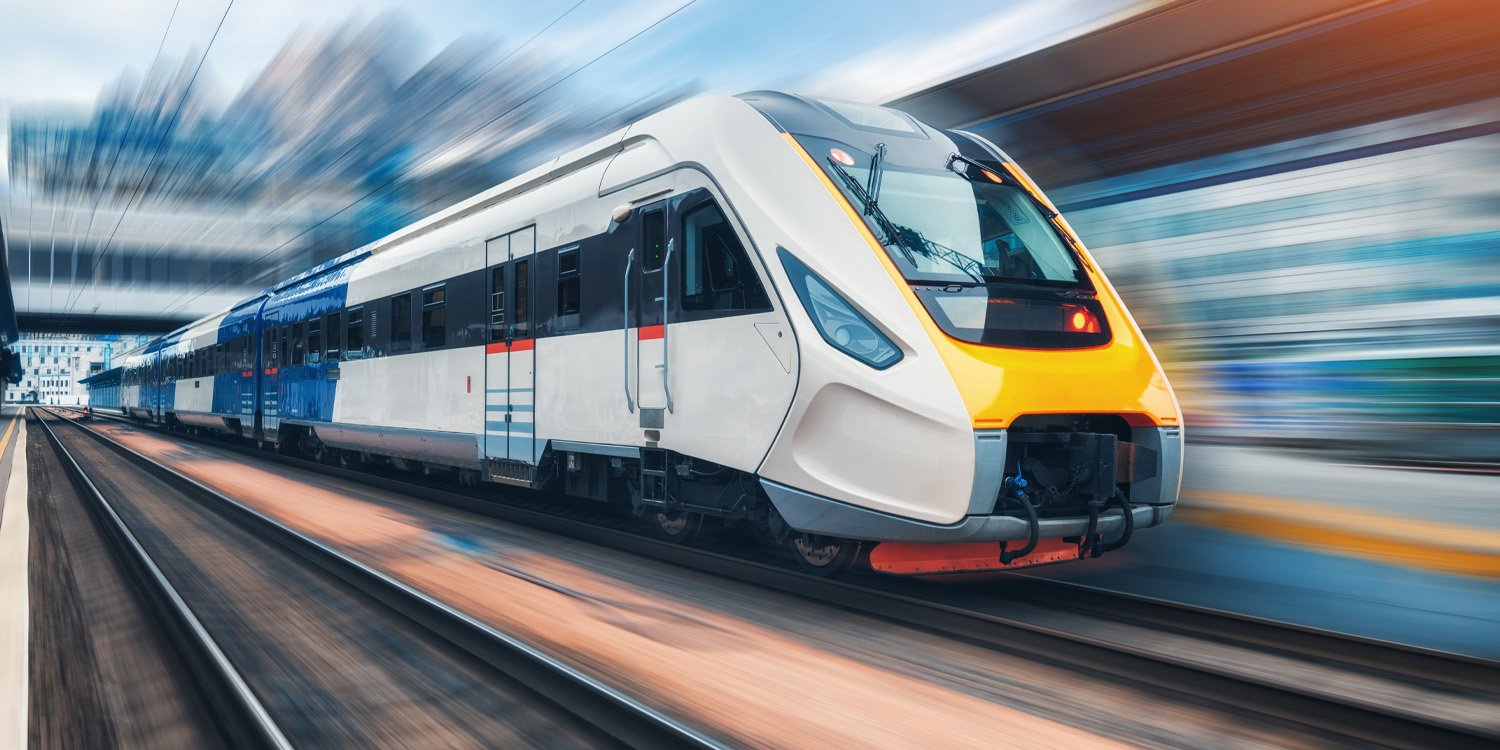
New research published in Social science and medicine Evidence shows that access to high-speed rail networks significantly improves cognitive health in middle-aged and older adults. The findings suggest that large-scale transportation infrastructure can act as an unexpected tool for public health, providing psychological well-being benefits alongside pure economic efficiency. By reducing depression, reducing air pollution, and increasing personal incomes, high-speed rail appears to offer a unique path to healthier aging.
As the global population continues to age, cognitive decline has become a major public health issue. Declining mental capacity not only affects a person’s daily life but also imposes a significant economic and logistical burden on the healthcare system. Scientists have extensively studied individual factors that protect the aging brain, such as social participation, higher education, and daily physical activity.
Environmental factors such as particulate air pollution and access to public green spaces are also recognized to play an important role in brain health. However, the impact of transportation infrastructure on cognitive aging has received little attention in the scientific community. High-speed rail networks will transform the way people travel, making it easier to visit family members far away, receive specialized medical care, and find new economic opportunities.
China began a major expansion of its high-speed rail network in 2010. This rapid development, combined with the country’s aging population, has provided scientists with a unique opportunity to test whether modern transportation systems affect the cognitive health of older people. The researchers wanted to see if the ability to travel faster and farther could protect the aging brain from decline.
“High-speed rail (HSR) is rapidly expanding in countries such as Germany, France, Japan, and especially China, but most existing research focuses on its economic impact,” said study author Xu Zhong, a researcher at the Max Planck Center for Population, Health, and Social Inequalities at the University of Helsinki in Finland.
“We noticed a unique intersection: China’s HSR network has grown from 118 km in 2008 to 42,000 km in 2023, while the aging population (65 years and older) has increased from 8.3% to more than 15% within the same period. This has created a ‘natural experiment’ that allows us to investigate at scale how modern infrastructure impacts cognitive health.”
To explore this relationship, scientists analyzed data from the National Health Survey conducted from 2011 to 2018. They followed 11,572 adults aged 45 and older and observed changes in their cognitive health as high-speed rail service opened in their cities. The research team combined scores from two specific mental ability tests to measure overall cognition.
The first test measured episodic memory by recalling a list of 10 different words immediately and again after a short delay. The second test measures mental health and requires participants to perform tasks such as subtracting 7 from 100 in order, drawing a specific picture, and accurately stating the current year, month, and day. To ensure accuracy when analyzing this complex data, scientists used an advanced statistical technique called double machine learning.
Machine learning involves training computer algorithms to recognize complex patterns in large data sets. Using this advanced method, researchers were able to account for a vast number of external variables, including childhood health status, parental educational history, family structure, and baseline physical mobility. The algorithm was tested multiple times to verify that the identified patterns were genuine. This is an approach that helps isolate the specific effects of new rail lines from other life events.
To further confirm that their findings were accurate, the scientists looked at geographic data such as 1933 land elevations and historic railroad maps. These geographic and historical factors influenced where modern trains were built, but they had no direct impact on modern brain health. Using these environmental variables as mathematical anchors, the researchers were able to confidently link changes in cognitive health directly to the new rail line.
The results showed that the introduction of high-speed rail services improved participants’ overall cognitive scores. Specifically, trains increased mental well-being, but episodic memory showed no measurable effects. Episodic memory decline is often permanent, so improving transportation can prevent it from worsening, but once it’s gone, it tends to be difficult to reverse.
Scientists also found that trains improve brain health through three specific pathways. First, high-speed rail reduced local particulate air pollution by removing traditional polluting vehicles from the roads. Breathing clean air prevents inflammation in the brain and nervous system, directly supporting long-term healthy cognitive aging.
Second, improved economic connectivity has increased personal incomes, providing older people with better financial resources to live healthy lives. Finally, expanded travel options likely reduced social isolation and reduced symptoms of depression. Scientists found that simply having the option of easy travel tends to reduce psychological stressors and keep the mind active.
“I was surprised by the ‘multi-channel’ effect,” Zhong told SciPost. “This is not just one factor: HSR improves cognitive health by reducing air pollution, increasing incomes, and lowering levels of depression all at the same time.
The benefits of high-speed rail networks have not been equally distributed among all population groups. The improvement in cognitive function was particularly pronounced in women, who typically have higher rates of depression and cognitive decline due to their longer life expectancy. City dwellers and individuals between the ages of 60 and 74 also benefit greatly, as retirement often gives this particular age group the free time they need to actually take advantage of new travel options.
Trains also had a complex impact on social inequality. New transportation systems have reduced cognitive health disparities between people with different levels of education, greatly benefiting those with primary or secondary education. Highly educated people already had strong cognitive abilities, so they had less room for improvement on new railway lines than people with basic education.
At the same time, infrastructure development widened the gap between rural and urban residents. We found that people in urban areas had a much greater overall cognitive advantage than those in rural areas, where ticket prices are often higher. However, researchers noted that the train would allow rural residents to access better medical care in faraway cities, providing a small but meaningful lifeline for isolated people.
“We also uncovered a ‘double impact’ on inequality,” Zhong said. “While HSR narrowed the cognitive health gap between people with different levels of education, it actually widened the gap between rural and urban populations. This highlights that while infrastructure can empower disadvantaged populations, it must be designed inclusively to ensure rural populations are not left behind.”
“High-speed rail doesn’t just make travel faster; it’s also a public health tool. We found that access to high-speed rail helps improve cognitive health by reducing depression. High-speed rail can reduce social isolation by making it easier to travel and visit friends and family. Our findings suggest that governments should consider ‘health dividends’ such as improved mental well-being alongside economic efficiency when planning large-scale infrastructure.”
Although the study provides solid evidence, the scientists noted some limitations that should be considered. Cognitive health data rely on self-reported survey responses and basic memory tasks, which can be more subjective than formal clinical assessments in the hospital. The dataset also lacked specific measures of long-distance social interactions, so the researchers could only estimate how often participants actually took the train to visit distant friends.
Moreover, this finding is specific to the unique rapid expansion of China’s railway network. These exact numbers may not fully apply to countries with mature transportation systems and slower growth, such as Japan or France. Because high-speed rail tickets are more expensive than traditional travel options, rural residents could be permanently excluded from benefits unless the government plans a comprehensive policy. Future studies should validate these findings in other aging populations, particularly in Europe.
“We hope to validate these findings in other regions, such as Germany and Spain, where populations are aging even more rapidly,” Zhong said. “We want to understand whether the link between ‘mobility and cognitive health’ holds true across different cultural and geographic contexts, especially in settings where the urgency for solutions to healthy aging is at its peak.”
“Our findings are particularly timely for Europe. There is a huge opportunity to integrate health into transport policy with the EU’s blueprint for a new high-speed rail network, which aims to connect all capital cities by 2040. With the EU’s population aged 65 and over expected to reach 30% by 2050, we believe that Healthy aging is not just a medical question; it’s about how we move and stay connected.The brain ages over time.”Given social and environmental conditions, a train ticket could be a prescription for a more connected and cognitively active life. ”
The study, “Railway to a Better Mind – The Impact of High-Speed Rail on Cognitive Health Disparities,” was authored by Xu Zong, Mingming Guan, Ye Zhang, and Guowei Dong.
