


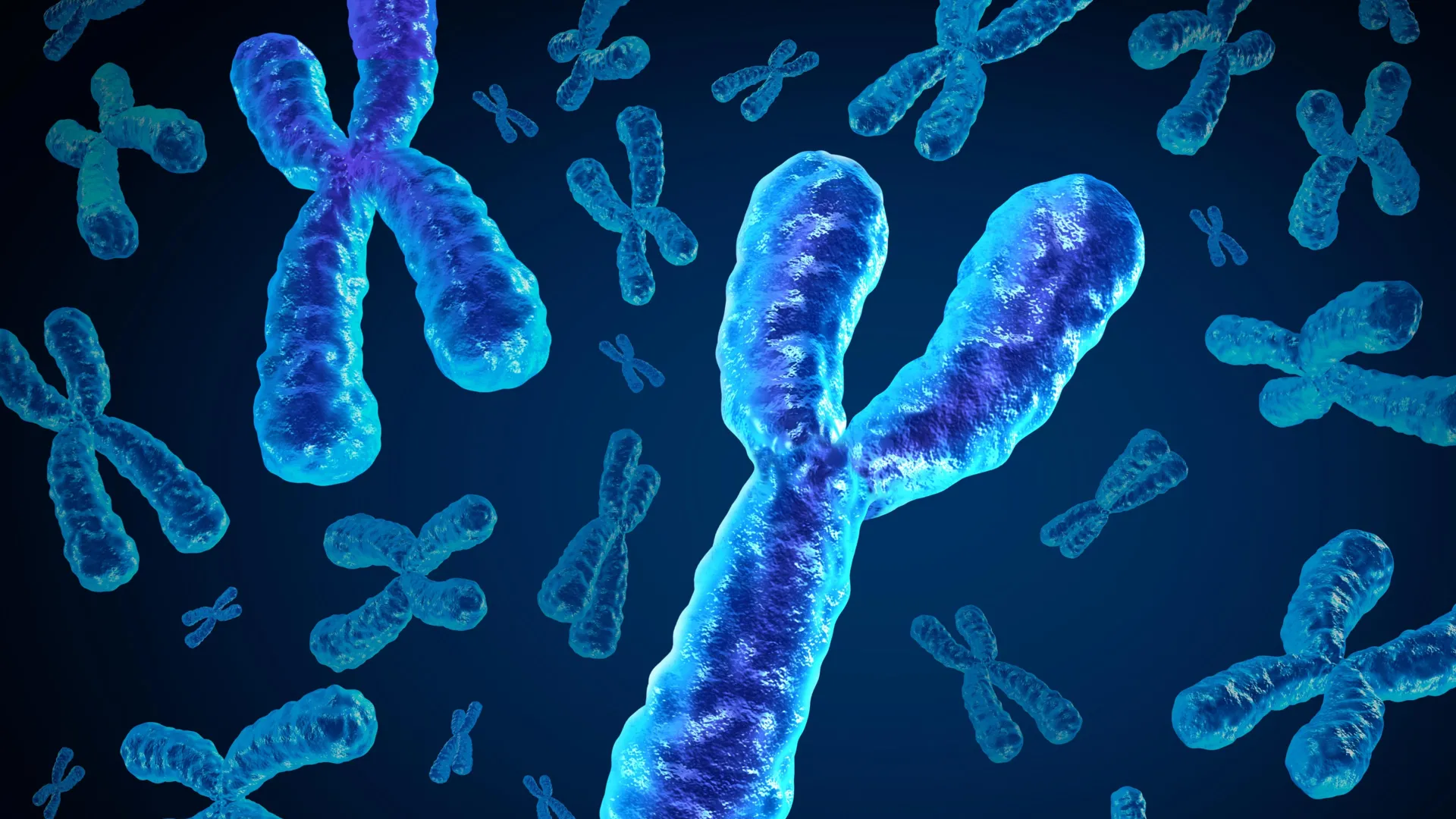
As men age, some cells gradually lose their Y chromosome. For a long time, scientists thought this change had little effect. Because the Y chromosome contains relatively few genes other than those involved in male development, its absence was not expected to affect overall health.
That perspective has changed. Research over the past few years has shown that loss of the Y chromosome can lead to serious health problems throughout the body and shorten lifespan.
How common are Y chromosome defects?
Advances in gene detection have revealed that Y chromosome defects are common in older men. This pattern becomes more pronounced with increasing age. Approximately 40% of men in their 60s show some loss, increasing to 57% by age 90. Environmental exposures such as smoking or contact with carcinogens can increase the likelihood of this change.
Loss does not occur in all cells. Instead, some cells have a Y chromosome and others do not, creating a condition known as mosaicism. If a cell loses Y, all subsequent copies of it also lose Y. Laboratory studies suggest that cells lacking Y may proliferate faster than normal cells, which may give them an advantage in tissues and even tumors.
The Y chromosome is particularly vulnerable during cell division. It can be accidentally excluded, left inside a structure surrounded by a small membrane, and later discarded. Therefore, Y chromosome defects are more likely to accumulate in tissues where cells divide rapidly.
Why are small chromosomes important?
The human Y chromosome is abnormal. It contains only 51 protein-coding genes (not counting multiple copies), whereas other chromosomes contain thousands of protein-coding genes. It is known for its role in determining male sex and supporting sperm production, but was long thought to have limited other functions.
In laboratory settings, cells can still survive after losing the Y chromosome, reinforcing the idea that the Y chromosome is not essential for basic cellular functions. In fact, some marsupials lose Y early in development, and chromosomes in mammals have continued to shrink for about 150 million years. In certain rodents, it can even disappear and be replaced.
Given this history, losing the Y chromosome later in life was once thought to be unimportant.
The connection between disease and shortened lifespan
Despite previous assumptions, there is growing evidence linking Y chromosome defects to major health conditions. Studies have linked it to cardiovascular disease, neurodegenerative diseases, and cancer.
For example, high levels of Y loss in kidney cells are associated with kidney disease. A large population study also found that men over the age of 60, who have more Y-deficient cells, have a higher risk of heart attack.
Loss of the Y chromosome is associated with worse outcomes from COVID-19 infection, which may help explain why men have higher mortality rates. It is also more frequently seen in patients with Alzheimer’s disease. Furthermore, multiple studies have shown an association between Y deficiency and various cancers and decreased survival of affected patients. Cancer cells themselves often exhibit loss of this chromosome along with other abnormalities.
Cause or effect?
It remains difficult to determine whether loss of the Y chromosome directly causes disease or simply occurs along with the Y chromosome. In some cases, disease or tissue repair can increase cell division, increasing the chance of chromosome loss.
Genetic factors also appear to be involved. Research suggests that about one-third of Y chromosome loss mutations are inherited, and that this involves about 150 genes associated with cell cycle control and cancer risk.
However, experimental evidence points to a more direct effect. In one study, mice given Y-deficient blood cells developed age-related symptoms, including decreased cardiac function and eventually heart failure.
There are also indications that loss of the Y chromosome may directly impact cancer behavior. In some cases, it can promote tumor growth and aggressiveness, such as ocular melanoma, which occurs more often in men.
What does the Y chromosome do in the body?
The health effects associated with the loss of the Y chromosome suggest that the Y chromosome plays a broader role than once believed. But how can a chromosome with so few genes have such a wide range of effects?
One important gene, SRY, is active in many tissues throughout the body. Its role in the brain is known to include involvement in Parkinson’s disease. Four additional genes are active only in the testes and are essential for sperm production.
In addition to these, many of the remaining genes on the Y chromosome are active in multiple tissues and help control gene expression. Some act as tumor suppressors. These genes also have counterparts on the X chromosome, and both men and women usually have two copies. If a cell loses Y, only one copy may remain and normal gene regulation may be disrupted.
The Y chromosome also contains a large number of non-coding genes. These produce RNA molecules that are not converted into proteins but can affect the function of other genes. This may explain why the Y chromosome influences activity across many parts of the genome.
Deletion of Y has been shown to alter gene expression in hematopoietic cells and cells involved in the immune response. It can also affect the development of blood cells and heart function.
Looking to the future
Only recently has the complete sequence of the human Y chromosome been determined. As researchers continue their work, they may learn more about how the gene contributes to health and disease, and why losing it can have such profound effects.
