


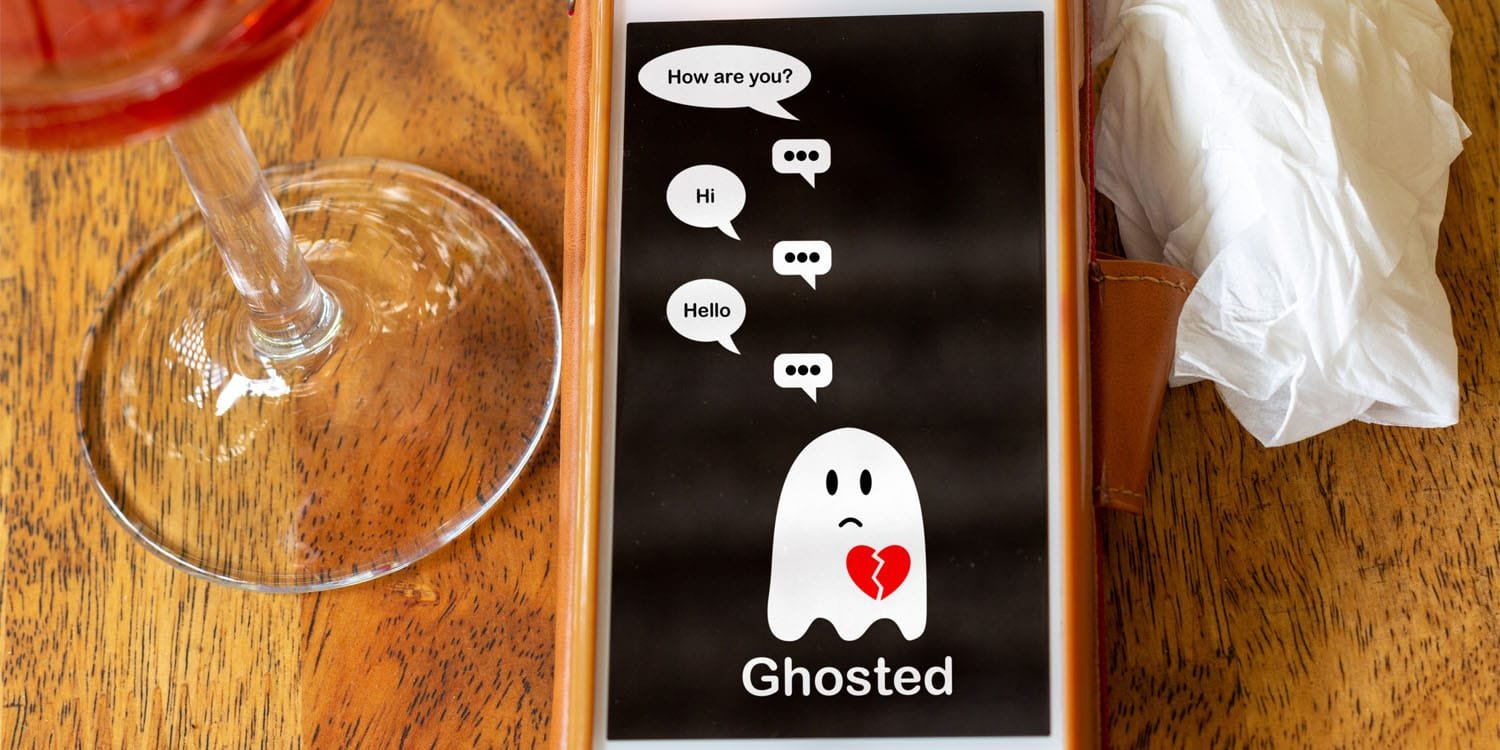
Being ignored without explanation tends to cause more psychological distress than direct rejection. New research published in Computers in human behavior provide evidence that although ghosting and explicit rejection are both hurtful, the uncertainty of ghosting slows a person’s emotional recovery. This study suggests that clear communication during a breakup, even through casual digital interactions, can help people process the event and move on more easily.
Ghosting is the act of unilaterally ending a relationship by cutting off all communication without providing any explanation. This has become incredibly common in the digital age, especially on dating apps and social media platforms. The person who disappears leaves others to figure out what went wrong completely on their own.
“Ghosting comes up often in everyday conversations about modern relationships and digital communication. Many people describe it as a particularly painful experience, but some argue that disappearing may actually be kinder than explicitly rejecting someone. “We wanted to test whether this intuition was actually true and to better understand how people psychologically react to these two different ways of ending a relationship,” said Alessia Tellari, a postdoctoral fellow at the Catholic University of the Sacred Heart, who conducted the study while at the university. Milan Bicocca.
To understand how people respond to this behavior, scientists have traditionally asked participants to recall past experiences. Relying on human memory can introduce bias, as humans tend to change their memories over time to make sense of painful events. To get a more accurate picture, Tellari and colleagues created a real-time experiment to observe how the emotional impact of ghosting unfolds from day to day.
The researchers wanted to directly compare these everyday reactions to the effects of outright rejection, when a person explicitly states, “I don’t want to talk to you anymore.” By tracking emotions over several days, scientists wanted to understand exactly how people cope with different forms of social exclusion. This multi-day approach allows us to take a closer look at the specific psychological scars caused by sudden silence.
The researchers conducted two separate experiments using the newly developed chat format. In the first study, 46 young people between the ages of 19 and 34 participated in a 15-minute daily text conversation using the Telegram messaging app. Each participant was paired with a research partner who was actually an ally. That is, they were research assistants who functioned as regular participants.
For three days, the two talked about casual topics such as sports, music, and travel. After each chat, participants filled out a questionnaire measuring emotions, relationship satisfaction, and feelings of interpersonal intimacy. They also rated their partner’s competence, sociability, and morality, and reported on their own basic psychological needs for a sense of belonging, self-esteem, control, and a meaningful existence.
On the fourth day, the researchers introduced various experimental scenarios. For the 18 participants in the control group, daily chats continued as usual for an additional three days. For 13 participants, their partner explicitly rejected the participant by sending a message that they were no longer interested in talking.
For the last 15 participants in the ghosting group, their partners stopped responding completely without any explanation. The scientists then tracked participants’ daily survey responses to see how different groups reacted to the sudden changes in their relationships. This allowed us to measure the immediate impact of the event and the recovery process over a 6-day period.
Scientists have found that both rejection and ghosting instantly damage relationships and cause a surge of negative emotions. Participants in both exclusion groups reported feeling ignored, their self-esteem threatened, and interpersonal intimacy reduced. A closer look at the data over the next few days revealed a clear pattern of recovery.
People who were directly rejected began to show signs of emotional recovery very quickly. Their feelings of alienation and threatened needs began to decrease in the days following the incident. In contrast, those who were ghosted experienced a more sustained negative emotional state.
Their basic psychological needs were still threatened and their confusion remained high. This pattern suggests that a lack of closure prevented ghosted participants from moving forward. The scientists noted that simple and direct rejection gave participants the final judgment they needed to start coping.
“One of the interesting things is how similar the initial reactions to ghosting and rejection were,” Tellari told PsyPost. “In both cases, people felt immediately hurt and their basic psychological needs threatened. But as the days passed, the trajectories began to diverge. Participants who were rejected tended to recover faster, while those who were ghosted remained stuck in uncertainty for longer.”
To see if these patterns hold up over time, the scientists conducted a second study with 90 participants. This time, the experiment lasted nine days instead of six, allowing them to observe the emotional recovery process for a longer period of time. The researchers also tested whether the gender of the study partner made a difference by matching participants with both same-sex and opposite-sex partners.
The group included 33 people in the control condition, 33 who had experienced explicit rejection, and 27 who had been ghosted. The procedures were the same as in the first study, with participants chatting daily and filling out the same psychological assessments. The longer timeline is designed to capture delayed responses that may not appear in the first few days.
The findings from the second study essentially replicated the first experiment. The gender of the chat partner did not change participants’ reactions to the abrupt end of the conversation. Once again, a direct rejection caused an immediate and sharp emotional pain, followed by a steady recovery.
Participants who were ghosted showed delayed and long-term psychological strain. For example, a rejected person immediately felt a desire to be alone, but over time it disappeared. For those who became ghosts, their desire for solitude gradually grew as the days passed.
Those who were ghosted judged their partner’s morality more harshly over time. This was probably because I continued to be disappointed by the lack of explanation. Researchers argue that this ongoing uncertainty makes ghosting uniquely difficult to process, as the brain has a hard time interpreting situations without a clear outcome.
“While both experiences are painful, ghosting tends to be more psychologically difficult than explicit rejection,” Terrali explained. “When someone disappears without explanation, the uncertainty keeps people wondering what happened: Is the other person okay? Did they do something wrong? Or will the relationship start again? This lack of closure seems to prolong the pain and make it harder to move on. Rejection, by contrast, hurts, but because the message is clear, it helps people process the situation and get back on their feet faster.”
Although this study provides new insights, there are some potential caveats to keep in mind.
“Our study used a controlled experimental setting in which participants interacted with a research partner for several minutes per day over several days and then experienced ghosting or rejection,” Telari said. “This allows us to study people’s reactions in real time and under controlled conditions. However, real-life relationships are often more complex. People may have contextual information to help them interpret periods of silence, but their emotions can also become more invested, making the experience even more painful.”
People in real relationships may have access to context clues, such as mutual friends, that can help interpret sudden silence. Future research could investigate how these responses play out in real romantic situations with longer relationship histories. Scientists also need to directly test whether anxiety is the exact mechanism that impedes emotional recovery.
The researchers also recommend testing these results across different cultures and age groups. This particular sample consisted entirely of Italian youth, and cultural norms regarding communication may change how people experience social exclusion. Exploring these variables can help us more fully understand the dynamics of digital relationships.
The study, “The Hallucinatory Pain of Ghosting: A Multi-Day Experiment Comparing Responses to Ghosting and Rejection,” was authored by Alessia Telari, Luca Pancani, and Paolo Riva.
