


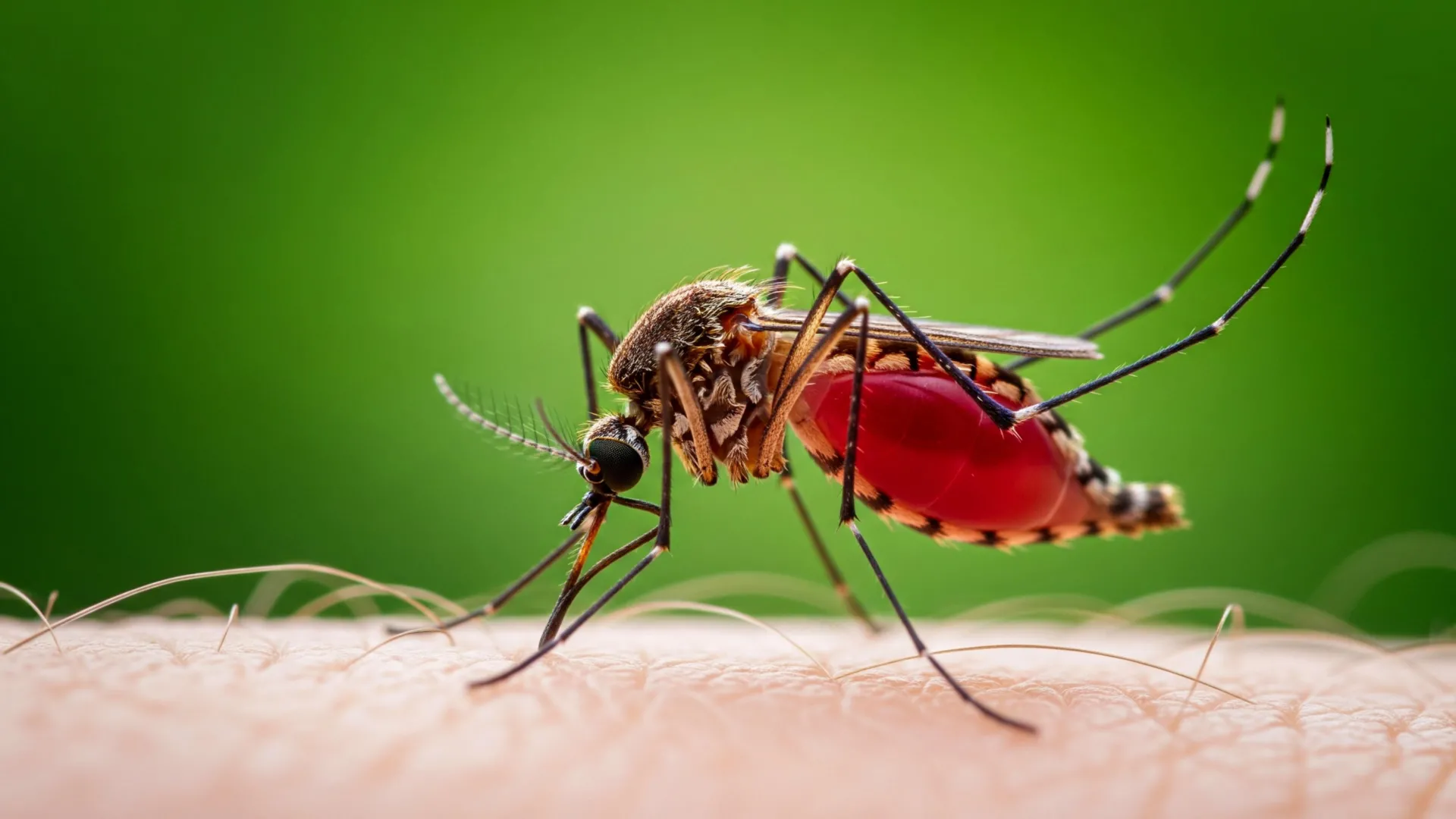
- The malaria parasite is packed with tiny crystals that spin around constantly, a strange behavior that has puzzled scientists for decades.
- Researchers have now discovered that these crystals are powered by the decomposition of hydrogen peroxide, a reaction similar to those used in rocket engines.
- This constant rotation may help the parasite survive by safely removing toxic peroxides and managing harmful iron compounds.
Impact: This discovery could open the door to new malaria treatments and spur advances in microscopic robotic technology.
Crystals rotating inside the malaria parasite
All cells of the parasite that causes deadly malaria Plasmodium falciparum It contains small compartments filled with microscopic iron crystals. These crystals are constantly in motion during the parasite’s life. Like loose change in a machine, they swirl, bounce, and collide within a confined space, moving so fast and unpredictable that standard scientific tools have a hard time tracking them. However, once the parasite dies, movement quickly stops.
These iron crystals have long been a key focus for antimalarial drugs, but their unusual behavior has puzzled scientists ever since they were first observed. “People don’t talk about things they don’t understand, and the behavior of these crystals is so mysterious and strange that it’s been a blind spot in parasitology for decades,” said Dr. Paul Sigala, associate professor of biochemistry at the University of Utah Spencer Fox Eccles School of Medicine (SFESOM).
Now, Sigala’s team has uncovered the mechanism behind this strange behavior. The crystals are powered by chemical reactions similar to those used to power rockets.
This discovery could point to new strategies for malaria treatment and also provide insights for designing nanoscale robotic systems. The survey results are PNAS.
Rocket-like chemistry moves crystals
The researchers discovered that the crystals, made from an iron-containing compound called heme, are set into motion by the decomposition of hydrogen peroxide into water and oxygen. This reaction releases energy and provides the force needed to keep the crystal moving.
This type of propulsion is well known in aerospace engineering, where hydrogen peroxide is used as a fuel to launch spacecraft, but until now it had not been identified in biological systems. “This decomposition of hydrogen peroxide has been used to power large rockets,” says Erica Hastings, Ph.D., a postdoctoral researcher in biochemistry at SFESOM. “But I don’t think it’s ever been observed in a biological system.”
Hydrogen peroxide is abundant within the small compartments that house the crystals, and the parasite naturally produces it as a byproduct. This makes it a strong candidate as a potential energy source. Experiments confirmed that hydrogen peroxide alone can rotate isolated crystals, even outside the parasite.
When the parasites were grown under hypoxic conditions that reduced hydrogen peroxide production, the rate of crystallization was reduced to about half its normal rate, even though the parasites remained otherwise healthy.
Why Crystal Motion Helps Parasites Survive
Researchers believe this constant movement may play an important role in helping the parasite survive. One possible explanation may involve hydrogen peroxide itself, which is highly toxic. The rotating crystals may help the parasites safely break down excess peroxide, reducing the risk of damage from harmful chemical reactions.
Sigala suggests another benefit. This movement may prevent the crystals from sticking together, limiting their ability to store additional heme. As the crystals aggregate, they lose the surface area needed to efficiently process more heme. By continuing to move, the parasite may be able to manage this process more effectively.
Impact on new drugs and nanotechnology
The researchers say these spinning crystals are the first known examples of self-propelled metal nanoparticles in biology. They suspect that similar processes exist elsewhere in nature.
The discovery could guide the development of advanced microscopic robots. “We believe that nanoengineered self-propelled particles can be used for a variety of industrial and drug delivery applications, and that these results provide potential insights,” Sigala says.
It also has potential medical uses. “We believe that the decomposition of hydrogen peroxide is likely to make an important contribution to reducing cellular stress,” Sigala says. “If there is a way to block the chemical reactions on the surface of the crystal, that alone might be enough to kill the parasite.”
This mechanism is very different from that seen in human cells, making it an attractive target for new therapeutics. Drugs designed to interfere with this process are less likely to cause harmful side effects. “If you target a drug to a region that is very different from human cells, you probably won’t have extreme side effects,” Hastings explains. “If we can define how this parasite differs from our bodies, we will have access to new treatments.”
The result is PNAS As “Chemical promotion of hemozoin crystal movement in malaria parasites”.
This research was supported by the National Institutes of Health (grant numbers R35GM133764, R21AI185746, R35GM14749, and T32AI055434), the Utah Iron and Heme Disorders Center (grant number U54DK110858), the University of Utah Price Institute of Technology, and the Utah Health University 3i Initiative. The content is solely the responsibility of the authors and does not necessarily represent the official views of the National Institutes of Health.
