

Close Menu

    Subscribe to Updates

    Get the latest creative news from FooBar about art, design and business.

    What's Hot

    Lilly stock falls 7% since HSBC downgrade

    March 18, 2026

    Survey reveals more than 150,000 uncounted deaths due to new coronavirus infection

    March 18, 2026

    First test of new neuroscience theory shows how smart brains coordinate information

    March 18, 2026
    Facebook X (Twitter) Instagram
    Facebook X (Twitter) Instagram
    Health Magazine
    • Home
    • Environmental Health
    • Health Technology
    • Medical Research
    • Mental Health
    • Nutrition Science
    • Pharma
    • Public Health
    • Discover
      • Daily Health Tips
      • Financial Health & Stability
      • Holistic Health & Wellness
      • Mental Health
      • Nutrition & Dietary Trends
      • Professional & Personal Growth
    • Our Mission
    Health Magazine
    Home » News » First test of new neuroscience theory shows how smart brains coordinate information
    Mental Health

    First test of new neuroscience theory shows how smart brains coordinate information

    healthadminBy healthadminMarch 18, 2026No Comments4 Mins Read
    First test of new neuroscience theory shows how smart brains coordinate information
    Share
    Facebook Twitter Reddit Telegram Pinterest Email


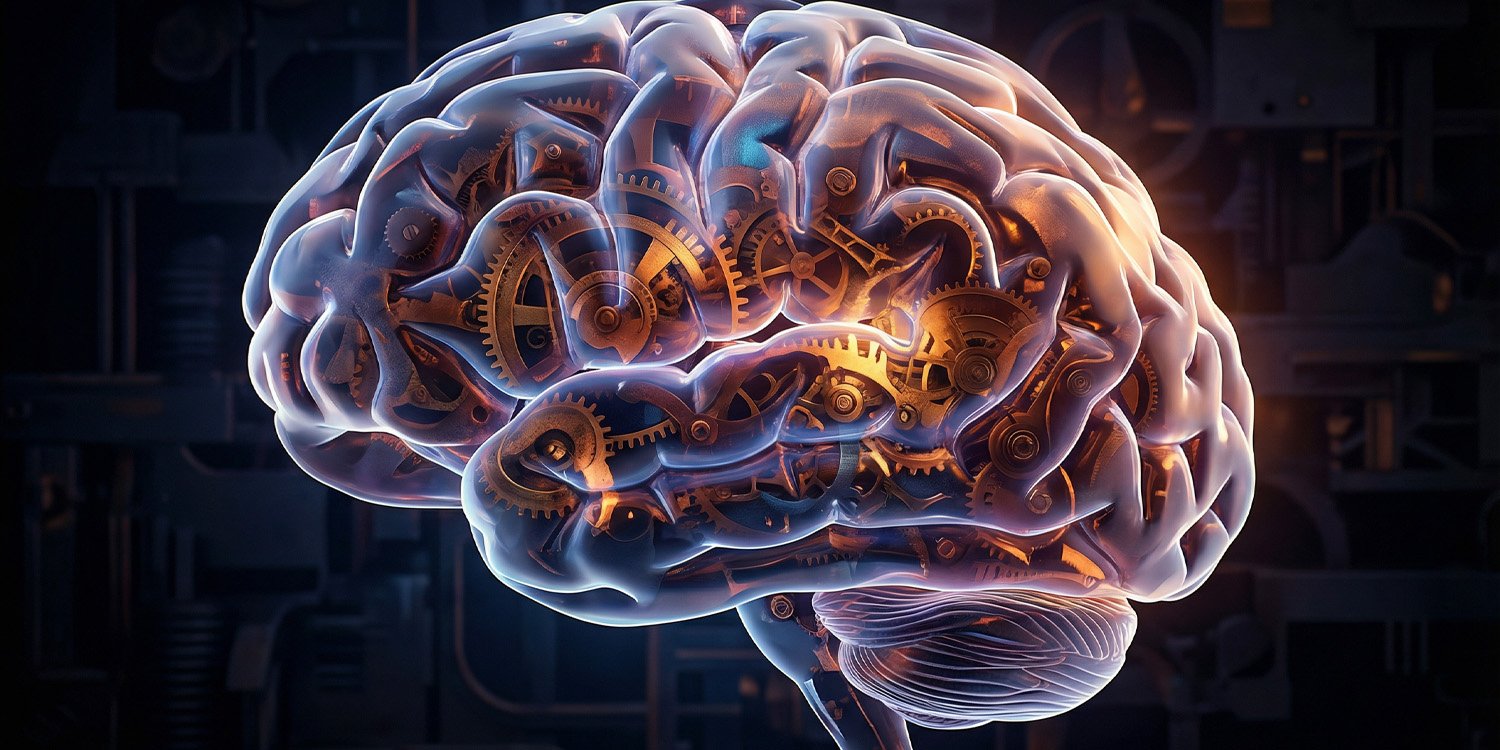
    New research published in communication biology It suggests that people who perform well on intelligence tests may have brains that can communicate more flexibly across distant regions. The study found that more diverse connections between major brain regions and more complex patterns of brain activity over time were associated with higher intelligence scores.

    Researchers have long sought to understand the biological basis of intelligence. Early research often focused on identifying specific brain regions responsible for higher cognitive abilities. In particular, the frontal and parietal lobes are often associated with reasoning, problem solving, and complex decision making. More recent theories suggest that intelligence may also depend on how flexibly brain networks can shift between different patterns of activity when solving problems.

    The researchers behind the study, led by Jonas A. Thiele of the University of Wurzburg in Germany, wanted to test these new ideas more directly. Specifically, we aimed to provide the first empirical test of the newly proposed multilayer processing theory of intelligence (MLPT), which suggests that human intelligence relies on processes operating across multiple spatial and temporal scales.

    Rather than studying brain activity while people were resting or performing simple tasks, they looked at brain activity while participants completed a well-known intelligence test called Raven’s Progressive Matrix. In this test, participants must look at a pattern of shapes and decide which parts correctly complete a logical sequence.

    To investigate these multiscale brain processes, the scientists analyzed two different datasets collected in separate laboratories. In the first dataset, the brain activity of 67 participants (26 women, mean age 23 years) was measured using functional magnetic resonance imaging (fMRI) while taking an intelligence test. The method tracks blood flow in the brain, allowing researchers to see which regions communicate with each other through different spatial networks during tasks.

    In the second dataset, 131 participants (65 women, average age 24 years) completed the same type of reasoning test and had their brain activity recorded using electroencephalography (EEG), which measures electrical signals produced by the brain. Unlike fMRI, EEG can capture very rapid changes in brain activity, allowing researchers to study how the complexity of brain signals changes over time.

    The fMRI results revealed a crucial nuance. It turns out that people who score high on intelligence tests don’t just have “stronger” connectivity throughout their brains. Instead, they demonstrated more diverse communication between frontal and parietal regions of the brain. These regions appear to act as highly efficient “connector hubs” linking disparate brain networks to coordinate information as participants solve complex problems.

    EEG analysis revealed that individuals with higher intelligence scores exhibited greater signal complexity on longer (coarser) timescales, suggesting richer and more flexible large-scale brain dynamics. At the same time, we observed a weaker and non-significant trend of reduced complexity on very short (fine) timescales. This may reflect simpler and more efficient local processing within smaller brain circuits.

    Together, these results support the idea that intelligence is not derived from a single brain region, but from how different regions work together effectively across different spatial and temporal scales.

    Thiele et al. concluded that: “Our findings provide the first empirical evidence for a key assumption of multilayer processing theory (MLPT), which posits that higher intelligence arises from more flexible global long-range processes operating on coarser timescales and coordinating simpler short-range processes within smaller neuronal ensembles on finer timescales.”

    Despite these insights, the researchers caution that the study has several limitations. For example, the fMRI scans and EEG recordings were obtained from different participant groups, so it was not possible to directly compare the two datasets. Additionally, the relatively small sample size may limit statistical power, and all participants were young, so the results may not necessarily generalize to children or older adults.

    The study, “Deciphering the Human Brain During Intelligence Tests,” was authored by Jonas A. Thiele, Joshua Faskowitz, Olaf Spons, Adam Chudarsky, Rex Jung, and Kirsten Hilger.


    Source link

    Visited 1 times, 1 visit(s) today
    Share. Facebook Twitter Pinterest LinkedIn Telegram Reddit Email
    Previous ArticleAI consumes as much energy as Iceland, but scientists aren’t worried
    Next Article Survey reveals more than 150,000 uncounted deaths due to new coronavirus infection
    healthadmin

    Related Posts

    Scientists discover new brain pathway that rapidly reduces diet-resistant body fat

    March 18, 2026

    Psychological reasons why we judge groups more harshly than individuals

    March 18, 2026

    Scientists discover how intestinal inflammation causes age-related memory loss

    March 18, 2026

    New psychology study reveals cognitive cost of smartphone notifications

    March 18, 2026

    Using AI to verify human advice can damage professional relationships

    March 18, 2026

    Brain scans reveal a link between childhood trauma and bipolar disorder in some patients with depression

    March 18, 2026
    Add A Comment
    Leave A Reply Cancel Reply

    Categories

    • Daily Health Tips
    • Discover
    • Environmental Health
    • Exercise & Fitness
    • Featured
    • Featured Videos
    • Financial Health & Stability
    • Fitness
    • Fitness Updates
    • Health
    • Health Technology
    • Healthy Aging
    • Healthy Living
    • Holistic Healing
    • Holistic Health & Wellness
    • Medical Research
    • Medical Research & Insights
    • Mental Health
    • Mental Wellness
    • Natural Remedies
    • New Workouts
    • Nutrition
    • Nutrition & Dietary Trends
    • Nutrition & Superfoods
    • Nutrition Science
    • Pharma
    • Preventive Healthcare
    • Professional & Personal Growth
    • Public Health
    • Public Health & Awareness
    • Selected
    • Sleep & Recovery
    • Top Programs
    • Weight Management
    • Workouts
    Popular Posts
    • the-pros-and-cons-of-paleo-dietsThe Pros and Cons of Paleo Diets: What Science Really Says April 16, 2025
    • Improve Mental Health10 Science-Backed Practices to Improve Mental Health… March 11, 2025
    • How Healthy Living Is Transforming Modern Wellness TrendsHow Healthy Living Is Transforming Modern Wellness… December 3, 2025
    • "The Best Daily Health Apps to Track Your Wellness Goals"The Best Daily Health Apps to Track Your Wellness… August 15, 2025
    • daily vitamin D needsWhy Sunlight Is Crucial for Your Daily Vitamin D Needs June 12, 2025
    • Healthy Living: Expert Tips to Improve Your Health in 2026Healthy Living: Expert Tips to Improve Your Health in 2026 November 16, 2025

    Demo
    Stay In Touch
    • Facebook
    • Twitter
    • Pinterest
    • Instagram
    • YouTube
    • Vimeo
    Don't Miss

    Lilly stock falls 7% since HSBC downgrade

    By healthadminMarch 18, 2026

    Shares of Indianapolis drugmaker Eli Lilly have fallen more than 7% since investment bank HSBC…

    Survey reveals more than 150,000 uncounted deaths due to new coronavirus infection

    March 18, 2026

    First test of new neuroscience theory shows how smart brains coordinate information

    March 18, 2026

    AI consumes as much energy as Iceland, but scientists aren’t worried

    March 18, 2026

    Subscribe to Updates

    Get the latest creative news from SmartMag about art & design.

    HealthxMagazine
    HealthxMagazine

    At HealthX Magazine, we are dedicated to empowering entrepreneurs, doctors, chiropractors, healthcare professionals, personal trainers, executives, thought leaders, and anyone striving for optimal health.

    Our Picks

    AI consumes as much energy as Iceland, but scientists aren’t worried

    March 18, 2026

    Scientists discover new brain pathway that rapidly reduces diet-resistant body fat

    March 18, 2026

    FDA approves blockbuster psoriasis drug J&J

    March 18, 2026
    New Comments
      Facebook X (Twitter) Instagram Pinterest
      • Home
      • Privacy Policy
      • Our Mission
      © 2026 ThemeSphere. Designed by ThemeSphere.

      Type above and press Enter to search. Press Esc to cancel.