


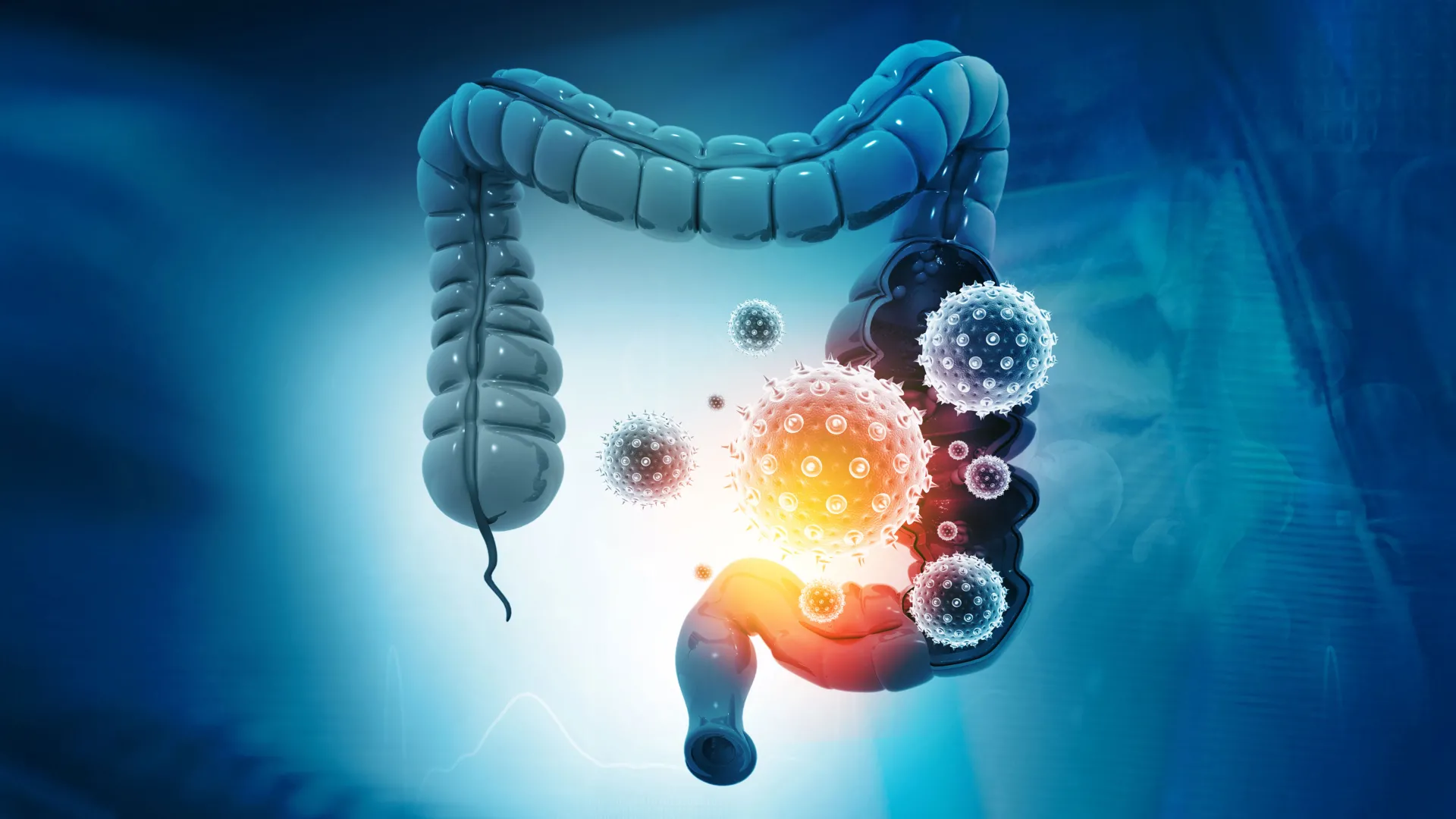
Colorectal cancer appears to be distinct from other cancers in surprising ways. New research from the University of East Anglia suggests the disease has a unique microbial ‘fingerprint’, a discovery that could change the way doctors understand and treat the disease.
Colorectal cancer is the fourth most common cancer in the UK and the second most common cause of cancer-related deaths. This new discovery could help clinicians better understand how the disease develops, how aggressive it becomes, and how patients respond to different treatments.
The research team analyzed whole genome sequencing (WGS) data from more than 9,000 cancer patients. The result is scientific translational medicinealso challenges the widely accepted assumption that every cancer type has a unique microbial signature.
“This study changes the way we think about the role of microbes in cancer,” said lead researcher Dr Abraham Gihawi from UEA Norwich Medical School.
How scientists analyzed tumor microbes
To conduct the study, researchers examined DNA sequence data from Genomics England from 11,735 cancer samples across 22 different cancer types.
“When we collect a cancer DNA sequence, we also get information from the DNA of the microorganisms in the sample,” Dr. Gihawi said.
“We wanted to determine the exact DNA composition of the microorganisms present in each sample, so we developed a computer program that removed the human DNA and analyzed the remaining microbial DNA.
“We then correlated this information with clinical data from patients regarding cancer type and clinical outcomes.
“Our findings challenge previous claims that each cancer type has a distinct microbiological signature or fingerprint.
“But importantly, as whole-genome sequencing becomes more commonplace in hospitals, we show that looking at microbes in tumor samples could be a powerful tool to improve cancer treatment at little additional cost.”
Colorectal cancer displays distinct microbial signatures
The analysis revealed a clear pattern. Of all the cancers studied, colorectal tumors were the only one that consistently showed a unique and distinguishable microbial community.
“Our results show that only colorectal tumors have clearly distinguishable microbial communities.
“We found that these microbial signatures are so specific that we can accurately distinguish colorectal tumors from other tumors. We hope this will help doctors diagnose the disease more accurately and researchers to study the microbes present in colorectal cancer.”
The study also points to broader clinical applications. In oral cancer, researchers have found that certain viruses, such as HPV (human papillomavirus), can be detected more accurately than some current diagnostic tests.
They also identified rare but dangerous viruses, such as human T-lymphotropic virus-1 (HTLV-1). These viruses can lie dormant in the body and later contribute to the development of cancer.
Microorganisms associated with survival and treatment response
The findings suggest that microbes may be doing more than simply coexisting with cancer. In some cases, they seem to be related to the patient’s physical condition.
“We found that certain types of bacteria are associated with decreased survival rates in some sarcoma cases. This may lead to further research and treatment options for these types of cancer,” Dr. Gihawi said.
“One of the most interesting things we discovered was that in some sarcoma cases, the presence of certain bacteria was associated with improved survival.
“This suggests that microbes could one day help doctors predict how patients will respond to treatments and open up new treatments,” he added.
Whole genome sequencing as a clinical tool
Experts say the study highlights the growing importance of genome sequencing in modern medicine.
Professor Daniel Brewer, from UEA’s Norwich School of Medicine, said: “This study highlights the increasing clinical value of whole genome sequencing in identifying pathogens that may otherwise go undetected, such as HTLV-1 and papillomaviruses.”
“By uncovering these hidden infections and providing insight into cancer prognosis, especially sarcomas, we demonstrate how genomic analysis is becoming an essential tool in precision medicine.
“Our findings also suggest that oral cancer may be an important diagnostic consideration in some cases, further highlighting the importance of comprehensive genomic profiling in clinical decision-making.”
Collaboration and funding
The project was led by UEA and involved researchers from multiple institutions including the University of Leeds, Quadrum Institute, Oxford Nanopore Technologies, London Cancer Research Institute, University of Manchester, National Institute for Health and Care Research (NIHR) Manchester Biomedical Research Centre, University of Athens (Greece), University of Liverpool, Cambridge University Hospitals NHS Foundation Trust, University College London and University of Southampton. University of North Carolina (USA) and Earlham Institute.
Funding for this research was provided by Big C Cancer Charity and Prostate Cancer UK.
