

Close Menu

    Subscribe to Updates

    Get the latest creative news from FooBar about art, design and business.

    What's Hot

    Popular pre-workout supplement linked to dangerous sleep deprivation

    March 9, 2026

    What are plasticizers? Do they have negative health effects?

    March 9, 2026

    Lilly CEO Ricks to collect $36.7 million salary package in 2025

    March 9, 2026
    Facebook X (Twitter) Instagram
    Facebook X (Twitter) Instagram
    Health Magazine
    • Home
    • Environmental Health
    • Health Technology
    • Medical Research
    • Mental Health
    • Nutrition Science
    • Pharma
    • Public Health
    • Discover
      • Daily Health Tips
      • Financial Health & Stability
      • Holistic Health & Wellness
      • Mental Health
      • Nutrition & Dietary Trends
      • Professional & Personal Growth
    • Our Mission
    Health Magazine
    Home » News » What are plasticizers? Do they have negative health effects?
    Environmental Health

    What are plasticizers? Do they have negative health effects?

    healthadminBy healthadminMarch 9, 2026No Comments5 Mins Read
    Share
    Facebook Twitter Reddit Telegram Pinterest Email


    Plasticizer is a general term for all chemicals that are added to materials (usually plastics or rubbers) to make them softer and more flexible. They are found in countless everyday items, including plastic shower curtains, shrink wrap, PVC raincoats, household flexible tubing and wire insulation.

    Plasticizers, also known as phthalates, are also found in cosmetics such as nail polish, lotions, and shampoos. Here they act as stabilizers and maintain consistency. It also helps make products like lotions more water-resistant and last longer.

    The use of certain plasticizers is prohibited or severely restricted in countries such as the EU, US, Canada, and Japan due to the potential for harmful effects on human health and the environment. However, it is still widely used elsewhere.

    Woman shopping at a supermarket in Los AngelesPlasticizers, which are added to plastics to make them more flexible, are commonly found in food packaging Image: Lucy Nicholson/REUTERS

    For example, restrictions have become particularly strict when it comes to children’s toys, and in recent years German researchers have reported unusually high concentrations of strictly regulated plasticizers in young children.

    Degradation products of the plasticizer mono-n-hexyl phthalate (MnHexP) were detected in 92% of urine samples from 259 children and adolescents collected across Germany in the spring and summer of 2025.

    An initial study in 2024 found the same substance in almost two-thirds of urine samples from 250 children aged 2 to 6 in the western state of North Rhine-Westphalia. This is a tenfold increase compared to three years ago.

    A nationwide survey by Germany’s federal environment agency, UBA, at the time had already detected the chemical in about a third of the adult population.

    “Based on recent results, we would not be surprised to find MnHexP in urine samples from children and adolescents,” he said. Dirk Messner, head of UBA, in mid-February. ”However, what surprised us was the large proportion of samples that were contaminated, and in some cases at very high concentrations. ”

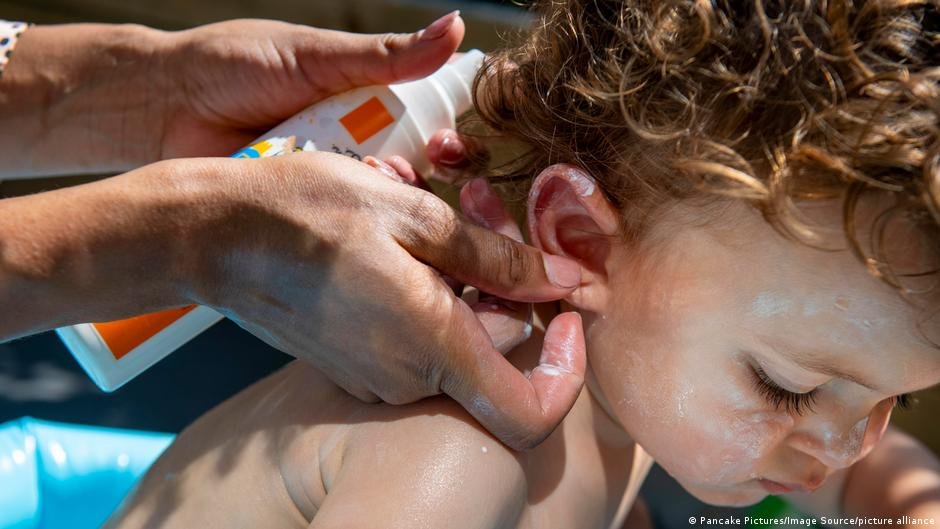
    UBA announced that a 2024 study identified sunscreens as a potential source of plasticizers. The agency added that this source is again likely to be included in the latest data collected in 2025, but other sources have not been ruled out.

    How do plasticizers adversely affect human health?

    Marieke Colossa Göring, a toxicologist at UBA until December 2025, told DW after the first study that the concentrations of the degradation product MnHexP detected in the children tested were high enough that in some cases “a health risk cannot be ruled out.” Still, most measurements remained below levels considered likely to cause harm.

    MnHexP is a potential byproduct that remains in the body after ingesting or absorbing di-n-hexyl phthalate (DnHexP) through the skin or respiratory tract, but it can also come from other sources. DnHexP has been classified as a “substance of very high concern” by the European Chemicals Agency since 2013, and its use is strictly regulated.

    Plasticizers everywhere

    To view this video, please enable JavaScript and consider upgrading to a web browser that supports HTML5 video.

    In a 2013 analysis, the European Chemicals Agency found that DnHexP is “toxic for reproduction” in humans and can adversely affect fertility or “harm the unborn child.” This also applies to phthalate byproducts found in urine samples.

    Phthalates are one of a group of plasticizers that have been used in the production of countless products and packaging over the years. However, some are considered endocrine disruptors when they leach from products or evaporate from surfaces and reach humans. That is, they can interfere with glands in the body that produce hormones that regulate growth, development, and reproduction.

    Several studies have linked long-term exposure to a number of health problems in children, including obesity, diabetes, high blood pressure, fertility, and neurological and respiratory problems. Animal studies also suggest that plasticizers may affect the risk of diabetes, obesity, and high blood pressure.

    Are there alternatives to plasticizers?

    In the face of these concerns, researchers have investigated the potential of bio-based plasticizers. These include alternatives made from plants such as wheat, corn, rice and rapeseed oil, which may reduce the damage caused by traditional plasticizers.

    Indian town known for non-toxic wooden toys

    To view this video, please enable JavaScript and consider upgrading to a web browser that supports HTML5 video.

    However, some of these alternatives still do not perform as well as the plasticizers that have been used for decades, or are too expensive to manufacture. Also, although the health effects are less severe, they can still be associated with respiratory illnesses and dermatitis. Further research is also needed to examine whether these alternatives may have unintended environmental impacts.

    Experts say one way to avoid plasticizers and their many drawbacks is to use products that are certified phthalate-free by their manufacturers. Certain plastic products are clearly labeled as such, and alternatives made from other materials (wooden toys, glass containers, metal camping utensils) don’t contain plastic in the first place.

    This article was originally published on September 13, 2024 and updated on March 9, 2026.

    Editor: Jennifer Collins


    Source link

    Visited 1 times, 1 visit(s) today
    Share. Facebook Twitter Pinterest LinkedIn Telegram Reddit Email
    Previous ArticleLilly CEO Ricks to collect $36.7 million salary package in 2025
    Next Article Popular pre-workout supplement linked to dangerous sleep deprivation
    healthadmin

    Related Posts

    Why smoke from Iran’s burning refineries is more dangerous than urban smog

    March 9, 2026

    Microplastics are creating a tiny microbial battlefield in farm soil

    March 8, 2026

    How President Trump’s EPA rollback will give US states new tools to fight climate change | US News

    March 8, 2026

    More than 500,000 tonnes of sewage sludge spread across Scottish fields

    March 8, 2026

    How protecting nature makes the world safer

    March 6, 2026

    ‘Fundamental conflict’: Ethics view of Trump: EPA chemical officials retract their statements

    March 6, 2026
    Add A Comment
    Leave A Reply Cancel Reply

    Categories

    • Daily Health Tips
    • Discover
    • Environmental Health
    • Exercise & Fitness
    • Featured
    • Featured Videos
    • Financial Health & Stability
    • Fitness
    • Fitness Updates
    • Health
    • Health Technology
    • Healthy Aging
    • Healthy Living
    • Holistic Healing
    • Holistic Health & Wellness
    • Medical Research & Insights
    • Mental Health
    • Mental Wellness
    • Natural Remedies
    • New Workouts
    • Nutrition
    • Nutrition & Dietary Trends
    • Nutrition & Superfoods
    • Nutrition Science
    • Pharma
    • Preventive Healthcare
    • Professional & Personal Growth
    • Public Health
    • Public Health & Awareness
    • Selected
    • Sleep & Recovery
    • Top Programs
    • Weight Management
    • Workouts
    Popular Posts
    • the-pros-and-cons-of-paleo-dietsThe Pros and Cons of Paleo Diets: What Science Really Says April 16, 2025
    • Improve Mental Health10 Science-Backed Practices to Improve Mental Health… March 11, 2025
    • How Healthy Living Is Transforming Modern Wellness TrendsHow Healthy Living Is Transforming Modern Wellness… December 3, 2025
    • daily vitamin D needsWhy Sunlight Is Crucial for Your Daily Vitamin D Needs June 12, 2025
    • Healthy Living: Expert Tips to Improve Your Health in 2026Healthy Living: Expert Tips to Improve Your Health in 2026 November 16, 2025
    • The Science Behind Keto Diets: Is It Right for You?The Science Behind Keto Diets: Is It Right for You? April 11, 2025

    Demo
    Stay In Touch
    • Facebook
    • Twitter
    • Pinterest
    • Instagram
    • YouTube
    • Vimeo
    Don't Miss

    Popular pre-workout supplement linked to dangerous sleep deprivation

    By healthadminMarch 9, 2026

    New analysis from Canadian research on youth behavior It suggests that teenagers and young adults…

    What are plasticizers? Do they have negative health effects?

    March 9, 2026

    Lilly CEO Ricks to collect $36.7 million salary package in 2025

    March 9, 2026

    Therapists test AI dating simulator to help chronically single men practice romantic skills

    March 9, 2026

    Subscribe to Updates

    Get the latest creative news from SmartMag about art & design.

    HealthxMagazine
    HealthxMagazine

    At HealthX Magazine, we are dedicated to empowering entrepreneurs, doctors, chiropractors, healthcare professionals, personal trainers, executives, thought leaders, and anyone striving for optimal health.

    Our Picks

    Therapists test AI dating simulator to help chronically single men practice romantic skills

    March 9, 2026

    Scientists create slippery nanopores that overcharge blue energy

    March 9, 2026

    Fierce Healthcare’s 2026 Fierce 15 on the New York Stock Exchange

    March 9, 2026
    New Comments
      Facebook X (Twitter) Instagram Pinterest
      • Home
      • Privacy Policy
      • Our Mission
      © 2026 ThemeSphere. Designed by ThemeSphere.

      Type above and press Enter to search. Press Esc to cancel.