It feels like everyone is talking about microplastics. Trends in web searches, scientific papers, and news headlines have steadily increased over the past decade and have significantly spiked in the past two years as evidence of plastic particles in the human body.
In a world full of plastic particles, have you ever stopped and really thought about how these discoveries make you feel? Ambiguous? anger? Fed up? Nervous?
As a science communicator, I know that sometimes facts alone don’t communicate. To personalize my connection to plastic pollution, I turned to art. It’s about creating a collage that connects us with the microplastics inside us.
When I started reporting on plastic pollution more than a decade ago, the world’s perception of this global human-induced crisis was changing. Until then, plastic pollution was primarily portrayed as a “marine debris” problem resulting from coastal litterbugs and a lack of recycling. Reports about the Great Pacific Garbage Patch reminded me of mountains of garbage floating isolated in the Pacific Ocean.
But then researchers and documentarians like me began to pay attention to an even more disturbing reality. That means plastic products and the particles they emit are rapidly saturating the world’s oceans as plastic production is out of control. Plastics do not break down like natural materials. Instead, it breaks down into smaller pieces, microplastics, and even smaller nanoplastics, remaining plastic forever.
As a freelance photojournalist, I have traveled more than 10,000 nautical miles with researchers to the Great Pacific Garbage Patch in the South Pacific, across the Atlantic Ocean, around the north and west coasts of Iceland, and beyond, documenting the scientists, volunteers, and sailors who collect plastic particles on and below the surface of the ocean. It was shocking to see up close the researchers’ equipment, filled with colorful confetti-like pieces of plastic.
But having spent so much time seeing plastic in the ocean, I wondered. If plastic products (bags, drink bottles, building materials, children’s and pet toys, clothing, food packaging, furniture, shoes, car interiors, tires, etc.) are always around us on land, and the planet’s ecosystems, including the oceans, are connected to each other and to all of us, how can we isolate this crisis from the oceans alone?
These are the questions I’ve been working to answer in journalism and in my first book, Thicker Than Water: The Quest for Solutions to the Plastic Crisis.
Sure enough, as the years went on, more evidence of an astonishing range of plastic particles came to light. Microplastics, and even smaller sized nanoplastics, contaminate the deepest ocean trenches, the highest mountains, oceans and freshwater, soil, weather, indoor and outdoor air, house dust, plants and trees, food and drinking water, and even outer space.
In 2019, I visited scientists in Denmark. They were using a “breathing” robot to study the possibility of inhaling plastic particles. That’s when we realized there was a previously unexplored area where plastic particles could be lurking inside our own bodies.
Despite all kinds of evidence of plastic particles in ecosystems, plants, and wildlife, it wasn’t until recently that people started looking inward at plastics. Scientists have faced numerous hurdles when studying plastics and their effects on the human body. First, plastics are difficult to avoid even in laboratory experiments and environments and can lead to pollution. Additionally, scientists are developing standardized methods to detect plastic particles in the human body. There is also the challenge of finding willing volunteers to perform physical examinations. Recent human research participants have included cadaveric brains, cancer tissue samples, removed tonsils, feces, and placenta.
Despite these and other challenges, research into the plastics in our bodies is moving forward rapidly, as concerns about the health effects of microplastics and nanoplastics grow. Scientists have uncovered at least some of the serious effects of plastic pollution on humans. Heart disease patients who found microplastics in their carotid artery plaques also had inflammation elsewhere in their bodies and had a significantly increased risk of heart attack, stroke, and death from any cause compared to patients with no signs of microplastics traveling through their bloodstream.
Plastic particles pose more than just a physical hazard. Plastics also contain more than 16,000 chemicals. Plastic particles and chemicals have a negative impact on the fertility and reproductive health of everyone: women and men, adults and children alike. Cells in the human body exposed to microplastic particles undergo cell damage and cell death in laboratory experiments. Scientists are also noticing links between microplastics and Alzheimer’s disease, dementia, Parkinson’s disease, and other neurodegenerative diseases.
Although the number of particles found has been questioned recently in the news, researchers have definitely found plastic particles in people’s bloodstream, bones, bone marrow, brain, breast milk, adult and infant feces, hair, heart, kidneys, liver, lungs, penis, placenta, saliva and phlegm, semen, skin, spleen, stomach, testes, throat and airways, urine, uterus, and veins.
And plastic pollution doesn’t start and end with plastic. This includes all the pollution to ecosystems and humans, from the moment plastic’s fossil fuel components are extracted from the earth, through its production, storage, transportation, and final disposal into landfills, incinerators, and the environment.
Despite all this, many people still haven’t heard about or fully understand the risks of plastic pollution. I wondered how I could break through this message.
When telling the story of plastic pollution, I have primarily worked through the mediums of writing and photography. But I also used my love of collage and the emotional power of art to inspire care and action. My goal in creating a series of microplastic and watercolor collages focusing on plastic particles in the human body is to juxtapose the beauty of the two mediums: the organic flow of watercolor and the artificiality of plastic.
I want people to be appropriately shocked when it comes to plastic, which is also a part of themselves.
That’s certainly true.


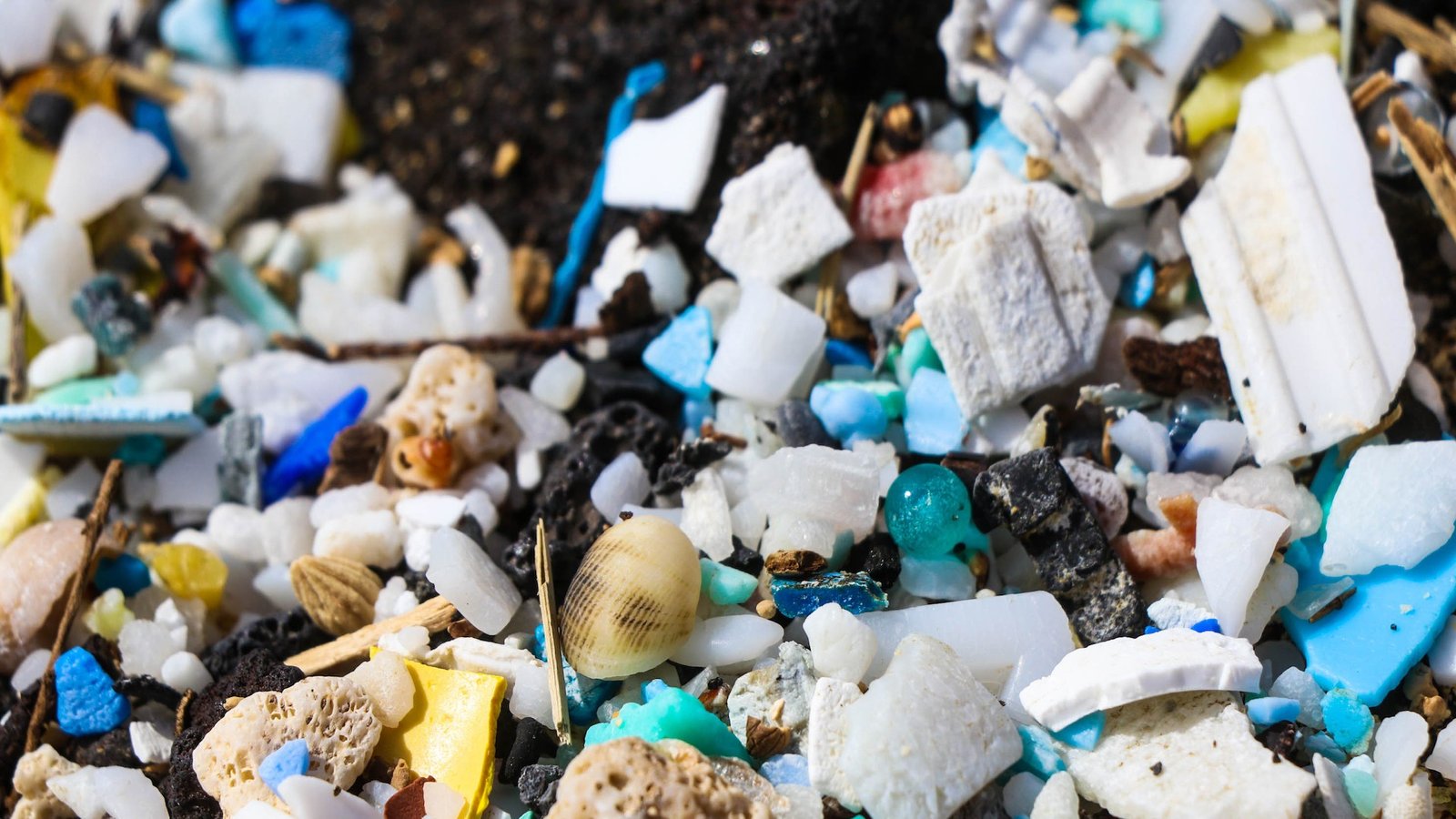
These pieces are made from microplastics collected by volunteers and staff from the Hawaii Wildlife Foundation, an organization that cleans up Kamilo Point, one of the most plastic-contaminated beaches in the United States.
Its shores collect layer after layer of plastic because it juts out into the path of ocean circulation (ocean currents) that carry large amounts of plastic into what we call the garbage patch. I remember feeling sad and shocked when I visited Kamilo Point in 2016, dipped my hands in the ocean waves, and pulled out a handful of plastic.
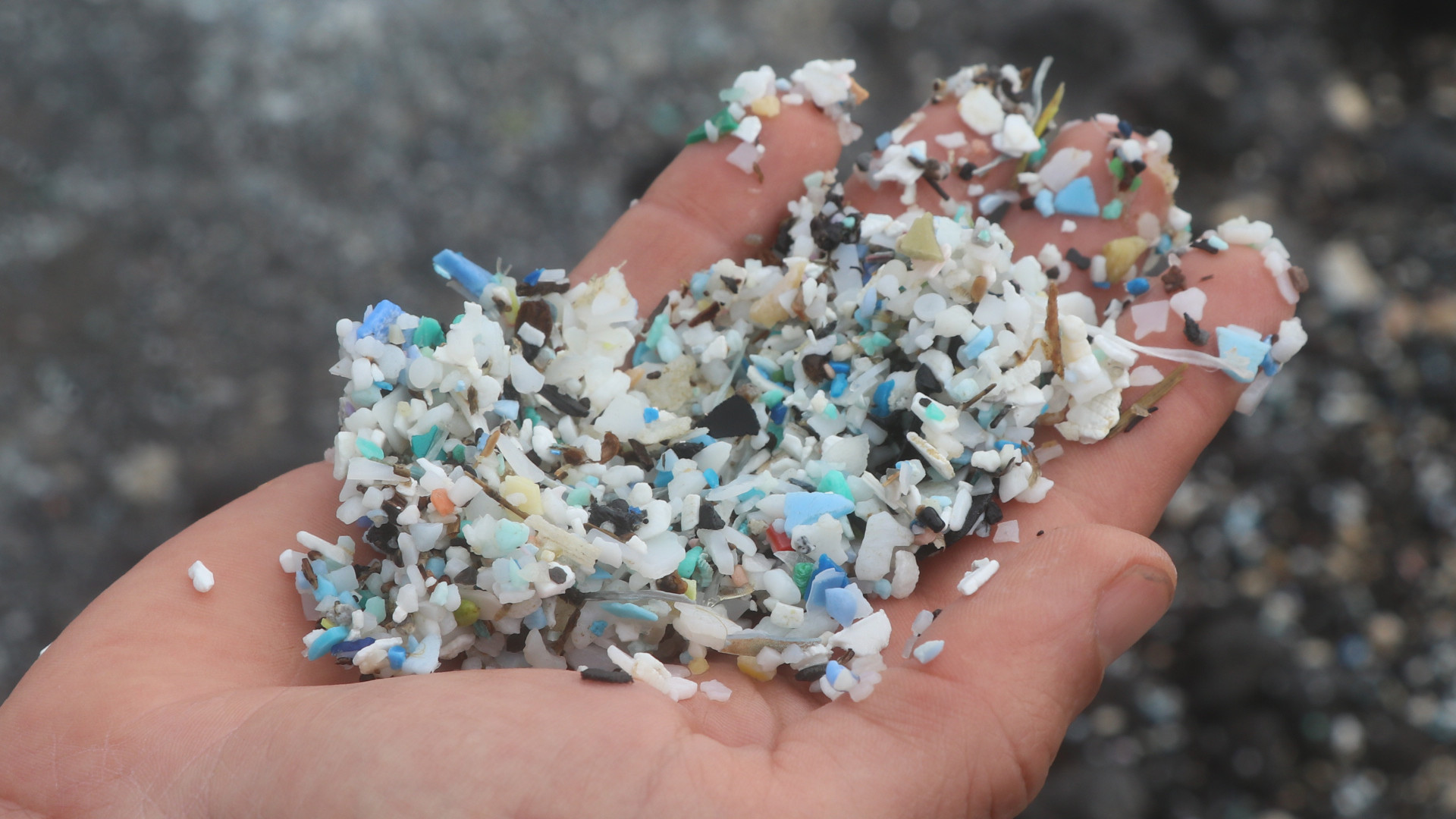 Marine microplastics. © 2018 Erica Cirino. Unauthorized reproduction is prohibited.
I have shared my microplastic collages with people all over the world. The reactions usually follow the same trajectory. First, enjoy the colors and beauty of these mixed media works. Then I realized that the colorful mosaic of small pieces were plastic particles. And we are disgusted by the realization that these plastic particles exist in and around us.
“Wait…are these inside our bodies?” someone who recently saw my plastic collage asked, pointing to the particles on the paper in front of him. It’s gratifying, if somewhat harsh, to see people connect the plastic particles of my art with their bodies in the way I intended.
All of this may feel overwhelming, but the good news is that you can take action to combat plastic pollution.
Change doesn’t happen overnight. But we have the solution we need today. Our leaders need to demand that companies stop mass producing plastic and drastically reduce it. And you can start by replacing single-use plastics with proven, reusable, refillable alternatives like ceramic, glass, stainless steel, and wood. Another step is to require manufacturers and retailers to reduce wasteful packaging.
We can all embrace the culture of necessary change and change our lives to reduce the amount of plastic we use whenever we can. The broader systems changes we need will necessarily require communities to grow more resilient and self-reliant. We need to learn how to grow, repair, and share our ways toward a less wasteful world, a world that resembles our planet and wastes nothing. And this is good for everyone.
The reason I left wildlife rehabilitation for photojournalism was to communicate the issues facing the planet, people, and wildlife so we can address and prevent them. Rather than continuing to treat the symptoms of human-caused problems, we heal sick and injured wild animals and return them to the same dangers they faced in the first place. We now know that plastic pollution affects everyone, everywhere.
But now the story is changing again. we have the solution you need. Will we come face to face with the microplastics inside us?
I believe it is possible. And even if it means I can never make art with plastic again, that’s a change I can live with.
 We will republish this article for free! Please read our reprint policy. Environmental muralist’s animal drawings bring urban oasis to concrete jungle