


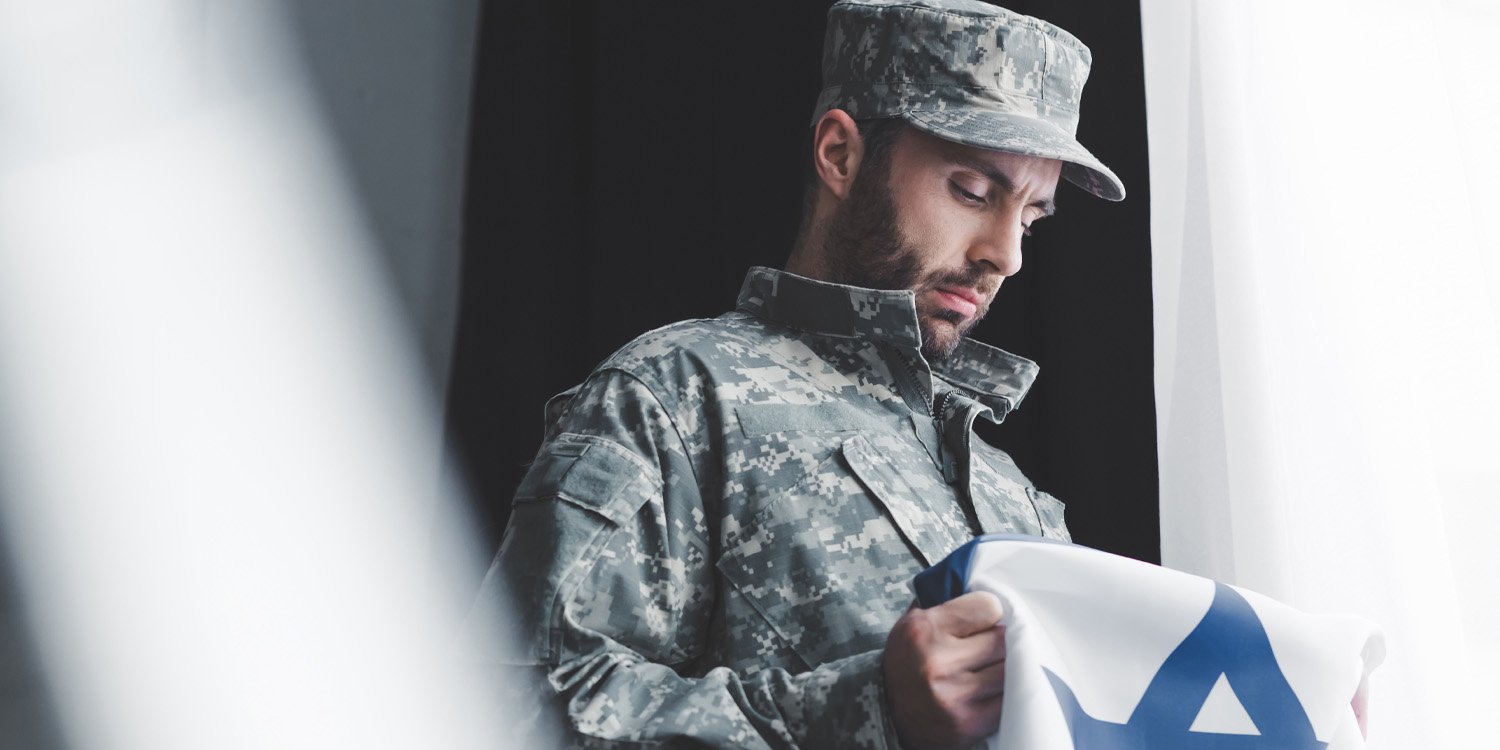
A study conducted in Israel during the 2023 war with Hamas found that people who reported greater unpredictability in childhood tended to have greater psychological distress during the war. They also tended to suffer from greater psychological distress and emotional dysregulation before the war began. The paper was published in. Affective Disorders Journal.
Childhood unpredictability refers to the extent to which a child’s environment is unstable, inconsistent, or difficult to predict over time. This includes experiences such as frequent changes in caregivers, disruption in the home, inconsistent routines, and sudden changes in resources or safety. Unlike simple deprivation, unpredictability refers to variability rather than simply a lack of input or support.
Research in developmental psychology shows that children are highly sensitive not only to what they receive, but also to how stable that condition is. High unpredictability can shape systems related to cognitive and emotional development, particularly learning, stress, and decision-making. For example, children in unpredictable environments may become more alert and sensitive to potential threats. They may also prioritize short-term rewards over long-term plans, which can be adaptive in volatile situations.
Study author Ohad Shepsenwolu and his colleagues point out that life history theory interprets changes in cognitive and emotional responses caused by unpredictability as strategic responses to environmental conditions, creating so-called “fast” life history strategies. This is a strategy that prioritizes rapid growth, early reproduction, and increased mating effort to produce more offspring, but because the future is unpredictable, long-term consequences are greatly downplayed. They conducted a study that followed Israeli adults over six years to examine emotion dysregulation and psychological distress before and during the Israel-Hamas war.
Study participants were 720 Israeli Jews who participated in the longitudinal study in January 2018 and completed subsequent assessments in April 2022, December 2023, and March 2024. Age at the start of the study ranged from 18 to 64 years, with a mean age of 43 years. On average, they had 1.75 children and almost 53% of participants were male.
Study participants completed assessments of psychological distress (SCL-10R), emotion dysregulation (Difficulties with Emotion Regulation Scale – 18), and childhood unpredictability. The early life unpredictability assessment consisted of six questions asking about three types of unpredictability experienced during the first decade of life: changes in economic circumstances, moving to a different environment, and changes within the family.
For the 2023 and 2024 assessments, participants also answered four items assessing direct exposure to the Israeli-Hamas war in the past three months. They reported how often they experienced sirens or alarms, heard explosions, felt their lives were in danger, and felt their family members’ lives were in danger.
The results showed that in the prewar period, greater unpredictability in childhood was associated with greater psychological distress and emotional dysregulation. Both of these traits have increased significantly across the board since the war began. However, the spike in psychological distress after the start of war was much stronger for individuals who had greater unpredictability earlier in life.
Interestingly, the increase in emotion dysregulation during war was not dependent on childhood unpredictability. Participants’ ability to regulate their emotions deteriorated at roughly the same rate regardless of their childhood environment. Furthermore, among individuals directly exposed to war, childhood unpredictability was associated with significantly increased psychological distress.
“These findings demonstrate that the Israel-Hamas war took an emotional and psychological toll on Israeli adults. Furthermore, they suggest that unpredictability in childhood is a common risk factor for emotion dysregulation and psychological distress in adulthood and predicts poorer mental health among those exposed to war,” the study authors concluded.
This study contributes to the scientific understanding of the association between childhood unpredictability and later psychological characteristics. However, it should be noted that the assessment of childhood unpredictability is based on retrospective recall of childhood experiences provided by adult participants, leaving room for recall bias to influence the results. Additionally, the researchers noted that the sample focused only on Israeli Jews, highlighting the need for similar studies among Arab citizens of Israel and Palestinians in Gaza, who have also been severely affected by the conflict. Finally, the study design does not allow us to draw strict causal inferences from the results.
The paper, “The association between childhood unpredictability and mental health during the Israel-Hamas war,” was authored by Ohad Shepsenwohl, Dvora Shmulewitz, Vera Svirski, and Mario Mikulincer.
