


In 2009, investigators uncovered a disturbing scandal at a cemetery outside Chicago. Employees at Burr Oak Cemetery in Alsip, Illinois, are accused of digging up old graves, moving remains to other parts of the cemetery, and then reselling the newly emptied burial grounds. When the case finally went to trial in 2015, a surprisingly small piece of evidence played a key role. It was a small lump of moss.
New research published in journal forensic research Now, the first detailed scientific explanation of the study has been provided. Researchers explain exactly how moss helped prove that a crime occurred.
Moss expert receives unexpected phone call
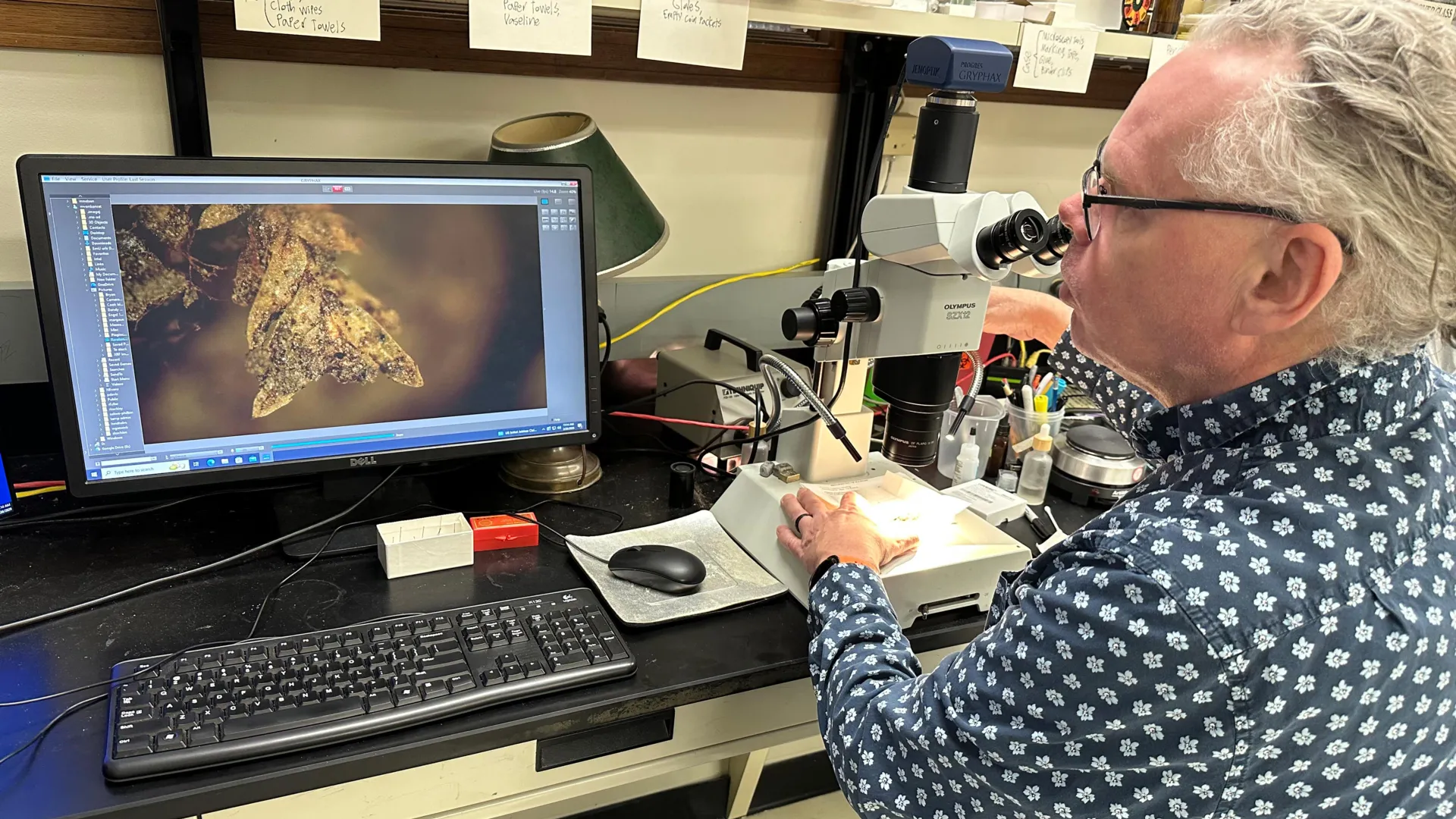
Matt von Conrad, lead author of the study and head of botanical collections at Chicago’s Field Museum, likes watching detective shows on TV (the new paper is named after the BBC’s “Silent Witness”). Still, he never expected his expertise with moss to become part of an actual criminal investigation.
“One day in 2009, I answered the phone and it was the FBI, asking if I could help them identify the plant,” von Conrad said.
Agents then brought small moss samples to the Field Museum. Plant fragments were found about 8 inches below the soil, alongside human remains that had apparently been reburied elsewhere in the cemetery.
“The researchers wanted to know what type of moss it was and how long it had been buried in the soil,” von Conrad says.
Identifying the type of moss
To answer the first question, von Conrad and his colleagues analyzed the samples under a microscope and compared them to preserved moss specimens held in museum collections. The plant was identified as Fissidenstaxifolius, commonly referred to as pocket moss.
The researchers then looked at the type of moss growing around the area where the body was found. Interestingly, this particular species did not exist there.
“We looked at different types of moss growing near the crime scene, and none of them were growing there,” von Conrad said. “But when we investigated the rest of the cemetery, we found huge colonies of that type of moss growing in the same areas where investigators suspected the bones might have been unearthed. So we had pretty strong evidence that the remains came from this other section of the cemetery.”
Find out how long the moss was buried
Identifying the type of moss helped investigators track where the remains likely came from, but prosecutors also needed to establish when the bones were moved. The defendants argued that someone may have vandalized the graves and reburied the remains before they began working at the cemetery.
The moss was buried with the relocated ruins, so estimating how long the plants were underground could help establish a timeline.
“Moss is a bit of an oddball,” says von Conrad. “Moss has an interesting physiology; even when it’s dried and stored dead, it still has an active metabolism and a small number of cells may still be active. The amount of metabolic activity decreases over time, so we can tell how long ago a moss sample was collected.”
Chlorophyll analysis reveals timeline
Scientists can estimate a plant’s metabolic activity by examining chlorophyll, the green pigment that enables plants to photosynthesize. Chlorophyll gradually degrades as plant tissues are destroyed and cells stop functioning.
The researchers measured how much light chlorophyll absorbs in moss samples of known age. These included moss that had been in the museum’s collection for 14 years, as well as newly collected specimens. They then performed the same analysis on moss recovered from graveyards.
They found that the moss had likely been underground for only one to two years. The discovery strengthened the case against the cemetery workers, who were ultimately convicted in 2015 of desecrating bodies.
Moss evidence in rare forensic case
“From time to time, cases arise in which the FBI must bring in experts to assist in gathering evidence, conduct analysis, present evidence to prosecutors, and testify about their work as necessary to secure a conviction. “This was one of the cases in which we worked with the Plant Program, and it turned out to be extremely valuable because the plant material in the cemetery was key to indicting and convicting four people,” said Doug Secom, a former FBI agent who worked on the case and is a co-author of the new paper.
After investigating the Burr Oak Cemetery, von Conrad was asked to assist with several other cases related to moss. Still, such cases remain rare in forensic medicine. In 2025, he and several co-authors published another study investigating the use of moss and other bryophytes as evidence in criminal investigations. Their research uncovered only about a dozen such incidents over the past century.
The untapped forensic potential of moss
“Moss is often overlooked, but we hope that our research will help raise awareness that other plant groups besides flowering plants exist and that they play a very important role in society and in our surroundings,” von Conrad says. “But most importantly, we want to focus on this microscopic flora as a law enforcement tool. If we can highlight moss as potential evidence, we may be able to help a family somewhere in the future.”
