

Close Menu

    Subscribe to Updates

    Get the latest creative news from FooBar about art, design and business.

    What's Hot

    Why the brain becomes unbalanced as we age

    March 25, 2026

    First atomic movie reveals hidden causes of radiation damage

    March 25, 2026

    Most Americans don’t know this food increases the risk of colon cancer

    March 25, 2026
    Facebook X (Twitter) Instagram
    Facebook X (Twitter) Instagram
    Health Magazine
    • Home
    • Environmental Health
    • Health Technology
    • Medical Research
    • Mental Health
    • Nutrition Science
    • Pharma
    • Public Health
    • Discover
      • Daily Health Tips
      • Financial Health & Stability
      • Holistic Health & Wellness
      • Mental Health
      • Nutrition & Dietary Trends
      • Professional & Personal Growth
    • Our Mission
    Health Magazine
    Home » News » This tiny implant smaller than a grain of salt can read your brain
    Nutrition Science

    This tiny implant smaller than a grain of salt can read your brain

    healthadminBy healthadminMarch 25, 2026No Comments2 Mins Read
    This tiny implant smaller than a grain of salt can read your brain
    Share
    Facebook Twitter Reddit Telegram Pinterest Email


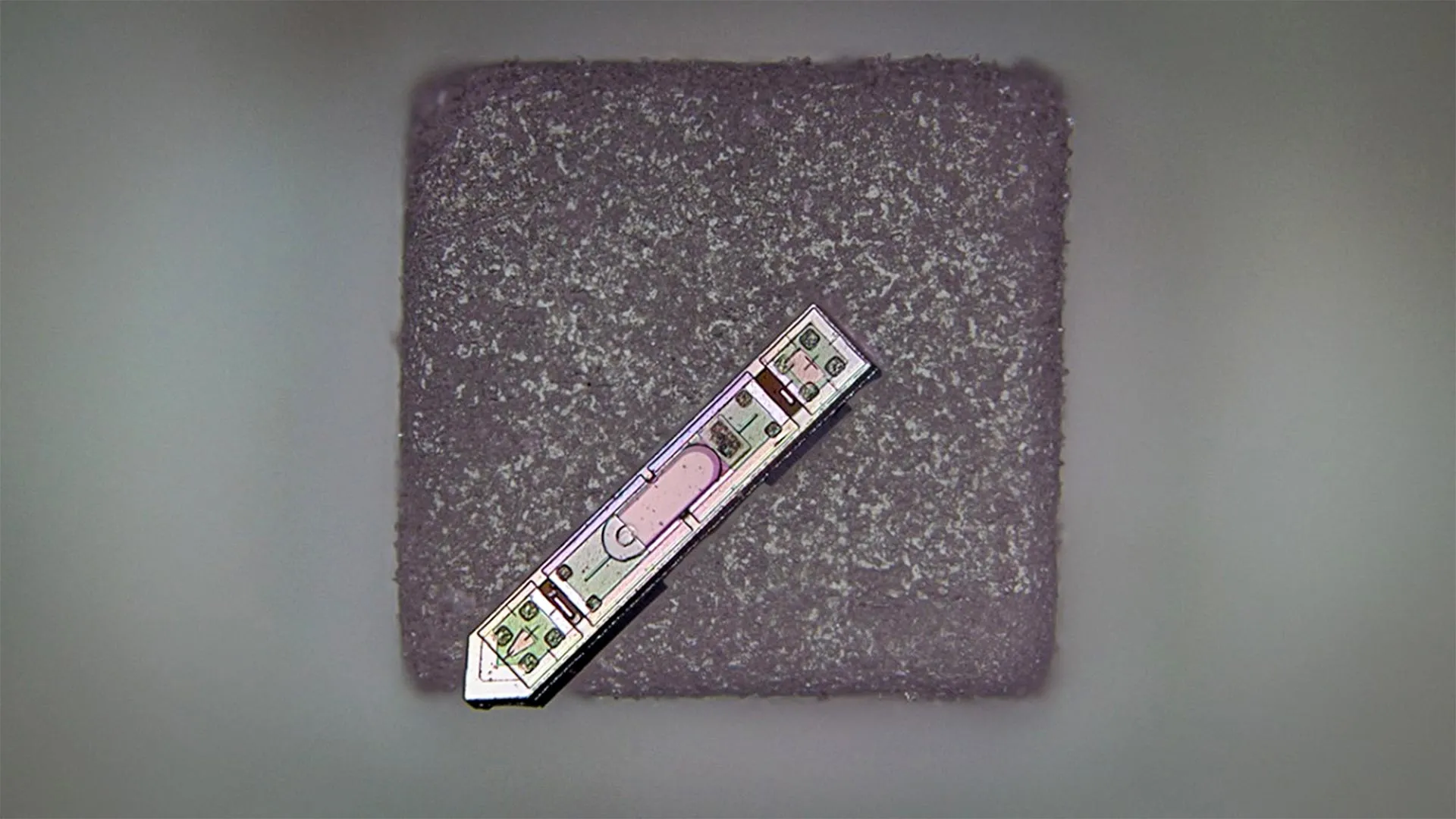
    Cornell University researchers and collaborators have developed an entirely tiny neural implant. Despite its size, the device can wirelessly transmit brain activity data from live animals for more than a year.

    Progress reported in nature electronicsshows that microelectronic systems can operate on very small scales. This could open the door to new approaches in brain monitoring, biointegrated sensors, and other medical and technological applications.

    What is a MOTE device

    This device is known as a microscale optoelectronic tetherless electrode (MOTE). Its development was led by Alyosha Molnar, a professor in the Department of Electrical and Computer Engineering at Cornell University, and Seung-woo Lee, an assistant professor at Nanyang Technological University. Lee started working on this technology early on as a postdoctoral fellow in Molnar’s lab.

    How implants use light to send brain signals

    MOTE works using red and infrared laser beams that safely pass through brain tissue. It sends data back by emitting small pulses of infrared light that encode electrical signals from the brain.

    At the core of the device is a semiconductor diode made from aluminum gallium arsenide. This component captures incoming light to power the system and emits light to transmit data. The implant also includes a low-noise amplifier and optical encoder, both built with the same type of semiconductor technology used in everyday microchips.

    The device measures approximately 300 microns long and 70 microns wide.

    “As far as we know, this is the smallest neural implant that measures electrical activity in the brain and reports it wirelessly,” Molnar said. “By using pulse position modulation in the code, for example, the same code used in optical communications in satellites, we can successfully retrieve the data optically while using very little power for communication.”

    Future applications of brain and body monitoring

    Molnar said the materials used in MOTE could allow researchers to record brain activity during MRI scans, something that is nearly impossible with current implants. The technology could be applied to other parts of the body, including the spinal cord, and could eventually be combined with future innovations such as optoelectronics embedded in artificial skull plates.


    Source link

    Visited 1 times, 1 visit(s) today
    Share. Facebook Twitter Pinterest LinkedIn Telegram Reddit Email
    Previous ArticleiXCells Biotechnologies joins international collaboration to assess chemotherapy toxicity in human organoids
    Next Article Systematic review identifies stress-induced biological triggers in oncology
    healthadmin

    Related Posts

    Why the brain becomes unbalanced as we age

    March 25, 2026

    First atomic movie reveals hidden causes of radiation damage

    March 25, 2026

    Most Americans don’t know this food increases the risk of colon cancer

    March 25, 2026

    Fathers face increased risk of depression in the first year after giving birth

    March 25, 2026

    Bees dance better when they dance with an audience.

    March 25, 2026

    Scientists have solved a big mystery about how the brain stores memories.

    March 25, 2026
    Add A Comment
    Leave A Reply Cancel Reply

    Categories

    • Daily Health Tips
    • Discover
    • Environmental Health
    • Exercise & Fitness
    • Featured
    • Featured Videos
    • Financial Health & Stability
    • Fitness
    • Fitness Updates
    • Health
    • Health Technology
    • Healthy Aging
    • Healthy Living
    • Holistic Healing
    • Holistic Health & Wellness
    • Medical Research
    • Medical Research & Insights
    • Mental Health
    • Mental Wellness
    • Natural Remedies
    • New Workouts
    • Nutrition
    • Nutrition & Dietary Trends
    • Nutrition & Superfoods
    • Nutrition Science
    • Pharma
    • Preventive Healthcare
    • Professional & Personal Growth
    • Public Health
    • Public Health & Awareness
    • Selected
    • Sleep & Recovery
    • Top Programs
    • Weight Management
    • Workouts
    Popular Posts
    • the-pros-and-cons-of-paleo-dietsThe Pros and Cons of Paleo Diets: What Science Really Says April 16, 2025
    • Improve Mental Health10 Science-Backed Practices to Improve Mental Health… March 11, 2025
    • How Healthy Living Is Transforming Modern Wellness TrendsHow Healthy Living Is Transforming Modern Wellness… December 3, 2025
    • daily vitamin D needsWhy Sunlight Is Crucial for Your Daily Vitamin D Needs June 12, 2025
    • Healthy Living: Expert Tips to Improve Your Health in 2026Healthy Living: Expert Tips to Improve Your Health in 2026 November 16, 2025
    • "The Best Daily Health Apps to Track Your Wellness Goals"The Best Daily Health Apps to Track Your Wellness… August 15, 2025

    Demo
    Stay In Touch
    • Facebook
    • Twitter
    • Pinterest
    • Instagram
    • YouTube
    • Vimeo
    Don't Miss

    Why the brain becomes unbalanced as we age

    By healthadminMarch 25, 2026

    Lena Ting and her team at Emory University set out to understand how aging and…

    First atomic movie reveals hidden causes of radiation damage

    March 25, 2026

    Most Americans don’t know this food increases the risk of colon cancer

    March 25, 2026

    Fathers face increased risk of depression in the first year after giving birth

    March 25, 2026

    Subscribe to Updates

    Get the latest creative news from SmartMag about art & design.

    HealthxMagazine
    HealthxMagazine

    At HealthX Magazine, we are dedicated to empowering entrepreneurs, doctors, chiropractors, healthcare professionals, personal trainers, executives, thought leaders, and anyone striving for optimal health.

    Our Picks

    Fathers face increased risk of depression in the first year after giving birth

    March 25, 2026

    Systematic review identifies stress-induced biological triggers in oncology

    March 25, 2026

    This tiny implant smaller than a grain of salt can read your brain

    March 25, 2026
    New Comments
      Facebook X (Twitter) Instagram Pinterest
      • Home
      • Privacy Policy
      • Our Mission
      © 2026 ThemeSphere. Designed by ThemeSphere.

      Type above and press Enter to search. Press Esc to cancel.