

Close Menu

    Subscribe to Updates

    Get the latest creative news from FooBar about art, design and business.

    What's Hot

    Your brain can be tricked into liking artificial sweeteners

    April 9, 2026

    The world is getting brighter at night, but it’s getting darker in some places

    April 9, 2026

    Mathematical model reveals the psychology behind authoritarian decision-making

    April 9, 2026
    Facebook X (Twitter) Instagram
    Facebook X (Twitter) Instagram
    Health Magazine
    • Home
    • Environmental Health
    • Health Technology
    • Medical Research
    • Mental Health
    • Nutrition Science
    • Pharma
    • Public Health
    • Discover
      • Daily Health Tips
      • Financial Health & Stability
      • Holistic Health & Wellness
      • Mental Health
      • Nutrition & Dietary Trends
      • Professional & Personal Growth
    • Our Mission
    Health Magazine
    Home » News » The world is getting brighter at night, but it’s getting darker in some places
    Nutrition Science

    The world is getting brighter at night, but it’s getting darker in some places

    healthadminBy healthadminApril 9, 2026No Comments4 Mins Read
    The world is getting brighter at night, but it’s getting darker in some places
    Share
    Facebook Twitter Reddit Telegram Pinterest Email


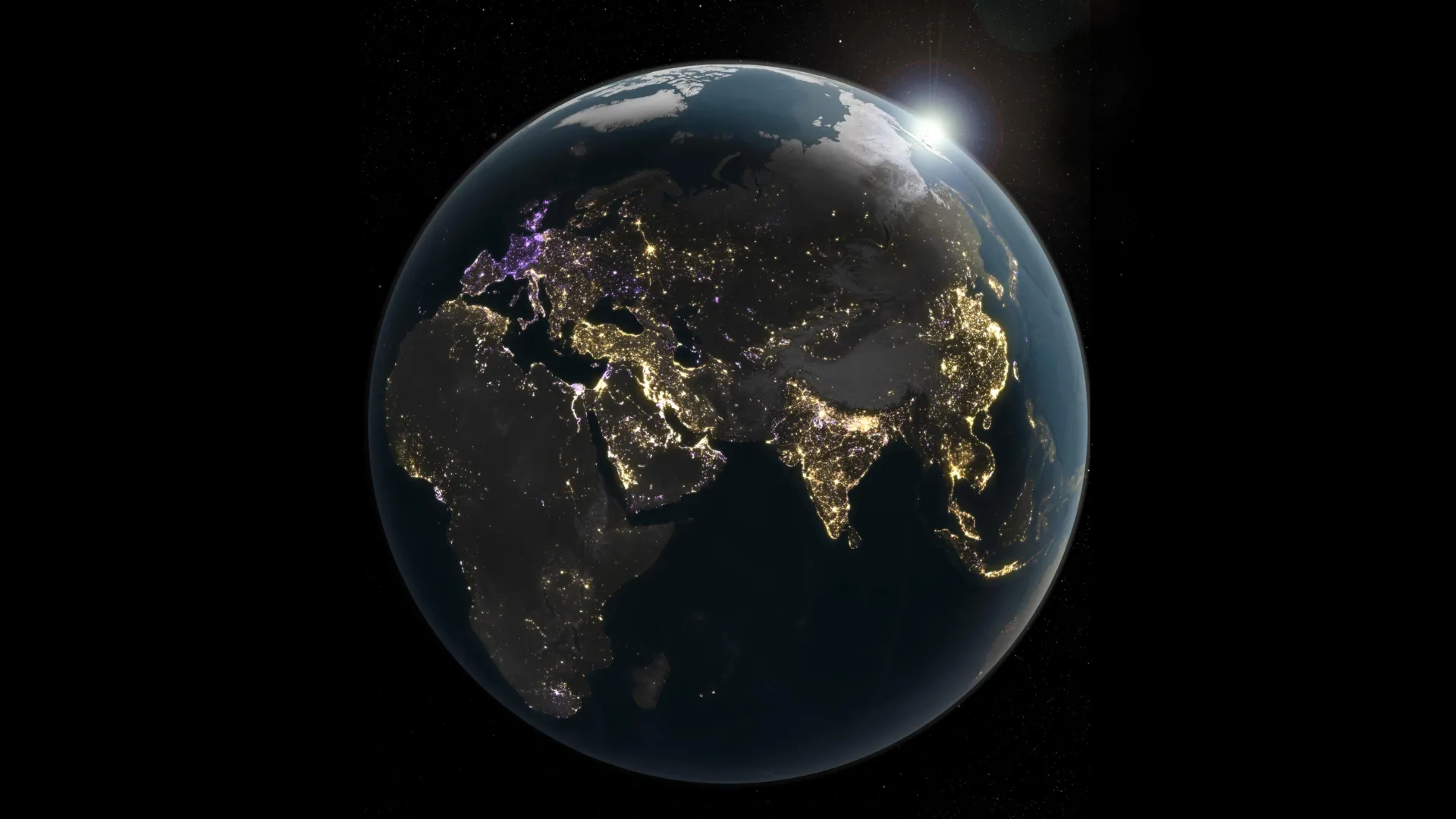
    Satellite observations show that Earth’s nights are steadily getting brighter, but the trend is not uniform. Data from the VIIRS DNB instrument, covering the period 2014 to 2022, shows that global nighttime lighting is increasing by approximately 2% each year.

    “We’re seeing a total increase of 16% worldwide, but that doesn’t mean we’re increasing lighting everywhere,” Christopher Kaiba explained. “We found that global emissions increased by 34% in regions where lighting increased. This was offset by an 18% decrease in emissions from other regions.”

    These findings reveal that changes in nighttime illumination are more dynamic and localized than previously understood. Due to the rapid growth of cities, countries such as China and India brightened significantly during the study period. In contrast, some developed countries have seen a decline in light emissions, often associated with the adoption of LED technology and policies aimed at reducing light pollution.

    Regional changes reflecting policy and conflict

    Not all change happens gradually. After the Russian invasion, night lighting in Ukraine sharply decreased. France also saw a significant decline, with nighttime brightness dropping by 33 percent as many cities turn off street lights after midnight to save energy and reduce light pollution.

    “In Germany, luminescence remained almost constant overall, despite regional variations,” Kaiba reports. “Light radiation increased by 8.9% in bright areas of Germany, but decreased by 9.2% in dimly lit areas.”

    Across Europe, satellite measurements show a 4% reduction in nighttime light radiation. However, satellites detect light differently than the human eye, so this drop may not perfectly match what humans perceive on the ground.

    High-resolution data reveals faster changes

    A key advance in this research is the use of full-resolution nighttime data. Previous analyzes relied on monthly or annual averages, making it difficult to identify short-term or local changes.

    “Until now, no global analysis has been performed using full-resolution nighttime data,” Kaiba emphasizes.

    The research team also applied a new algorithm that takes into account the angle at which the satellite views Earth. For example, residential areas tend to appear brighter when viewed from an angle, while dense urban centers often appear brighter when viewed from directly above. By incorporating these differences, we are now able to more accurately understand how the luminescence changes.

    How satellites track the Earth at night

    This study is based on data from the Visible Infrared Imaging Radiometer Suite (VIIRS) Day/Night Band (DNB) carried by the Suomi Nuclear Power Plant, NOAA-20, and NOAA-21 satellites operated by NOAA and NASA.

    These satellites collect images after midnight, typically between 1 a.m. and 4 a.m. local time, scanning nearly the entire Earth from 70 degrees north to 60 degrees south latitude each night. Each pixel in the image represents approximately 0.5 square kilometers.

    To ensure accuracy, the researchers focused only on artificial light sources. Natural phenomena such as wildfires and aurora borealis, which can also be detected by satellite, were excluded from the analysis.

    Promoting next-generation satellites in Europe

    Understanding how lighting changes at night is of practical importance. “Artificial light is a major consumer of electricity at night, and light pollution has a negative impact on ecosystems,” says Christopher Kaiba. “So it’s important to understand how both of these are changing.”

    Kyba is leading the development of a new satellite specifically designed to monitor nighttime lighting as part of the European Space Agency’s (ESA) Earth Explorer 13 mission. The proposed system detects much fainter light sources, provides significantly higher resolution, and reduces uncertainties about global illumination trends.

    “The United States and China each have multiple satellites that observe nighttime light, but there are currently no European satellites designed for this purpose,” Kaiba says.


    Source link

    Visited 1 times, 1 visit(s) today
    Share. Facebook Twitter Pinterest LinkedIn Telegram Reddit Email
    Previous ArticleMathematical model reveals the psychology behind authoritarian decision-making
    Next Article Your brain can be tricked into liking artificial sweeteners
    healthadmin

    Related Posts

    Your brain can be tricked into liking artificial sweeteners

    April 9, 2026

    Scientists discover hidden gut trigger behind ALS and dementia

    April 9, 2026

    Brain research reveals hidden relationship between autism and ADHD

    April 9, 2026

    The hidden tradeoffs behind today’s most popular weight loss drugs

    April 9, 2026

    Scientists discover synergistic effect of spices that boosts anti-inflammatory effects by 100 times

    April 9, 2026

    There is a secret “second code” in your DNA that determines which genes are silenced.

    April 9, 2026
    Add A Comment
    Leave A Reply Cancel Reply

    Categories

    • Daily Health Tips
    • Discover
    • Environmental Health
    • Exercise & Fitness
    • Featured
    • Featured Videos
    • Financial Health & Stability
    • Fitness
    • Fitness Updates
    • Health
    • Health Technology
    • Healthy Aging
    • Healthy Living
    • Holistic Healing
    • Holistic Health & Wellness
    • Medical Research
    • Medical Research & Insights
    • Mental Health
    • Mental Wellness
    • Natural Remedies
    • New Workouts
    • Nutrition
    • Nutrition & Dietary Trends
    • Nutrition & Superfoods
    • Nutrition Science
    • Pharma
    • Preventive Healthcare
    • Professional & Personal Growth
    • Public Health
    • Public Health & Awareness
    • Selected
    • Sleep & Recovery
    • Top Programs
    • Weight Management
    • Workouts
    Popular Posts
    • the-pros-and-cons-of-paleo-dietsThe Pros and Cons of Paleo Diets: What Science Really Says April 16, 2025
    • Improve Mental Health10 Science-Backed Practices to Improve Mental Health… March 11, 2025
    • How Healthy Living Is Transforming Modern Wellness TrendsHow Healthy Living Is Transforming Modern Wellness… December 3, 2025
    • Kankakee_expansion.jpgCSL releases details of $1.5 billion U.S.… March 10, 2026
    • urlhttps3A2F2Fcalifornia-times-brightspot.s3.amazonaws.com2Fc32Fcd2F988500d440f2a55515940909.jpegA ‘reckless’ scrapyard with a history of… October 24, 2025
    • Healthy Living: Expert Tips to Improve Your Health in 2026Healthy Living: Expert Tips to Improve Your Health in 2026 November 16, 2025

    Demo
    Stay In Touch
    • Facebook
    • Twitter
    • Pinterest
    • Instagram
    • YouTube
    • Vimeo
    Don't Miss

    Your brain can be tricked into liking artificial sweeteners

    By healthadminApril 9, 2026

    Researchers from Radboud University, Oxford University, and Cambridge University set out to test a surprising…

    The world is getting brighter at night, but it’s getting darker in some places

    April 9, 2026

    Mathematical model reveals the psychology behind authoritarian decision-making

    April 9, 2026

    Eli Lilly’s GLP-1 tablets to be rolled out via US telemedicine provider

    April 9, 2026

    Subscribe to Updates

    Get the latest creative news from SmartMag about art & design.

    HealthxMagazine
    HealthxMagazine

    At HealthX Magazine, we are dedicated to empowering entrepreneurs, doctors, chiropractors, healthcare professionals, personal trainers, executives, thought leaders, and anyone striving for optimal health.

    Our Picks

    Eli Lilly’s GLP-1 tablets to be rolled out via US telemedicine provider

    April 9, 2026

    Garda signs $125 million deal with Assertio for chemotherapy-based infectious disease treatment Rolbedone

    April 9, 2026

    AbbVie challenges ‘outdated’ 340B drug discount program guidance in new lawsuit

    April 9, 2026
    New Comments
      Facebook X (Twitter) Instagram Pinterest
      • Home
      • Privacy Policy
      • Our Mission
      © 2026 ThemeSphere. Designed by ThemeSphere.

      Type above and press Enter to search. Press Esc to cancel.