


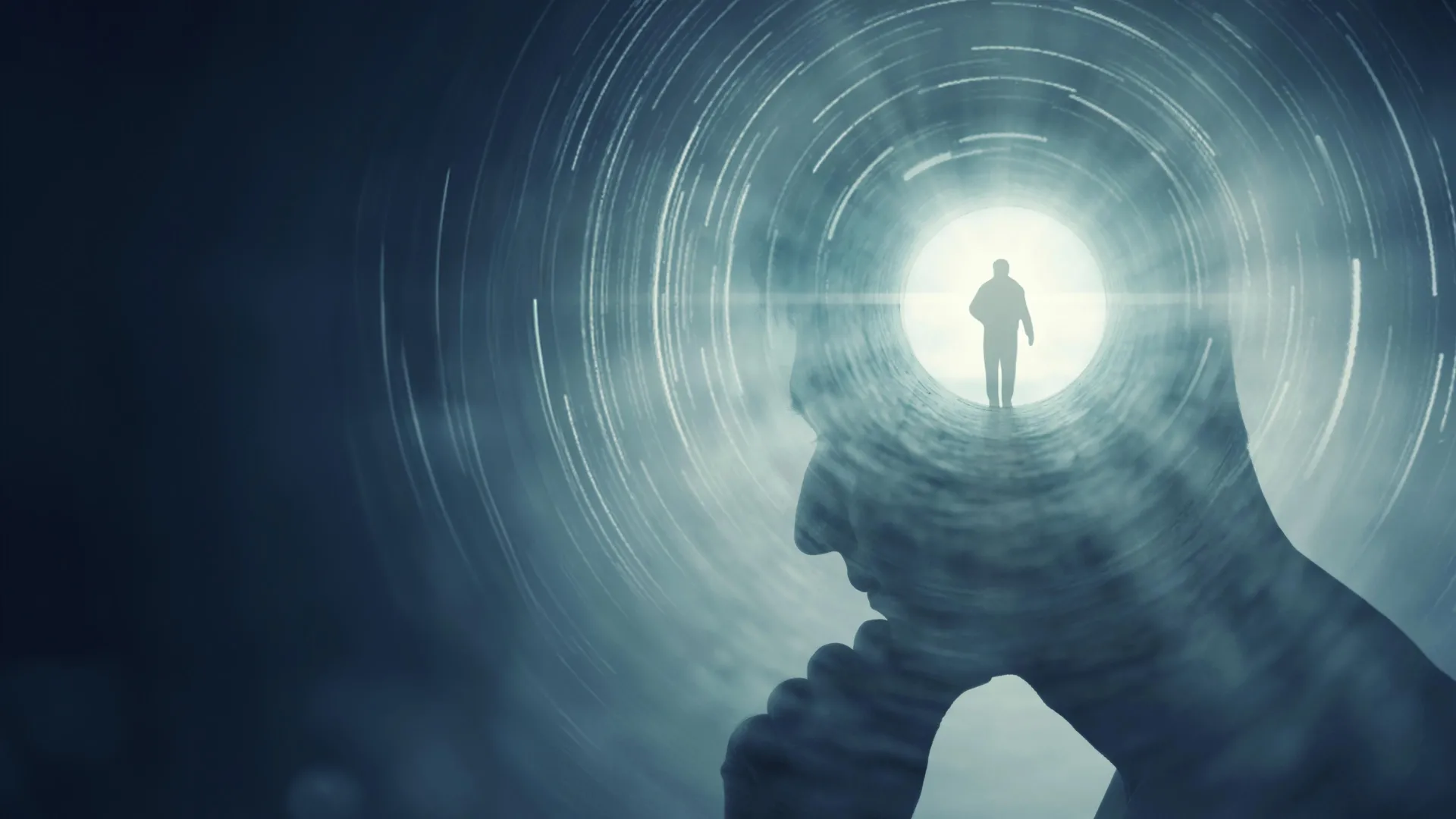
Is consciousness simply a product of the brain, or could it be a deeper feature of reality itself? This question is at the heart of a presentation by Christoph Koch, a leading figure in modern neuroscience, at the Vial Foundation’s 15th ‘Behind the Brain and Beyond’ Symposium, to be held in Porto from April 8th to 11th.
Although materialism still dominates scientific thinking, Koch highlights important gaps in this perspective. Despite great advances in neuroscience, scientists still have not explained how subjective experience arises from physical processes in the brain. This unresolved problem is known as the “hard problem” of consciousness.
Three major challenges to understanding consciousness
Mr. Koch’s talk will focus on three key areas where current explanations are lacking. The first is the difficulty of completely reducing conscious experience to physical brain mechanisms. The second is the question modern physics raises about what is considered truly “real.” Third, there is the persistence of unusual experiences that do not fit neatly into existing scientific frameworks, such as near-death experiences, mystical states, and episodes of terminal lucidity.
Rethinking consciousness as the basis
Based on these challenges, Koch suggests that old philosophical ideas such as idealism and panpsychism may need to be reconsidered. These perspectives treat consciousness as a fundamental component of reality, rather than something generated solely by the brain. He supports integrated information theory. This theory proposes that systems with a sufficiently high level of integrated information will have some form of subjective experience, providing a scientific interpretation of panpsychism.
Leading researcher in consciousness research
Koch, who works at the Allen Institute for Brain Science and previously taught at MIT and the California Institute of Technology, has played a major role in advancing the study of consciousness. His research includes developing new methods to identify signs of consciousness in patients who appear unresponsive, helping to push the boundaries of how scientists detect and understand states of consciousness.
