


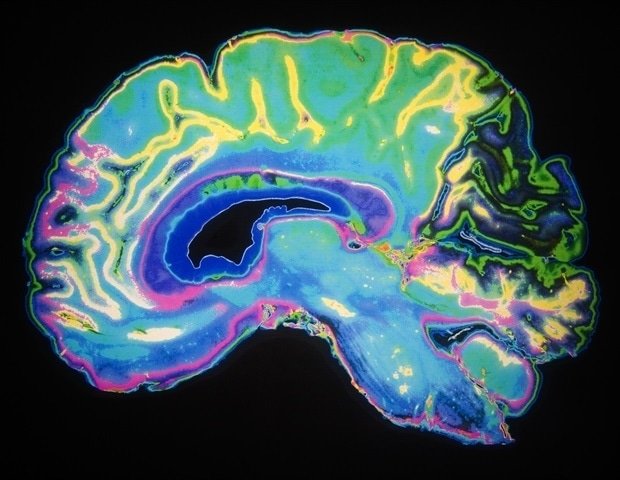
When people develop Alzheimer’s disease, they not only lose their sense of time, but also their sense of place. Are time and place two sides of the same coin?
Approximately 55 million people worldwide currently have dementia such as Alzheimer’s disease, and that number is expected to triple by 2050. At the Institute of Basic Medical Sciences at the University of Oslo, researchers are working to get closer to understanding what happens in the brain so that the onset of such diseases can be prevented or delayed.
All memory is made up of various components. I remember not only what I had for dinner last night, but also the time and place. We often think of time and space as separate categories, but this distinction was created by philosophers and physicists and is very practical in organizing our lives. But our brain cells don’t see it that way. ”
Cohen Vervaake, Professor, University of Oslo
These cells do not distinguish between one step forward in space and a second passage of time. Instead, it simply records the constantly changing flow of information from our senses and tracks events as they unfold. For the brain’s internal networks, he explains, time and place are effectively two sides of the same coin.
“So it’s no surprise that in Alzheimer’s disease, both are affected. When neural networks are damaged, our sense of ‘where’ and ‘when’ begins to unravel together. ”
The scent of silence: Observing the brain’s internal relays
Remembering when, where, and how something happened is called episodic memory. In your brain, billions of nerve cells form a massive network, sending signals back and forth like a relay race to process information from the sensations, sounds, smells, and sights of your life.
It is already known that the hippocampus contains cells that link memory to time and space. But Verbeike and his research group had a theory that another area of the brain was also involved: the retrosplenial cortex. This region, located in the back of the cerebral cortex near the hippocampus, was previously only known as an area that links memory and place.
To test whether this region also tracks time, the researchers designed a memory challenge in mice. This task required participants to hold a particular odor in their “working memory” for a short period of time. This article was recently published in Cell Reports.
“We presented the mice with a simple sequence of one odor, a five-second pause, and then a second odor. If the two odors were different, banana then mint, the mice licked the tube as a sugar water reward. If the odors were the same, they had to stay still,” Vervaeke explains.
At first, the mouse was impatient and constantly licked the tube. But after a week of training, they mastered the job.
“They learned to use that five-second period of silence to hold the first memory in their minds and wait to see if the next scent matched or changed,” Vervaeke explains.
The Universal Script: A Unified Theory of Experience
To find out what was happening in the brain, the researchers used a microscope to observe nerve cells in the retrosplenial cortex while the mice performed their tasks.
“When we looked at it under the microscope, two different groups of nerve cells came back to life,” Vervaeke says. “The first group acted like scent experts, active only when certain odors, such as banana or mint, were present. But the second group was even more fascinating: these cells were active in a precise order during five seconds of silence.”
Like a relay race, one cell passes a signal to the next, “holding” the memory of the first scent until the second scent arrives.
“Working together, these cells performed two jobs at once: identifying odors and tracking exactly how much time had passed.”
The most striking finding was that the retrosplenial cortex uses the same “neural script” for both space and time. “We found that the order of neural activity in the retrosplenial cortex was almost the same whether the mouse was physically running around the room or simply holding a memory in its head for five seconds,” Vervaeke says.
Redefining reality to cure dementia
This discovery reminds us of the tragic reality of Alzheimer’s disease. People with Alzheimer’s disease struggle to establish themselves in both time and place. By showing that the brain uses the same “neural scripts” for both, our research explains why these two senses often don’t work together, says the professor.
This work also challenges how we perceive the world around us. We use the concepts of time and space to organize our lives, and this distinction is largely due to human constructs. In fact, some modern physical theories are moving away from using time and space as the fundamental building blocks of the universe. The brain’s internal wiring appears to reflect this deeper reality, he says.
“We still have a tremendous amount to learn about how a healthy brain works,” Verbeike explains. “It’s almost impossible to fix a car without first understanding how the engine works when it’s running smoothly. Similarly, before we can truly understand what’s going wrong with dementia, we need to understand the ‘blueprint’ of a healthy brain – how episodic memories are constructed and stored. These discoveries bring us one step closer.”
sauce:
Faculty of Medicine, University of Oslo
Reference magazines:
Gerbert, A.C.; Others. (2025). Region-specific encoding of temporal information in the neocortex. cell report. DOI: 10.1016/j.celrep.2025.115363. https://www.cell.com/cell-reports/fulltext/S2211-1247(25)00134-2
