


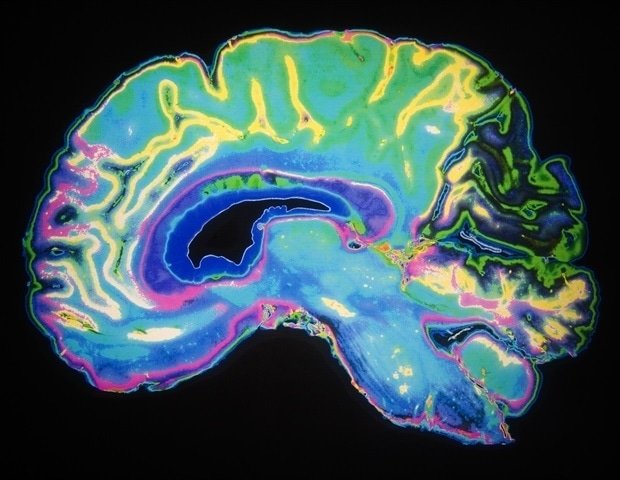
Accumulation of the protein tau in the brain is one of the hallmarks of Alzheimer’s disease. In a paper published March 5 in the journal Cell Press. Cell Press Blueresearchers report a previously unknown mechanism that appears to allow tau accumulation. The study, which used patient tissue as well as animal and cell models, suggests an important role for specialized brain cells, tanycytes, in regulating brain-to-body signaling.
Our findings reveal a previously underappreciated, disease-relevant role for tanycytes in neurodegeneration. Focusing on tanycyte health may be a way to improve tau clearance and limit disease progression. ”
Vincent Prevot, corresponding author, INSERM, France
Tanycytes are a type of non-neural brain cell that resides primarily in the third ventricle of the brain. Previous studies have shown that these cells play an active role in exchanging metabolic signals between blood and cerebrospinal fluid (CSF), the fluid that surrounds the brain and spinal cord and acts as a communication hub to maintain homeostasis.
In this study, the researchers sought to better understand how tannysite removes toxic molecules such as tau to maintain brain health. Researchers discovered that brain cells carry toxic molecules from the CSF into the blood for disposal, and when brain cells don’t function properly, tau can accumulate in the brain.
“Surprisingly, we were able to show in rodent and cell models not only that tanycytes are indeed involved in tau clearance, but also that tanycytes in the brains of human Alzheimer’s disease patients are fragmented and there are changes in gene expression associated with this shuttle function,” says Prebot.
The research team says these findings highlight the potential for developing interventions aimed at maintaining brain homeostasis to prevent neurodegeneration, but acknowledge that targeting tanycytes as a way to develop interventions against Alzheimer’s disease presents some challenges. One important limitation is the lack of good animal models of Alzheimer’s disease. Another is that larger cohorts and more longitudinal data are needed to establish a causal relationship and define the sequence of events linking tanycyte dysfunction and tau pathology.
“Our findings provide the first evidence of structural and functional changes in brain cells that are important in these little-known but important human diseases,” Prebot says.
This research was supported by the European Research Council, the National Institutes of Health, the Medical Research Foundation, and the French Institute of Neuroscience NRJ Foundation.
sauce:
Reference magazines:
Sauvé, F. Others. (2026). Tanycyte degeneration impairs tau clearance and contributes to the pathology of Alzheimer’s disease. Cell Press Blue. Doi: 10.1016/j.cpblue.2026.100003. https://www.cell.com/cell-press-blue/fulltext/S3051-3839(26)00001-0
