


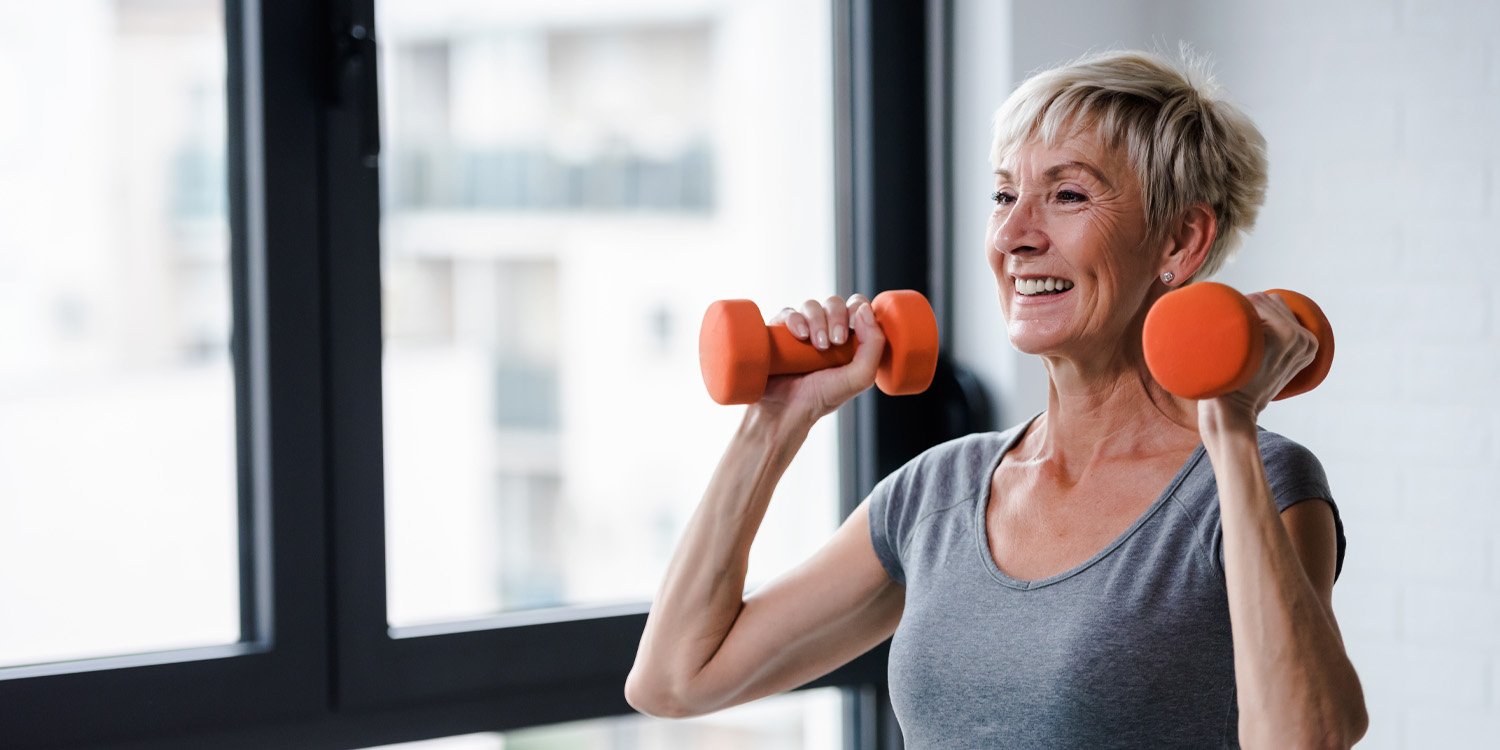
Recent research published in Affective Disorders Journal Our results suggest that increased muscle strength, especially in women, may play a direct role in reducing the risk of depression and its characteristic symptoms. Scientists at University College London found no evidence that aerobic fitness affects depression, but do show that building muscle strength may help prevent and treat depression. This provides evidence that strength training can be an effective and targeted strategy for improving mental health.
Although it is known that physical activity helps prevent depression, the exact biological reasons for this association are still unknown. Scientists wanted to understand specifically how exercise affects mental health in order to develop better treatment plans.
Two ways that exercise can improve your mood are through improved cardiovascular fitness and increased muscle strength. Cardiorespiratory fitness refers to the ability of the heart and lungs to supply oxygen to the body during sustained physical activity. Previous research has linked both of these fitness types to lower rates of depression.
Traditional observational studies, which simply observe people’s habits over time, have difficulty proving cause and effect because other lifestyle choices can influence the results. It is also possible that depression is not caused by a lack of fitness, but rather, depression is the cause of a lack of exercise.
“While it is known that physical activity can help prevent and treat depression, the underlying mechanisms by which depression occurs are still poorly understood. In this study, we investigated the effects of two specific physiological aspects of physical activity (cardiorespiratory fitness and muscle strength) on depression,” study authors Snehal M. Pinto Pereira, John Vincent, and Amy E. Taylor (professor, research associate, and senior investigator, respectively) said in a joint statement to PsyPost.
“It is well documented that depression is a highly heterogeneous disease, and symptoms vary widely between individuals. So we investigated whether cardiorespiratory fitness and muscle strength have a causal relationship with individual symptoms of depression or with depression as a single disease.”
Researchers looked at data from up to 341,326 adults between the ages of 37 and 73. All participants were of European descent and members of the UK Biobank, a large database of genetic and health information.
To determine cause and effect, scientists used a technique called Mendelian randomization. This method looks at small genetic variations that people are born with that are known to be associated with specific physical characteristics. These genetic markers are randomly assigned at conception, so they act like a natural experiment.
Scientists looked at genetic variations related to cardiorespiratory fitness and those related to grip strength. Grip strength was adjusted for body weight and used as a practical surrogate for overall muscle strength.
For mental health outcomes, researchers looked at common depression based on self-reported medical history and hospital records. They also assessed nine specific symptoms of depression to get a more complete picture of a person’s mental state.
These symptoms include anhedonia, a core symptom of depression defined as depressed mood, changes in appetite, difficulty concentrating, and loss of pleasure or interest in previously enjoyable activities. They also noted psychomotor changes, such as significantly slower body movements and extreme restlessness and fidgetiness.
Individual symptoms were measured using a standard questionnaire given to a subset of 108,622 participants. People were considered to have symptoms if they reported experiencing symptoms for more than a few days in the past 2 weeks.
The researchers found no evidence that genetic markers of cardiorespiratory fitness were associated with depression overall or its individual symptoms. This was an unexpected result for scientists, as aerobic exercise is often recommended to improve mental health.
On the other hand, the data showed a clear association between improved grip strength and lower rates of depression. They found that a 0.1 kg increase in grip strength per kg of body weight was associated with a 14% lower chance of developing generalized depression.
Higher grip strength was also associated with a lower likelihood of developing some specific symptoms. For example, it was shown to reduce the likelihood of experiencing anhedonia by 21%. Stronger grip strength was also associated with a 44% lower chance of experiencing changes in appetite. Scientists also found evidence that improved muscle strength is associated with depressed mood, physical sluggishness, extreme fatigue, and concentration problems.
“Although it is clear that muscle strength is only one of many factors that influence depression, these findings suggest that increasing muscle strength may make a meaningful contribution to the reduction of depression and some of its symptoms,” the researchers said. “Importantly, the results were consistent across multiple analyses, giving us greater confidence in the robustness of our results.”
When scientists analyzed the data by gender, they found that these effects were generally stronger in women than in men. Protective effects against loss of pleasure, depressed mood, and concentration problems were observed in women but not in men.
The association between grip strength and changes in appetite was present in both men and women. There was no clear evidence that grip strength affected sleep disturbances or suicidal ideation in both men and women.
“An important takeaway from our findings is that muscle strength (particularly in women) is likely to be a contributing factor to depression and some of its symptoms in middle-aged and older adults,” the researchers explained. “Our findings suggest that increased muscle strength may help reduce depressed mood and loss of pleasure or interest in previously enjoyable activities (anhedonia), which are core symptoms of depression and represent secondary symptoms such as changes in appetite, decreased concentration, and decreased self-esteem. However, it will be important for future studies to replicate these effects in other samples and populations to increase generalizability.”
There are several possible reasons why muscle strength may help prevent depression. Muscle weakness can lead to a loss of independence and make it more difficult to perform daily tasks. It is known that experiencing difficulties in daily life increases the likelihood of developing symptoms of depression.
Another possibility involves biology at the cellular level. When your muscles contract during exercise, certain proteins are released into your body. Some scientists suspect that these proteins may help protect the brain from depression, but more research is needed to confirm this.
The scientists pointed out several potential misconceptions and limitations. People in UK biobanks tend to be healthier and more educated than the average population, which could skew the results. This study included only individuals of Caucasian European ancestry.
The scientists also used hand grip strength instead of whole body muscle strength. Although this is a common scientific practice, there is ongoing debate about how accurately hand strength reflects overall muscle strength.
“We have a strong interest in continuing to advance research in this area,” the researchers told PsyPost. “Our next steps include investigating both environmental and genetic factors associated with depression and anxiety, and how the interactions between these factors may impact mental health.
“One important way our research advances the field is by examining individual symptoms of depression (in addition to depression as a single disease). This approach could help researchers better understand the different pathways that contribute to depression and inform more targeted prevention strategies.”
The study, “Cardiopulmonary Fitness, Grip Strength, and Symptoms of Depression: A Mendelian Randomized Study,” was authored by John Vincent, Snehal M. Pinto Pereira, Jane Maddock, Dylan M. Williams, Mark Hamer, Jonathan P. Roiser, and Amy E. Taylor.
