

Close Menu

    Subscribe to Updates

    Get the latest creative news from FooBar about art, design and business.

    What's Hot

    Genetic mutation could trap schizophrenia patients’ brains in a false reality

    April 3, 2026

    Cannabis addiction pervasively impairs multiple memory types, new study shows

    April 3, 2026

    Strange ‘elephant skin’ rock reveals ancient life in the dark sea

    April 3, 2026
    Facebook X (Twitter) Instagram
    Facebook X (Twitter) Instagram
    Health Magazine
    • Home
    • Environmental Health
    • Health Technology
    • Medical Research
    • Mental Health
    • Nutrition Science
    • Pharma
    • Public Health
    • Discover
      • Daily Health Tips
      • Financial Health & Stability
      • Holistic Health & Wellness
      • Mental Health
      • Nutrition & Dietary Trends
      • Professional & Personal Growth
    • Our Mission
    Health Magazine
    Home » News » Strange ‘elephant skin’ rock reveals ancient life in the dark sea
    Nutrition Science

    Strange ‘elephant skin’ rock reveals ancient life in the dark sea

    healthadminBy healthadminApril 3, 2026No Comments4 Mins Read
    Strange ‘elephant skin’ rock reveals ancient life in the dark sea
    Share
    Facebook Twitter Reddit Telegram Pinterest Email


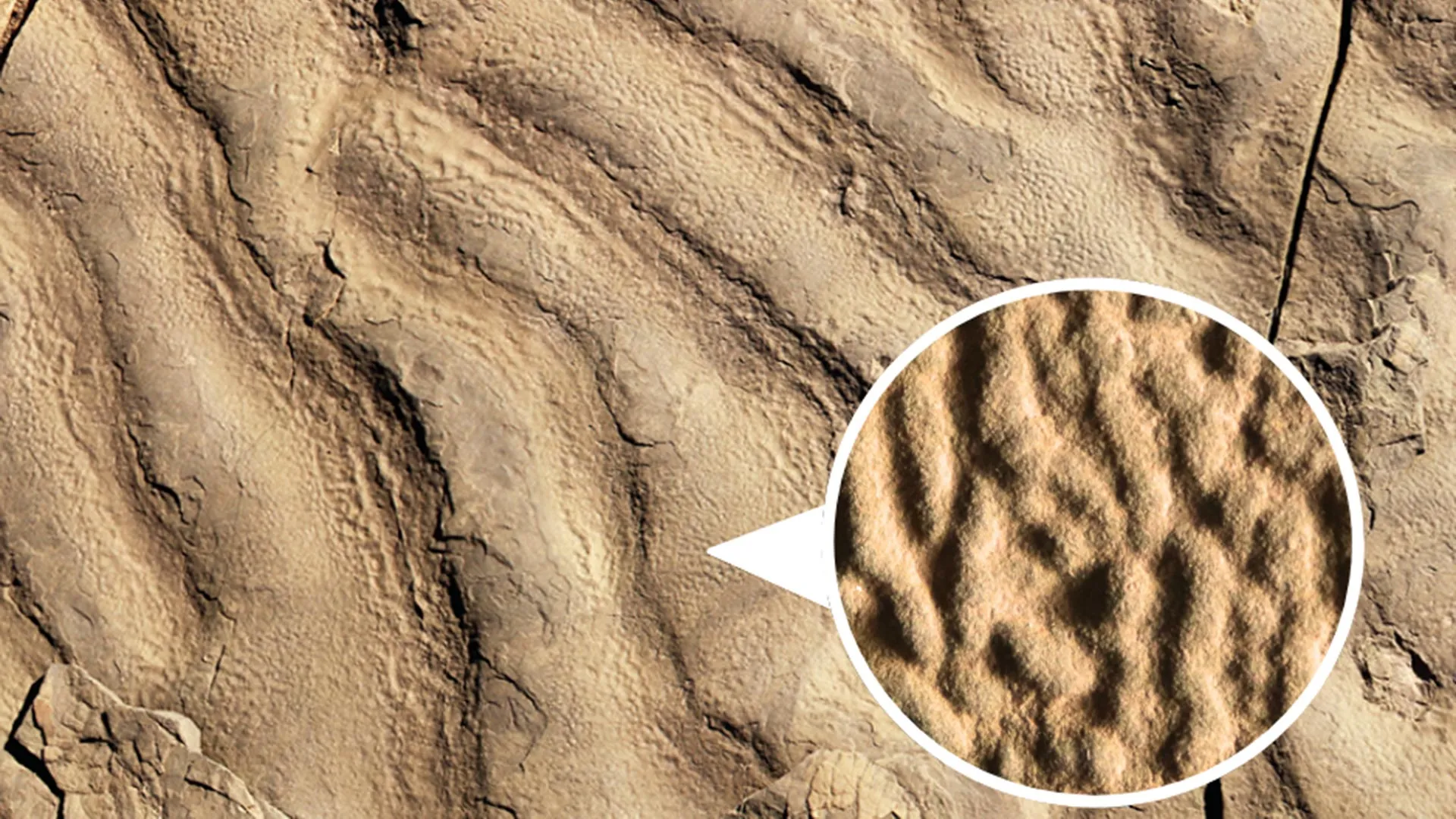
    In 2016, geologist Rowan Martindale was hiking a hillside in Morocco when something unusual caught his eye. The slabs of sedimentary rock were covered with a wrinkled texture that looked strikingly like elephant skin. The pattern was so unexpected that it immediately stood out.

    “When I saw the wrinkles, I thought, ‘This can’t be in this rock. What’s going on here?'” said Martindale, an associate professor at the Jackson School of Geosciences at the University of Texas at Austin.

    The texture of a rock reveals the process by which it was formed over millions of years. To Martindale, the wrinkled surface looked just like a fossilized microbial mat. These structures form as microbial communities grow throughout the sediment, leaving behind unique patterns. In this case, the texture appeared to preserve a dense layer of microorganisms that existed during the Early Jurassic Period, more than 180 million years ago.

    Martindale recognized the pattern right away. During graduate school, she studied similar textures through photos and samples shared by colleagues in her lab, which focused on microbial fossils from the Early Triassic.

    puzzle in the wrong place

    There was one big problem. This setting did not match what the scientists expected.

    The wrinkled rock formations originate from deep ocean waters approximately 600 feet below the earth’s surface. However, scientists have long believed that this type of microbial wrinkled structure forms only in shallow environments. In such environments, microbes rely on sunlight for energy and can avoid animals for energy, especially during stressful times or after mass extinctions.

    In deeper waters, similar patterns are usually explained differently. Geologists often attribute it to underwater landslides that push sediment into ridges and trenches. But Martindale wasn’t convinced. The patterns she saw had clear signs of microbial activity.

    “Knowing what to look for and having a ‘search image’ of the wrinkle structure in my head made me want to stop and dig into this,” she said.

    A new explanation for the wrinkle structure of the deep sea

    In a recent study published in geologyMartindale and her colleagues are proposing a new interpretation that links geological processes and biological activity. They suggest that while underwater landslides did occur, they did not directly create the wrinkles. Instead, they delivered nutrients to the ocean floor, allowing microorganisms to grow and structure to form.

    According to the research team, these microbes were not dependent on sunlight. Instead, they likely relied on chemicals for energy, a process known as chemosynthesis. Nutrient inputs from landslides may have supported these communities, while the release of toxic sulfur compounds may have prevented other marine life from disturbing them.

    Modern clues from deep sea ecosystems

    Similar ecosystems exist in today’s oceans. Some microbial mats thrive in deep, dark environments, feeding on chemical energy rather than sunlight. An example of this can be seen in the carcass of a whale that has sunk to the ocean floor. These “whale drop” sites create ephemeral but rich ecosystems in which microbes quickly colonize and thrive.

    Jake Bailey, a professor at the University of Minnesota who studies how microbes affect Earth systems, said the discovery challenges long-held assumptions about these rock structures.

    “Some of the largest microbial ecosystems on Earth are now found in the dark ocean,” said Bailey, who was not involved in the study. “The research here shows that certain ancient sedimentary structures may record the presence of these chemotrophs rather than photosynthetic organisms (organisms that require sunlight to make energy).”

    Rethinking fossils in the rock record

    Martindale explained that this discovery could have far-reaching implications. If chemosynthetic microbial communities are more widespread than previously thought, their fossils may also become more common. However, scientists may have interpreted the wrinkled rock textures as purely physical formations and overlooked them.

    Part of the challenge lies in the language used to describe these features. Without clear terminology, it can be difficult to distinguish between structures formed by physical forces and structures formed by living organisms.

    “The terminology is pretty loose,” Martindale says. “There’s so much meanness about wrinkles that we lack diagnostic language.”

    Follow an unexpected scientific path

    Martindale typically studies ancient coral reefs and mass extinctions. She never expected that this observation would lead to studies of deep-sea microbial mats. But the mystery turned out to be too compelling to ignore.

    “I’m really happy that it went in a direction that I didn’t expect at all,” she said. “We had no hypothesis that we would find these microbial mats here. We just had the right search image in the right place at the right time. And we were stubborn enough to not let it go.”

    This research was funded by the National Science Foundation.


    Source link

    Visited 1 times, 1 visit(s) today
    Share. Facebook Twitter Pinterest LinkedIn Telegram Reddit Email
    Previous ArticleConversion therapy ruling impacts state medical boards
    Next Article Cannabis addiction pervasively impairs multiple memory types, new study shows
    healthadmin

    Related Posts

    Genetic mutation could trap schizophrenia patients’ brains in a false reality

    April 3, 2026

    Scientists discover why influenza and coronavirus hit older people so hard

    April 3, 2026

    Scientists say more than a third of adults have misconceptions about BMI

    April 3, 2026

    SpaceX’s Starship could cut travel time to Uranus in half

    April 3, 2026

    Study finds dangerous lead levels in children’s clothing

    April 3, 2026

    French fries could become healthier with new microwave frying technology

    April 3, 2026
    Add A Comment
    Leave A Reply Cancel Reply

    Categories

    • Daily Health Tips
    • Discover
    • Environmental Health
    • Exercise & Fitness
    • Featured
    • Featured Videos
    • Financial Health & Stability
    • Fitness
    • Fitness Updates
    • Health
    • Health Technology
    • Healthy Aging
    • Healthy Living
    • Holistic Healing
    • Holistic Health & Wellness
    • Medical Research
    • Medical Research & Insights
    • Mental Health
    • Mental Wellness
    • Natural Remedies
    • New Workouts
    • Nutrition
    • Nutrition & Dietary Trends
    • Nutrition & Superfoods
    • Nutrition Science
    • Pharma
    • Preventive Healthcare
    • Professional & Personal Growth
    • Public Health
    • Public Health & Awareness
    • Selected
    • Sleep & Recovery
    • Top Programs
    • Weight Management
    • Workouts
    Popular Posts
    • the-pros-and-cons-of-paleo-dietsThe Pros and Cons of Paleo Diets: What Science Really Says April 16, 2025
    • Improve Mental Health10 Science-Backed Practices to Improve Mental Health… March 11, 2025
    • How Healthy Living Is Transforming Modern Wellness TrendsHow Healthy Living Is Transforming Modern Wellness… December 3, 2025
    • Healthy Living: Expert Tips to Improve Your Health in 2026Healthy Living: Expert Tips to Improve Your Health in 2026 November 16, 2025
    • daily vitamin D needsWhy Sunlight Is Crucial for Your Daily Vitamin D Needs June 12, 2025
    • "The Best Daily Health Apps to Track Your Wellness Goals"The Best Daily Health Apps to Track Your Wellness… August 15, 2025

    Demo
    Stay In Touch
    • Facebook
    • Twitter
    • Pinterest
    • Instagram
    • YouTube
    • Vimeo
    Don't Miss

    Genetic mutation could trap schizophrenia patients’ brains in a false reality

    By healthadminApril 3, 2026

    A common feature of schizophrenia is difficulty using new information to make sense of the…

    Cannabis addiction pervasively impairs multiple memory types, new study shows

    April 3, 2026

    Strange ‘elephant skin’ rock reveals ancient life in the dark sea

    April 3, 2026

    Conversion therapy ruling impacts state medical boards

    April 3, 2026

    Subscribe to Updates

    Get the latest creative news from SmartMag about art & design.

    HealthxMagazine
    HealthxMagazine

    At HealthX Magazine, we are dedicated to empowering entrepreneurs, doctors, chiropractors, healthcare professionals, personal trainers, executives, thought leaders, and anyone striving for optimal health.

    Our Picks

    Conversion therapy ruling impacts state medical boards

    April 3, 2026

    Scientists discover why influenza and coronavirus hit older people so hard

    April 3, 2026

    Scientists say more than a third of adults have misconceptions about BMI

    April 3, 2026
    New Comments
      Facebook X (Twitter) Instagram Pinterest
      • Home
      • Privacy Policy
      • Our Mission
      © 2026 ThemeSphere. Designed by ThemeSphere.

      Type above and press Enter to search. Press Esc to cancel.