


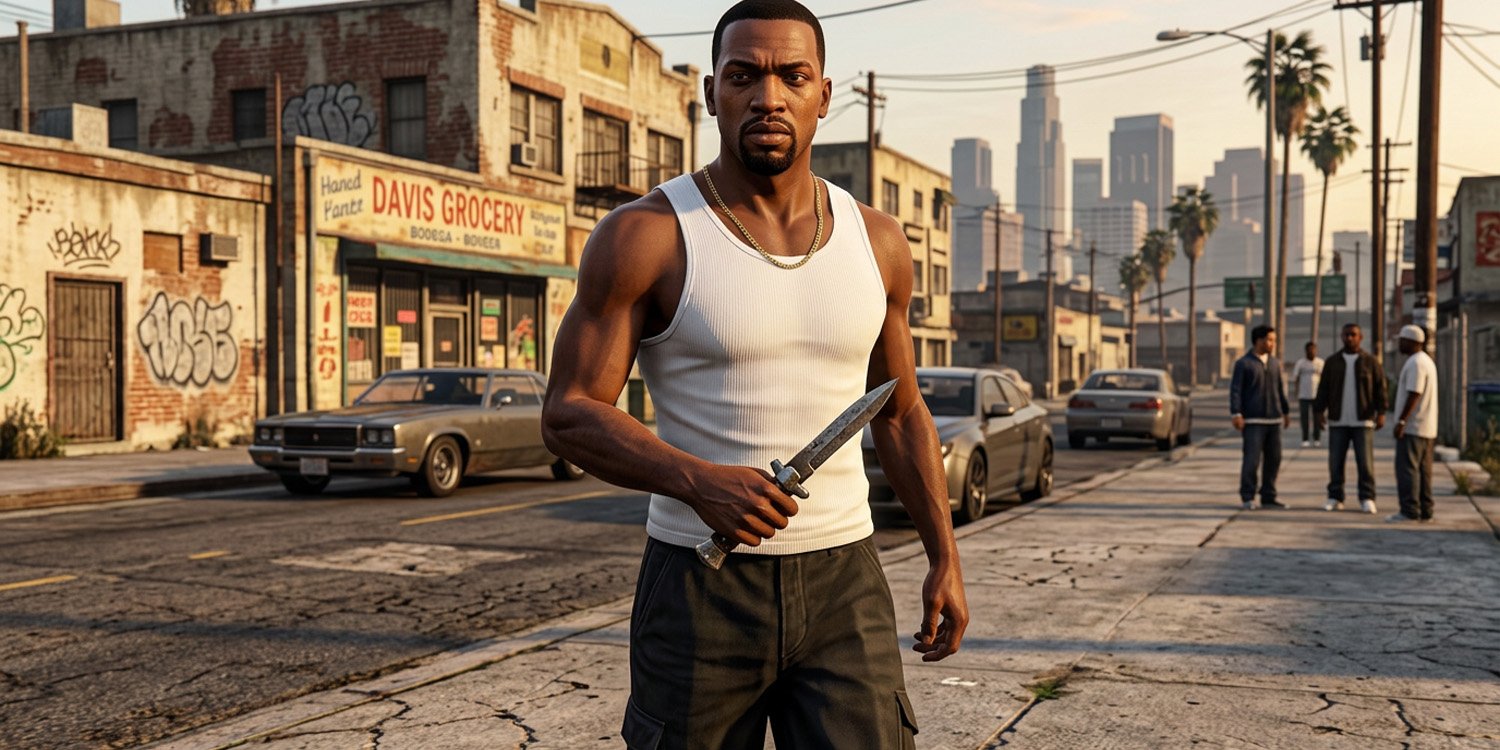
When people watch violent video game characters, the race of those digital avatars can shape the viewers’ racial biases in real life. Recent experiments published in International Journal of Psychology They found that watching a black character perform an act of violence increased unconscious bias among white participants. In fact, Black participants reported lower levels of overt racism after viewing the same footage.
These results highlight how racial representation in digital media can silently shape the attitudes of different audiences in very different ways. Teilson Evangelista Mariano, a researcher at the Catholic University of Pernambuco in Brazil, led the study with colleagues from Brazil and Portugal. The research team wanted to understand how interactive media influences how people view different racial groups.
Most previous research on media and bias has focused on passive formats such as television and movies. Mariano and his team wanted to see if the highly engaging nature of video games could produce a similar effect. They also wanted to see if the results varied depending on the race of the person watching the game.
To do this, the researchers focused on the difference between two types of bias: explicit and implicit attitudes. Overt attitudes are conscious beliefs that a person openly admits. For example, a person may express an overt attitude by agreeing to a racist statement on a survey.
Implicit attitudes are automatic and unconscious associations that people are not even aware they have. Even if people consciously reject racism, they may unconsciously associate certain racial groups with negative concepts. To understand how the media shapes these hidden biases, the research team considered two psychological frameworks.
The first framework is evaluative conditioning, which suggests that repeatedly pairing a neutral stimulus with a negative outcome trains the brain to associate the two. If a particular racial group is consistently associated with criminal activity in the media, the viewer’s brain may automatically begin to associate that race with danger. The second framework is a general attack model.
This model proposes that consuming violent media causes the brain to think about aggression and hostility. The researchers suspected that violent video games, in which black characters often play criminals, could trigger both of these psychological processes at the same time. They also incorporated ideas of racial identity into their work.
According to identity theory in psychology, people respond differently to stereotypes based on their own backgrounds. When people see negative depictions of groups to which they do not belong, they are more likely to absorb those stereotypes. When people see negative depictions of their group, they often experience psychological defensive reactions.
This defense mechanism may lead to rejection of prejudice and reaffirmation of group identity. To test these ideas, researchers recruited 140 adults online. To ensure that participants were responding purely to racial cues and not relying on past gaming habits, the team selected people with little video gaming experience.
Participants were randomly assigned to watch a one-minute video clip of the popular game Grand Theft Auto V. Half of the participants watched a black character perform an act of violence, such as physical assault or the use of a weapon. The other half observed a white character performing the exact same aggressive behavior in the exact same digital environment.
Video clips were edited to be completely identical in length, camera angle, and digital settings. The only difference between the two videos is the race of the central character. Creators emphasized visual elements such as skin color, facial features, and clothing to make the character’s race obvious.
Post-experiment manipulation checks confirmed that viewers accurately recognized the race of the character they were viewing. Immediately after watching the video, participants completed a computer-based task called the Implicit Association Test. This test measures unconscious bias by tracking how quickly a person matches different concepts on a screen.
The program requires users to pair black and white images of faces with positive words such as “good” or negative words such as “bad.” People who are quick to pair bad words with black faces and good words with white faces show higher levels of automatic prejudice on this test. Following the computer task, participants filled out a questionnaire called the Biological Racism Scale.
This study measured conscious bias by asking participants to rate their agreement with statements claiming that certain racial groups are biologically inferior. The results revealed a clear divide based on viewer race. For white participants, seeing violent black characters spiked unconscious bias on computer tests.
Exposure to white characters did not produce this same effect for white viewers. For Black participants, the digital character’s race had no effect on unconscious bias. The results for this particular group were not statistically significant in either direction.
Researchers suggest that sharing a racial identity with a character may act as a psychological shield, blocking the brain from absorbing negative stereotypes. The clear findings showed a very different pattern. Overall, white participants showed no change in their conscious self-reported beliefs after watching any of the videos.
Researchers point out that overt prejudice is tightly regulated by social norms. People often suppress conscious racist views to avoid appearing biased toward others. This explains why white participants showed an increase in prejudice on the unconscious computer test, even though they showed no change in the survey.
The two types of bias operate through completely different mental pathways. Black participants showed decreased overt racism scores after viewing violent Black characters. Researchers attribute this reaction to psychological defense mechanisms.
When faced with negative depictions of their group, people may actively push back against those stereotypes and reaffirm their identity. Researchers believe these findings have practical applications in the video game industry. Game developers need to evaluate how they portray racial minorities in the digital world.
Incorporating diverse and atypical representations can help prevent the spread of negative automatic bias. Creating complex Black characters in peaceful or heroic roles can counteract existing stereotypes and promote equity in society. The authors point out that game studios could also benefit financially by creating more inclusive media.
Public awareness of representation issues continues to grow, and consumer demand for diverse games is increasing. This study also highlights the need for better media literacy education. Educational programs should aim to teach consumers about the subconscious effects of digital media.
Interactive workshops can help young audiences think critically about the games they play and develop a natural resistance to biased portrayals. The authors note that their experiment has several limitations. This study was based on short video clips rather than active gameplay, so the psychological impact when a person is actually holding a controller may be different.
Due to the short nature of the video, it may not fully capture the immersion of modern video games. The research team did not pre-test the video clips before starting the main data collection, a standard step in experimental design. The study also relies on a convenience sample of online users.
This group may not be completely representative of the broader population of video game players around the world. The research team is looking forward to future experiments involving active gaming sessions. They also suggest testing these ideas on regular gamers to see if years of exposure to violent digital media changes a person’s basic reactions.
Finally, we recommend using a broader group of people to see if these patterns hold over time and across different cultures. Expanding this scope of research will help reveal how interactive entertainment shapes society as a whole.
The study, “The Effects of the Race of Violent Video Game Characters on Implicit and Explicit Racial Attitudes,” was authored by Tailson Evangelista Mariano, Victoria da Costa Perman, Carlos Eduardo Pimentel, Isabella Liandra Silva Santos, and Cicero Roberto Pereira.
