


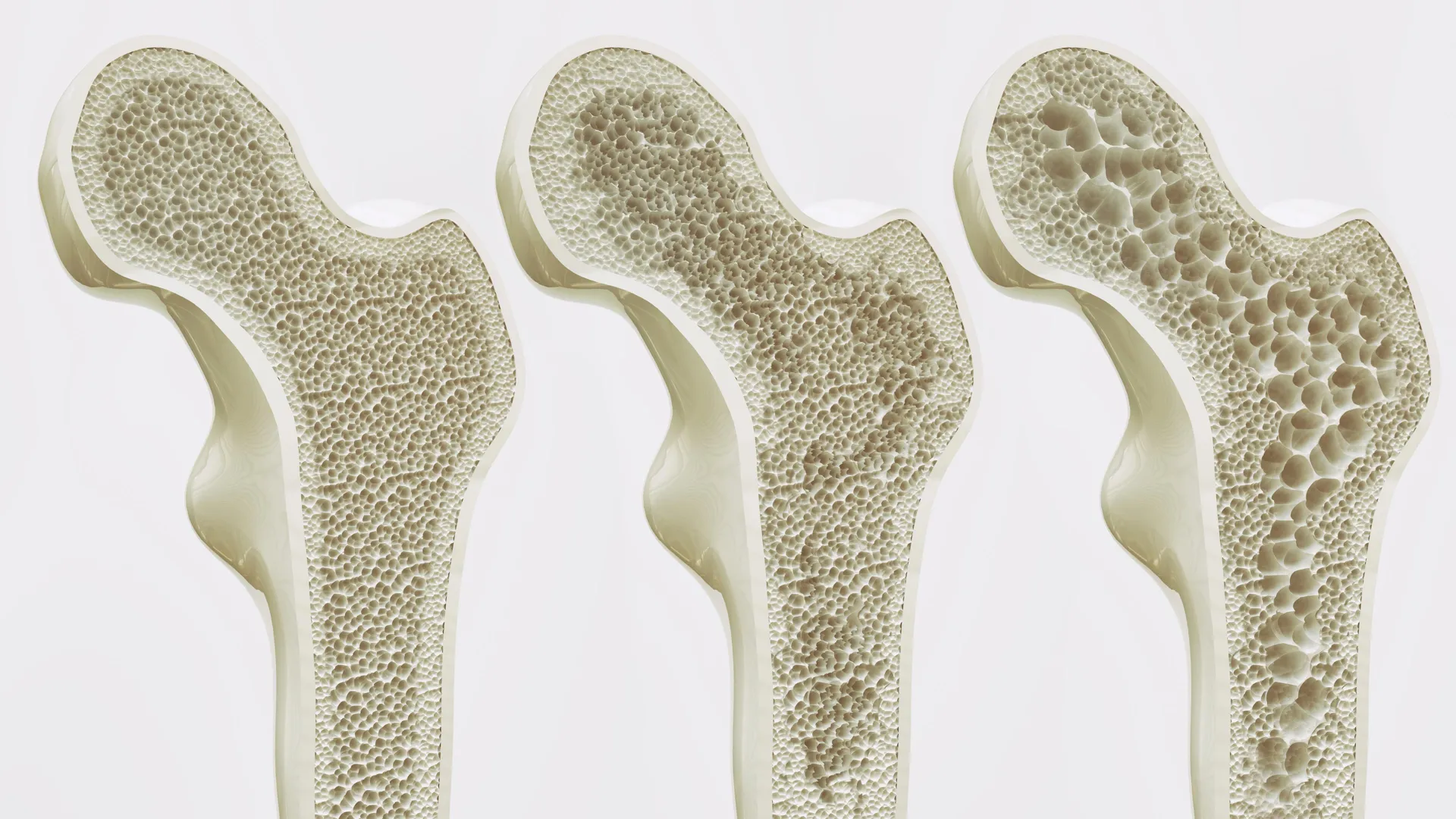
There is a growing demand for treatments that can safely prevent bone loss and provide long-term recovery. Osteoporosis is a disease that weakens bones and makes them more prone to fractures, and it affects approximately 6 million people in Germany alone, most of them women. This is especially common when bone density naturally decreases as we age and after menopause.
Current treatments can have limitations and side effects, so researchers are looking for new ways to more effectively strengthen bones. One promising approach is to identify new biological targets within the body that can be used to develop better drugs.
Recent research from the University of Leipzig focuses on one such target, a receptor called GPR133. This receptor belongs to a larger family known as adhesion G protein-coupled receptors (GPCRs). These receptors are located on the surface of cells and help transmit signals that control many processes in the body. Although GPCRs are already important in medicine, this particular subgroup has not been widely studied.
New research shows that GPR133 plays an important role in building and maintaining healthy bones.
Receptors associated with bone strength
To understand how important GPR133 is, researchers looked at what happens when GPR133 doesn’t function properly. In animal studies, mice with genetic changes that disrupt this receptor developed low bone density early in life, much like osteoporosis in humans.
“When genetic changes impair this receptor, mice show signs of reduced bone density at an early age, similar to osteoporosis in humans. “By using the substance 503, we were able to significantly increase bone strength in both healthy and osteoporotic mice,” explains Professor Ines Liebscher, lead researcher at the Rudolf Schönheimer Institute. Institute of Biochemistry, Faculty of Medicine.
Compound AP503 was discovered using a computer-based screening method that helps scientists quickly identify molecules that can activate specific receptors. In this case, AP503 acts as a stimulator of GPR133.
Mechanism of bone formation and decomposition
Although bones may seem like static structures, they are constantly being updated. There are two main types of cells that control this process. Osteoblasts are responsible for building new bone, and osteoclasts destroy old bone. Healthy bones depend on a careful balance between these two activities.
Researchers found that GPR133 helps regulate this balance. In bone tissue, receptors are activated by interactions between nearby bone cells and by physical forces such as movement and pressure. When activated, it sends a signal that increases osteoblast activity and decreases osteoclast activity.
The result is stronger, denser bones that are more resistant to damage.
AP503 appears to copy this natural activation process. By turning on the same signaling pathways, it promotes bone formation and limits bone destruction. This makes it a promising candidate for future treatments. In addition to protecting healthy bones, it may also be used to rebuild bones in patients with osteoporosis, including postmenopausal women.
Potential benefits for aging populations
The implications of this discovery may extend beyond bone health. In a previous study, the same Leipzig team found that activating GPR133 with AP503 also improved skeletal muscle strength.
“The newly demonstrated parallel bone strengthening once again highlights the great potential of this receptor for medical applications in an aging society,” says Julian Lehmann, Ph.D., lead author of the study and a researcher at the Rudolf Schönheimer Institute for Biochemistry.
Maintaining both muscle and bone strength is critical for older adults as it reduces the risk of falls, fractures, and loss of independence. Therapies that can support both systems simultaneously could offer significant benefits.
The research team is currently conducting more detailed studies on AP503 and GPR133. Ongoing projects aim to investigate how this pathway can be used to treat other conditions and to better understand how the receptors function throughout the body.
10 years of research behind the discovery
This breakthrough is based on more than a decade of research at the University of Leipzig focused on adhesion GPCRs. This study is part of Collaborative Research Center 1423 “Structural Dynamics of GPCR Activation and Signaling”.
Leipzig has become an internationally recognized leader in this field, contributing important insights into how these receptors function and how they can be targeted for new treatments.
Why is this discovery important?
Osteoporosis is sometimes called a silent disease because bone loss can occur without noticeable symptoms until a fracture occurs. By the time it is discovered, serious damage may have already occurred.
The identification of GPR133 as a key regulator of bone strength opens new directions for treatment. Future treatments may not only slow bone loss, but also actively rebuild bone and restore strength.
Although further research is needed before AP503 or similar compounds can be tested in humans, the findings offer a promising sign for a future in which maintaining strong, healthy bones throughout life may become much more feasible.
