


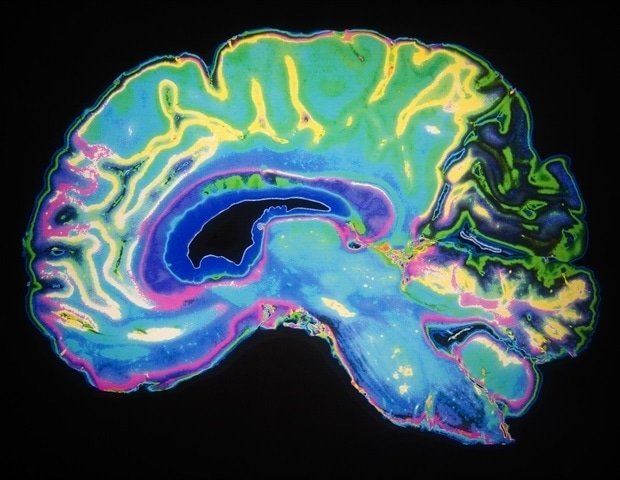
Research uncovering the origins of pineoblastoma, a rare childhood brain tumor, also reveals dependencies across multiple brain tumor types that share similar molecular programs. Scientists at St. Jude Children’s Research Hospital, Dana-Farber/Boston Children’s Cancer and Blood Disorders Center, and Uppsala University have collected and profiled the largest cohort of pineoblastoma tumors to date at single-cell resolution. They discovered a set of light-sensing-related genes that are essential for pineoblastoma formation in the developing pineal gland. Researchers subsequently extended this finding to medulloblastoma and retinoblastoma, demonstrating a common developmental condition and potential common treatment dependence that could serve as a target for treatment improvement. The survey results are announced today. cancer cells.
“Pineoblastoma is extremely rare, and we only treat a few cases each year at St. Jude,” said corresponding co-senior author Paul Northcott, Ph.D., director of the St. Jude Center for Neuro-Oncology Sciences (CENOS), co-leader of the Cancer Center’s Neurobiology and Brain Tumor Program, and member of the Department of Developmental Neurobiology. “By collaborating with other institutions, we dug deeper than previous profiling efforts to understand where these tumors come from, how they overlap or differ at single-cell resolution, and what makes them vulnerable.”
Illuminating the origin of the tumor
During the early stages of human development, brain cells rapidly expand, divide, and migrate to form complex structures such as the pineal gland. The pineal gland is a pinecone-like structure in the center of the brain that releases hormones such as melatonin. Scientists believed that pineoblastoma occurred when something went wrong during the rapid development of the pineal gland. However, before investigating how things go wrong, I first needed to understand how things go wrong during normal development. To do so, they created the first single-cell atlas of normal pineal gland development, including all cell types involved.
Once the researchers created the atlas, they measured gene expression in a cohort of rare tumor samples from 38 patients and compared it to normal pineal gland development. By measuring gene expression using single-cell RNA sequencing, they found that a population of early cells called pineal progenitor cells is most similar to these tumors, suggesting a role in pineoblastoma development. They created a unique mouse model through perturbation of five different pineoblastoma driver genes in these progenitor cells. All five models closely resembled their corresponding human subtypes based on extensive molecular and histological analyses.
Even though the subtypes had different cancer drivers, they all shared one remarkable gene expression signature. “We saw a recurring theme related to photosensitivity,” Northcott said. “Because the pineal gland plays an important role in circadian rhythms and the interpretation of light from the retina, it normally expresses a set of photoreceptor and phototransduction genes. Not only are these same genes expressed in pineoblastoma, but they are expressed at very high levels, suggesting that the tumor may be ‘addicted’ to the pineal gland.”
Bringing shared dependencies to light
“The light-sensitive signature was reminiscent of a very similar program observed in another brain tumor subtype, group 3 medulloblastoma,” Northcott said. “When we looked closely at other cancers, we found that the same genes, transcription factors, and biomarkers of this program are shared among anatomically distinct types of central nervous system tumors, including tumors of the pineal gland, retina, and cerebellum.”
This aberrantly expressed light-sensing signature indicates that this gene set may be essential for the formation and survival of these cancers, suggesting a potential tumor-to-tumor vulnerability. The researchers used CRISPR to remove a gene from this hallmark in pineoblastoma, medulloblastoma, and retinoblastoma cells to see if it affected the growth of the cells. They discovered that all three cancers have a common dependence on these genes, because without them the tumor would die.
“We found that a subset of these light-sensing genes had very strong selective dependence in these particular types of cancer,” Professor Northcott said. “With that information, we open the door to future treatments that target this common feature across multiple types of brain tumors.”
Authors and funders
Co-lead authors of the study are St. Jude’s Brian Gudenas, Anthony Liu, and Sheikh Tanveer Ahmad. Bernhard Englinger, Dana-Farber/Boston Children’s Cancer and Blood Disorders Center, and Miao Zhao of Uppsala University. Other co-senior authors of the study are Fredrik Swartling of Uppsala University and Mariela Philbin of Dana-Farber/Boston Children’s Cancer and Blood Disorders Center.
Other authors of the study are Leena Paul, Jennifer Hadley, Elan Lee, Melissa Butts, Priya Mittal, Stephanie Wu, Sarah Lewis, Katie Han, Taha Soliman, Hong Lin, Laure Janke, Paul Climo Jr., Frederic Boop, Amar Gajjar, Giles Robinson, Brent Orr, and St. Jude. Gabriela Rosen, Uppsala University. David Meredith, Harvard Medical School. Elke Pfaff and David Jones from the Heidelberg Hopf Children’s Cancer Center (KiTZ). Johannes Gojo, Medical University of Vienna. Jennifer Cotter of the University of Southern California and Sanda Alexandrusk of Boston Children’s Hospital.
This research was supported by the Mark Foundation (Emerging Leaders Award), the St. Baldricks Foundation (Robert J. Arcesi Innovation Award), the National Cancer Institute (1R01CA259372-01A1 and 1R01CA270785-01A1), the Andruzzi Foundation, the Alex Lemonade Stand Foundation (A Award), John W. and Pamela A. Cumming, Solving Kids’ Cancer, Inc./Bibi Foundation, Burroughs Wellcome Fund (Medical Career Award), Sontag Foundation (Outstanding Scientist Award), Austrian Science Foundation Erwin Schrödinger Fellowship (J-4311), Swedish Research Council, Swedish Cancer Society, Swedish Childhood Cancer Foundation, Swedish Brain Foundation, Swedish Childhood Cancer Foundation, Li Shu Pui Medical Foundation Training Grant, Lin Kin Pang-HKU Foundation Scholarship, and St. Jude’s fundraising and awareness arm, the American Lebanese and Syrian Association Charity (ALSAC).
sauce:
St. Jude Children’s Research Hospital
Reference magazines:
DOI: 10.1016/j.ccell.2026.02.010
