


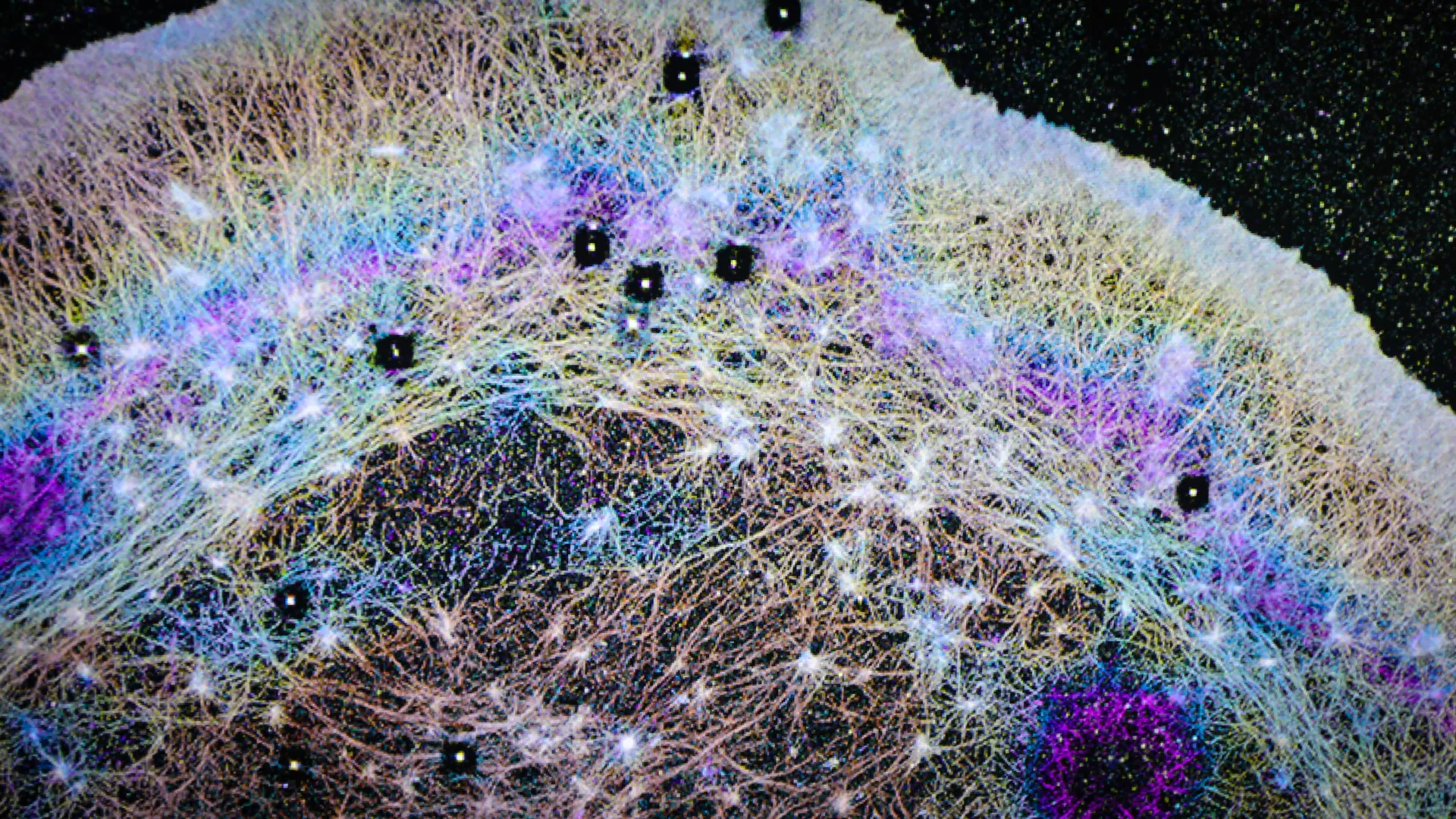
Researchers at Oregon Health & Science University have identified a previously unknown system inside cells that acts like an internal “trade wind” that rapidly transports important proteins to the tip of the cell. This discovery has changed the way scientists understand cell movement, cancer spread, and wound healing.
This research nature communicationschallenges long-held ideas about how cells organize and deliver proteins to specific locations.
Biology textbooks have long described the movement of proteins within cells as a nearly random process called diffusion. In this model, proteins drift until they finally reach their desired location. New research shows that cells don’t rely solely on chance. Instead, cells generate a directional fluid flow that actively pushes proteins in a distal direction that stretches, moves, and repairs tissue.
From classroom observations to big discoveries
This breakthrough dates back to an unexpected moment during a neurobiology course at the Marine Biology Laboratory in Massachusetts. The study’s co-senior authors, Dr. Catherine (Cathy) Galbraith and Dr. James (Jim) Galbraith, were conducting a standard classroom experiment when they noticed something unusual.
“It actually started with an unexpected discovery,” Kathy said. “We were just conducting an experiment with the students during class.”
The researchers used a laser to temporarily hide proteins in strips behind living cells and tracked how the proteins moved. This is a common method to study intracellular transport. During the experiment, they observed a darker band appear at the front end of the cell, an area that widens as the cell moves.
“We were doing it as a hobby, and we realized this gave us a way to measure things that we couldn’t measure before,” she said.
Further investigation revealed that this dark band indicated that waves of soluble actin, an important protein involved in cell movement, were being pushed out rapidly. Previously, scientists believed that actin reached this region primarily by random diffusion. The new results revealed a different mechanism.
“I realized that there was a big part missing from the cartoon model in the textbook,” Jim said. “For things to move forward, there must be some kind of flow within the cell. Cells really ‘go with the flow.'”
Directional flow facilitates protein transport
Kathy and Jim joined OHSU in 2013 after working at the National Institutes of Health, where they collaborated on advanced imaging techniques with Nobel Prize winner Dr. Eric Betzig at the Howard Hughes Medical Institute’s Janelia Research Campus.
Using specialized imaging tools, the researchers discovered that the cells actively generate directional fluid flows, which they compared to rivers in the atmosphere. These currents move actin and other proteins toward the front of the cell much faster than diffusion alone.
“We found that this cell can actually compress the back and target where it sends its substances,” Jim said. “If you squeeze half of a sponge, only half of it will hold water. That’s basically how cells work.”
These flows are nonspecific, meaning they can transport many types of proteins at once. This creates a highly efficient system that supports cell protrusion, adhesion, and rapid shape change. All of these processes are essential for movement, immune response, and tissue repair.
The researchers also discovered that these flows occur within a specialized region at the front of the cell. This region is separated from the rest of the cell by an actin-myosin condensation barrier, which acts like a physical boundary and guides proteins to the advancing end.
Visualize cell currents with new imaging
To observe these internal flows, the team developed a modified version of the standard fluorescence method. Instead of removing the fluorescence with a laser, they activated the fluorescent molecules at a single point and tracked their movement.
They named one of their key experiments FLOP (fluorescence away from origin).
“It wasn’t a failure at all,” Kathy says. “It was the opposite. It wasn’t a failure, because it worked.” The research team’s findings may help explain why certain cancer cells migrate so actively.
Effect on cancer cell migration
This finding may help explain why some cancer cells are highly invasive.
“We know that these highly invasive cells have very good mechanisms to push proteins to the front of the cell where they need to be very quickly,” Jim said. “In the same way that Porsches and Volkswagens have many of the same parts, every cell contains essentially the same components inside.However, when those parts are assembled into the final machine, they behave and function very differently.”
Understanding that cancer cells use this system differently than normal cells may allow scientists to develop new strategies to slow or stop the spread of cancer.
“If we understand the differences, we can target future treatments based on how cancer cells and normal cells work,” he said.
Advanced imaging and collaboration
The research brought together experts in engineering, physics, microscopy and cell biology. Major contributions came from collaborators at the Virginia Janelia Research Campus, including experts in fluorescence correlation spectroscopy and 3D super-resolution imaging.
“The equipment we needed doesn’t exist in most places,” Kathy said. “Janelia had a unique setup that allowed us to test and confirm what we were seeing.”
The research relied heavily on advanced imaging tools developed at Janelia, including iPALM, an interferometric technique that can resolve structures at the nanometer scale.
“iPALM allowed us to physically see the compartments,” Jim said. “No other light-based technology can do this.”
Newly identified “pseudo organelle”
The researchers describe this system as a “pseudo-organelle,” a functional compartment that is not surrounded by a membrane but plays a key role in organizing cell behavior.
“Just as small changes in the jet stream can change the weather, these small changes in cellular winds can change how diseases start and progress,” Cathy says.
The research team believes this discovery could have implications for multiple fields, including cancer research, drug delivery, tissue repair, and synthetic biology.
“All you had to do was look,” Kathy said. “The flow has been there all along. Now we know how cells use it.”
In addition to the Galbraiths, the study’s co-authors are Dr. Brian English of the Janelia Research Campus and Dr. Ulrike Böhm, formerly of Janelia and now with Carl Zeiss AG in Germany.
This research was supported by the National Institute of General Medical Sciences of the National Institutes of Health (award number R01GM117188), the National Science Foundation (award numbers 2345411 and 171636), the WM Keck Foundation, the Howard Hughes Medical Institute Janelia Visiting Scientist Program, and the Howard Hughes Medical Institute. The iPALM research was supported in part by an award from Janelia’s Center for Advanced Imaging. SIM imaging was supported in part by a Core Research Facilities grant from the OHSU School of Medicine.
