


Researchers at New York University Abu Dhabi (NYUAD) have discovered new clues that suggest water once moved beneath the surface of Mars. The discovery indicates that Mars may have been capable of supporting life for much longer than scientists once thought.
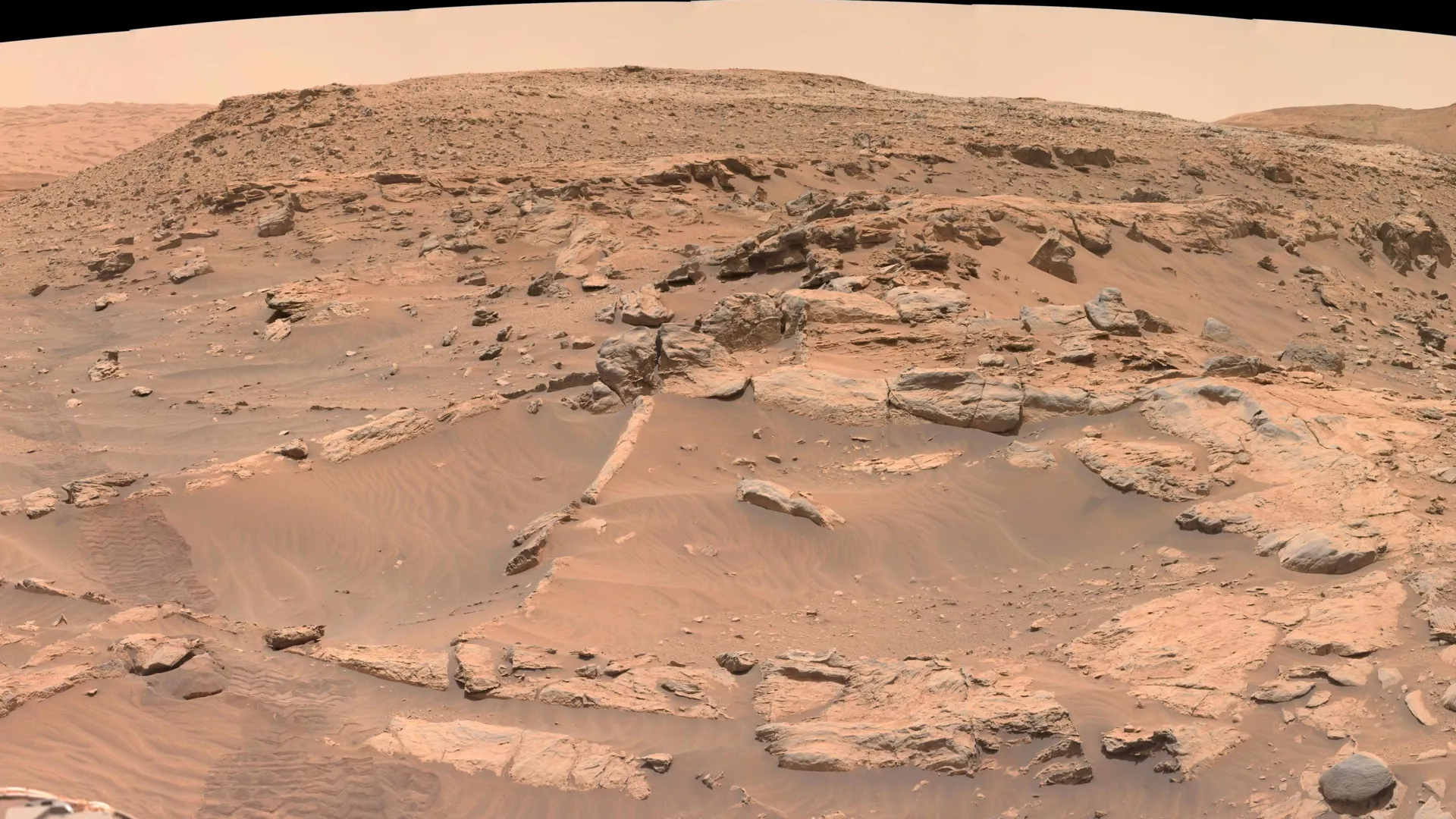
This research Journal of Geophysical Research – Planetsfocuses on the ancient sand dunes in Gale Crater, explored by NASA’s Curiosity rover. According to the study, these dunes slowly solidified into rock billions of years ago after interacting with groundwater moving beneath the Martian surface.
Comparison of Curiosity rover data and Earth’s deserts
The study was led by principal investigator Dimitra Atri and research assistant Vignesh Krishnamoorthy from New York University’s Institute for Space Exploration. To better understand what happened on Mars, the researchers compared observations from the Curiosity rover with similar rock formations found in the deserts of the United Arab Emirates that formed under similar conditions on Earth.
Their analysis suggests that water from nearby Martian mountains gradually seeped into the dunes through small cracks. As the water moved up through the sand, it left behind minerals such as gypsum, which is common in Earth’s desert environments. These minerals are particularly important to scientists because they can capture and preserve traces of organic matter. As a result, such deposits are considered promising locations for future missions searching for evidence of ancient life.
Groundwater may have supported microbial life
“Our results show that Mars did not simply go from wet to dry,” Atli said. “Even after lakes and rivers disappeared, small amounts of water continued to migrate underground, creating a protected environment that could support microbial life.”
New clues about Mars’ evolution and habitability
The discovery shed new light on how Mars has changed over billions of years. It also strengthens the idea that underground environments may be some of the best places to look for signs of past life on Earth.
This research was conducted at the New York University Center for Astrophysics and Space Science with support from the New York University Research Institute. The center conducts advanced research aimed at improving the scientific understanding of space, while supporting the UAE’s growing role in global space exploration. The project also included collaboration with the research groups of James Weston and Panče Naumov from NYUAD’s Core Technology Platform.
