


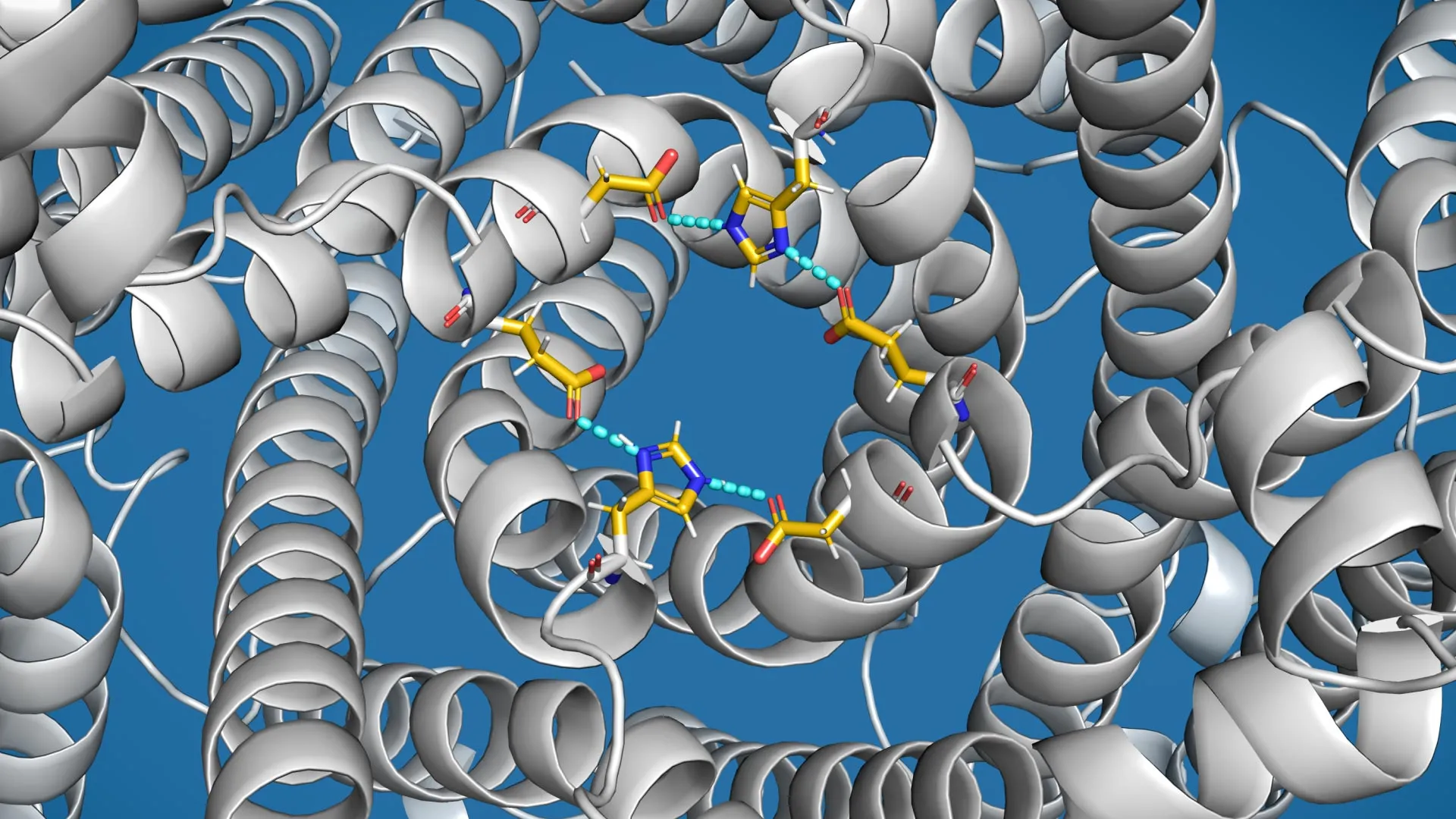
Researchers have revealed how a mysterious ion channel helps cells break down waste products, opening new possibilities for treating Parkinson’s disease.
Just as sinks and bathtubs have overflow drains to prevent spills, human cells appear to have similar safety devices built into them. A new study by scientists from Bonn Rhein Sieg University of Applied Sciences (H-BRS), LMU Munich, TU Darmstadt, and Nanion Technologies reveals that PNAS (Proceedings of the National Academy of Sciences), this protection system is revealed. A team led by Professor Christian Grimm (LMU Munich) and Dr. Oliver Rauh (H-BRS) has deciphered the function of the long-discussed ion channel TMEM175. Their findings suggest that this channel acts like an overflow valve inside lysosomes, preventing the environment from becoming too acidic.
Lysosomes and control of cellular acidity
Lysosomes are small membrane-enclosed compartments that act as recycling centers for cells. It breaks down large molecules into simpler components that cells can reuse. For this process to function properly, lysosomes must maintain an acidic environment.
pH measures the concentration of protons (H+) in a solution, with lower pH values indicating higher proton levels. Specialized proteins pump protons into lysosomes to create this acidity. However, maintaining the proper balance requires additional proteins embedded in the lysosomal membrane. This study highlights that TMEM175 plays an important role in fine-tuning this balance.
Researchers believe that in healthy cells, TMEM175 helps maintain ideal acidity levels so that waste products can be broken down more efficiently. When this channel is disrupted by mutation, pH regulation is impaired. As a result, proteins are not broken down properly, which can lead to nerve cell death. Previous studies have linked problems with lysosomal function to aging and neurodegenerative diseases such as Parkinson’s disease. “Our study demonstrated that the ion channel TMEM175 plays a crucial role here,” says Dr. Oliver Lau.
TMEM175 ion channel transports potassium and protons
For many years, scientists were unsure where TMEM175 resides in cells or what it actually does. Its simple name, which stands for transmembrane protein 175, reflects how little was initially known about it. Over time, interest in TMEM175 grew as evidence emerged linking it to neurodegenerative diseases, particularly Parkinson’s disease.
The researchers ultimately identified TMEM175 as an ion channel that moves charged particles across the lysosomal membrane. However, debate continued over whether they primarily transport potassium ions or protons, and how these movements affect cell function in both healthy and diseased states.
pH sensor that regulates proton flow
“I have studied many ion channels, but TMEM175 is the strangest one,” says Dr. Oliver Rau, who came to H-BRS from the Technical University Darmstadt and works for research partner CytoTransport. “When we started this project about six years ago, TMEM175 was thought to be a potassium channel; its function was completely unknown. We have now been able to demonstrate that TMEM175 conducts not only potassium ions, but also protons, and is therefore directly involved in regulating the pH, and therefore the proton concentration, inside the lysosome.”
“Most of the experiments were performed using the patch-clamp method,” explains Christian Grimm, an expert in the technique of measuring the electrical activity of lysosomal membranes. This method allowed the team to analyze how the channel behaved under different conditions. Their results show that TMEM175 can detect when acidity reaches a critical level and adjust proton flow accordingly.
“Our findings lay an important foundation for a deeper understanding of hitherto contested lysosomal functional processes and the function of the TMEM175 channel,” the authors said. “At the same time, our insights into the protein TMEM175 provide a promising target structure for the development of drugs to treat or prevent neurodegenerative diseases such as Parkinson’s disease.”
