


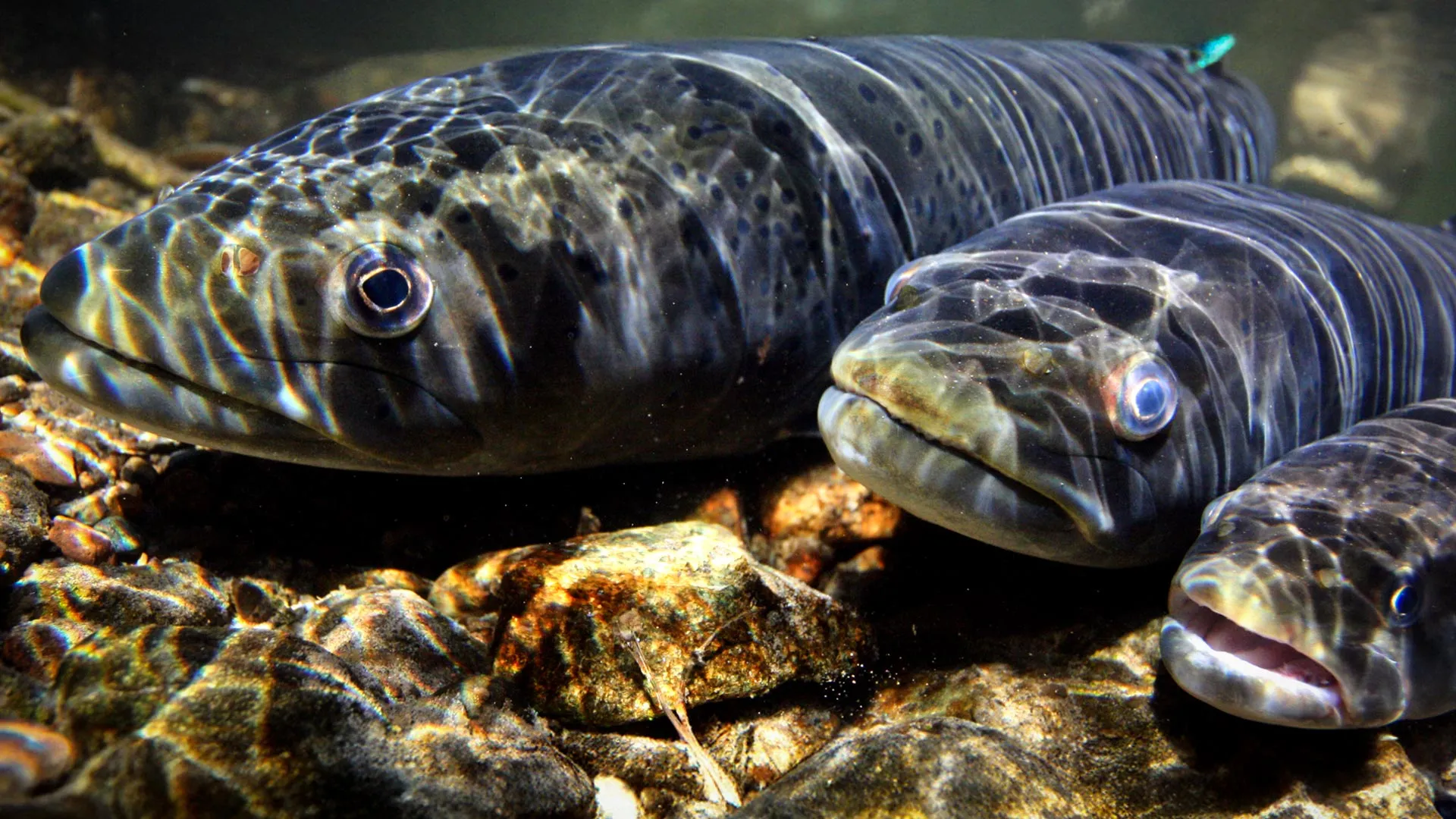
Some of the longest and most important animal migrations on Earth take place beneath the surface of rivers. An important new report from the United Nations environmental treaty, the Convention on the Conservation of Migratory Species of Wild Animals (CMS), warns that many of these migrations are now rapidly collapsing.
A global assessment of migratory freshwater fishes, presented at the CMS 15th Conference of the Parties (COP15) in Brazil, found that migratory freshwater fishes are among the most endangered species in the world. These fish are essential to maintaining healthy rivers, supporting major inland fisheries, and providing food and livelihoods to hundreds of millions of people.
Hundreds of migratory fish species need global protection
This assessment highlights hundreds of migratory fish species that require concerted international action. This provides strong evidence that fish dependent on transboundary rivers are rapidly declining due to dam construction, habitat fragmentation, pollution, overfishing, and climate-related ecosystem changes.
A total of 325 species of migratory freshwater fish have been identified as candidates for international conservation action, representing a largely overlooked biodiversity crisis across shared river systems.
The regional breakdown of the 325 species of migratory freshwater fish (excluding 24 species already listed) that are considered candidates for international protection under Annex I (Species in need of strict protection) and II (Species in need of international cooperation) of the Convention is as follows:
- Asia: 205
- South America: 55
- Africa: 42
- Europe: 50
- North America: 32
(Some species are found on multiple continents, so the total is over 325.)
Major river systems identified as priorities include the Amazon and La Plata-Parana in South America, the Danube in Europe, the Mekong in Asia, the Nile in Africa, and the Ganges and Brahmaputra in the Indian subcontinent.
The report is based on extensive global datasets and IUCN assessments of approximately 15,000 freshwater fish species, providing the most comprehensive overview to date of the conservation challenges facing migratory freshwater fishes.
It also outlines practical steps that governments can take immediately, including:
- protection of migration corridors and environmental flows;
- Basin-scale action planning and transboundary monitoring;
- Seasonal fishing adjustment
The often-overlooked crisis of freshwater biodiversity
The collapse of migratory freshwater fishes has received little attention globally, even though animals living in freshwater ecosystems are declining faster than animals on land or in the ocean.
These fish rely on long, uninterrupted river routes connecting spawning grounds, feeding grounds, and floodplain nurseries, often spanning multiple countries. When these connections are disrupted by dams, water flow changes, and habitat degradation, populations can decline rapidly.
The report estimates that freshwater migratory fish populations have declined by about 81% worldwide since 1970. Nearly all (97%) of the 58 migratory fish species (including freshwater and saltwater species) listed by CMS are currently threatened with extinction.
The findings demonstrate the poor conservation status of hundreds of migratory freshwater fish species and highlight the need to manage rivers as connected systems, rather than treating them as separate national waterways, to protect them.
Amazon basin highlights urgent need for protection
Brazil, which holds the COP15 Presidency, has proposed several conservation measures focused on the Amazon and La Plata Paraná rivers, South America’s largest river systems.
The Amazon Basin remains one of the last major strongholds for migratory freshwater fishes, but increasing development pressures are putting its status at risk.
A case study published concurrently with the global assessment identified 20 Amazonian migratory fish species that meet criteria for potential listing in CMS Appendix II. These long-distance migratory species are central to the region’s fisheries, accounting for approximately 93% of all landings and supporting an industry worth an estimated US$436 million each year.
Some of these fish have amazing journeys. Dorado (golden) catfish (Brachyplatystoma rousseauxii) is a bottom-dwelling species with a metallic gold/silver color and large body (up to 2 meters/6.5 ft) that completes the longest freshwater migration of any known fish. Its life cycle involves a journey of 11,000 kilometers from its headwaters in the Andes to its coastal nurseries.
To strengthen conservation efforts, Brazil and other countries are proposing a multispecies action plan for Amazonian migratory catfish (2026-2036) developed through regional cooperation.
Brazil also suggests adding spotted sorbim catfish (Pseudoplatinoma coruscans) to CMS Appendix II, highlighting the need for coordinated action in the La Plata Basin, where these fish face threats from dams, water flow changes, and fishing pressure.
These efforts represent some of the most ambitious international efforts to protect migratory freshwater fishes. These reinforce CMS’ core principles that conservation solutions must cover the entire geographic range of mobile species and rely on cooperation between countries.
Experts call for concerted global action
Lead author Dr. Zeb Hogan:
“Many of the world’s largest wildlife migrations take place in water. This assessment shows that migratory freshwater fish are in serious danger and that protecting them requires countries working together to keep rivers connected, productive and vibrant.”
CMS Executive Director Amy Frankel:
“This new assessment highlights the important priority of conserving migratory species and their habitats, which has not received sufficient focus. By aligning science, policy and international cooperation, governments can protect the world’s remaining great freshwater fish migrations and the communities and ecosystems that depend on them.”
Michelle Thiem, Vice President and Deputy Director of Freshwater, World Wildlife Fund:
“Rivers don’t recognize borders, and neither do the fish that depend on them. The crisis unfolding beneath our waterways is much deeper than most people realize, and we don’t have time. Rivers must be managed as connected systems, coordinating across borders and investing in basin-wide solutions. We need to invest in basin-wide solutions now, before these movements are lost forever.”
By the numbers: Global decline in migratory fish populations
- 325: Migratory freshwater fish species have been identified as candidates for international coordinated conservation action under CMS (beyond the 24 species already listed in Appendices I and II).
- 205: The species is found only in Asia, making it a global hotspot for endangered migratory freshwater fish.
- 81%: Populations of migratory freshwater fish are estimated to have declined worldwide since 1970, with one of the steepest declines recorded of any major vertebrate group.
- 97%: Percentage of migratory fish listed by CMS that are already endangered.
- 15,000: Freshwater fish species assessed through the IUCN Red List and global datasets used to create this assessment. This is the most comprehensive evidence base ever collected for migratory freshwater fishes.
- 250+: Transnational rivers and lakes around the world. In other words, conservation success depends on cooperation among states, not on the actions of states alone.
- 47%: Approximate percentage of Earth’s surface that is within shared river basins.
- 93%: The proportion of Amazonian fisheries landings is made up of freshwater migratory species, highlighting their important role in the region’s food systems and livelihoods.
- $436 million: Estimated annual value of Amazon fisheries based on migratory species
- 20: Amazon Basin species identified as meeting criteria for potential listing in CMS Appendix II in new case studies.
- More than 10,000 kilometers: The dolphinfish (golden catfish) migration is one of the longest freshwater migrations ever recorded.
- One fundamental solution: manage rivers as connected ecosystems rather than isolated national waterways.
English, Spanish and French documents:
