


Researchers at Umeå University have provided new insights into how cancer cells protect themselves from cell death. This research provides a deeper understanding of how key proteins interact within cells and may support the development of new cancer treatments in the long term.
The survey results were published in a magazine ACS Chemical BiologyHere we show how a central protein can block apoptosis, a process that normally kills cancer cells.
Apoptosis is a type of programmed cell death that plays an important role during embryonic development in removing old or damaged cells and allowing the immune system to function properly. When apoptosis is not working properly, as in many cancers, cells can divide uncontrollably and form tumors.
Many cancer treatments, such as chemotherapy and radiation therapy, work by causing damage and stress to cells, causing apoptosis. However, many tumors are also able to evade this form of cell death, making them resistant to treatment.
Blocks proteins that induce death
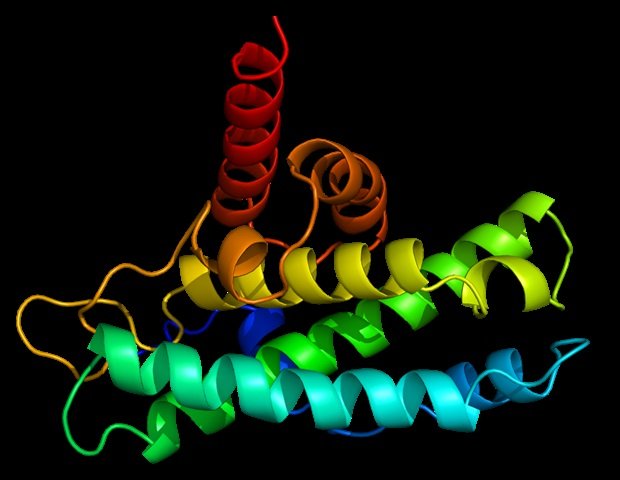
One of the most important proteins regulating apoptosis is the cell killing protein Bax. When Bax is activated, it can form pores in the mitochondrial membrane and initiate apoptosis. Another important protein in the same family, the cell protection protein Bcl-2, instead prevents Bax from killing harmful cells. In nearly half of human cancers, one of the underlying problems is increased production of Bcl-2, which promotes tumor growth and often reduces response to treatment.
In our study, we used advanced neutron experiments to show how Bcl-2 protects cancer cells by blocking death-inducing proteins that are most frequently activated by treatments. ”
Gerhard Gröbner, professor at Umeå University and lead author of the study
This experiment shows that Bcl-2, located on the outer surface of mitochondria, can capture and bind multiple Bax proteins simultaneously. This makes suppression of cell death more efficient than previously thought. Cancer cells do not need to produce very large amounts of Bcl-2 to protect themselves; a moderate increase is sufficient.
Opening up new possibilities for cancer treatment
The researchers also investigated how the composition of mitochondrial membranes affects interactions between proteins. One particular lipid, cardiolipin, can promote apoptosis and help Bax form pores in membranes. However, even in cardiolipin-containing membranes, sufficiently high levels of Bcl-2 can prevent cell death.
“In the long term, this kind of knowledge could open new opportunities for cancer treatment, for example by targeting Bcl‑2 and its protective functions,” says Gerhard Gröbner.
The research was carried out in collaboration with researchers from Umeå University, Lund University, the European Spallation Source (ESS) in Lund, the ISIS Neutron and Muon Source and Diamond Light Source in the UK, and the Laue-Langevin Institute (ILL) in France.
sauce:
Reference magazines:
Eiscough, South East, Others. (2026). Avoidance of mitochondrial apoptosis by Bcl-2-driven Bax oligomerization on membrane surfaces. ACS Chemical Biology. DOI: 10.1021/acschembio.5c00913. https://pubs.acs.org/doi/10.1021/acschembio.5c00913
