


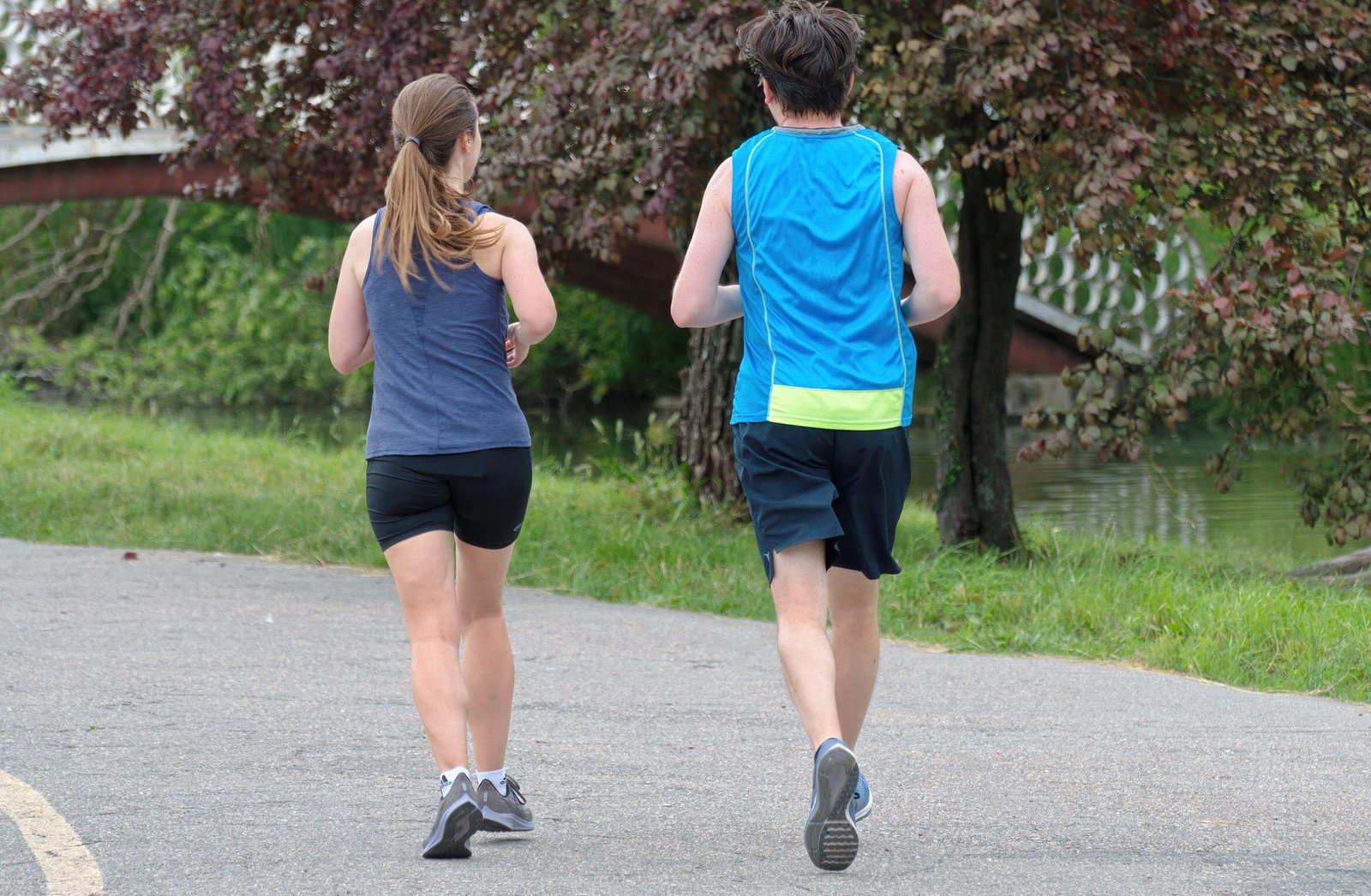
We provide evidence that regular physical activity is an effective way to reduce symptoms of anxiety and depression in people who suffer from chronic insomnia. A recent review of multiple independent studies also suggests that exercise improves overall sleep quality and reduces the severity of sleep disorders. These findings were recently published in the journal physiology and behavior.
Insomnia is a very common condition that causes difficulty falling asleep or staying asleep. This lack of rest often causes severe daytime disability, affecting a person’s social life, occupational functioning, and overall well-being. People diagnosed with this sleep disorder often experience high levels of psychological distress.
This distress often manifests as a symptom of anxiety or depression. Medical professionals are aware that insomnia, anxiety, and depression often interact with each other. Lack of sleep worsens mood, and negative mood disrupts sleep, creating a cycle that is notoriously difficult to treat.
Some evidence suggests that better sleep quality leads to better mental health, and better mental health leads to better sleep quality. Scientists wanted to explore non-drug treatments that could address all three interrelated problems at once. Physical activity is known to improve sleep quality and reduce symptoms of poor mental health in the general population.
Researchers set out to determine whether these mental health benefits of exercise applied specifically to patients formally diagnosed with insomnia. They wanted to see if working out could replace sleeping pills and antidepressants.
“Previous reviews published by us and our colleagues have suggested that anxiety reduction and antidepressant effects may be mechanisms explaining the effects of exercise on sleep. Some of our other previous studies have also shown that anxiety and depression in patients with chronic insomnia have been significantly reduced. We investigated the effect of exercise on disease symptoms and found that these variables were significantly reduced. This motivated us to conduct a meta-analysis to examine the level of evidence,” said Gisele Soares Passos, study author and Associate Professor at Jatai Federal University.
Meta-analysis is a statistical method that combines the mathematical results of multiple independent studies to find overall trends. The research team searched eight large academic databases for studies published through May 2022. Specifically, we looked for studies that compared an exercise intervention with a non-exercise control group in adults aged 18 years and older.
The researchers ultimately selected six randomized controlled trials and one quasi-randomized trial. A randomized controlled trial is a research design in which participants are randomly assigned to receive treatment or be part of a control group, which helps eliminate bias. These seven studies included a total of 336 participants.
Exercise programs varied widely across the selected studies and were characterized by different modes, intensities, and durations. Participants engaged in activities such as brisk walking, treadmill running, stationary biking, strength training, yoga, and tai chi. Training routines ranged from once a week to daily sessions.
The duration of these exercise programs lasted from 8 to 24 weeks. In contrast, control groups typically received standard sleep hygiene education, basic attention from researchers, or no intervention at all. To measure outcomes, the original study used a variety of standardized psychological questionnaires.
These questionnaires included tools such as the Beck Anxiety Inventory and the Center for Epidemiologic Research Depression Scale, which ask patients to rate their own psychiatric symptoms. The study also used specific surveys to measure subjective sleep quality, such as the Insomnia Severity Index. Some studies have tracked objective sleep data using a technique called actigraphy.
In actigraphy, participants wear a small sensor device similar to a smartwatch on their wrist to monitor their body movement and rest patterns throughout the night. Researchers found that regular physical activity significantly reduced symptoms of anxiety compared to a control group. Similarly, participants who exercised experienced significantly less depressive mood.
Statistical analysis provides evidence that the psychological benefits of working out are consistent and measurable for people who suffer from chronic sleep problems. Physical activity also improved participants’ subjective experience of rest. Scientists noted significant reductions in scores on certain insomnia scales, indicating that insomnia symptoms were much reduced.
Many participants saw their scores drop to levels indicating mild subthreshold insomnia. Participants also reported significantly improved overall sleep quality on a self-assessment survey. By examining objective data collected from wrist sensors, scientists found tangible improvements in nighttime rest patterns.
Exercise significantly reduced the amount of time participants spent awake after they first fell asleep. On average, participants who exercised spent nearly nine minutes less tossing and turning during the night. This decrease suggests that physical activity helps solidify sleep and make it more continuous.
However, exercise intervention did not change all aspects of sleep architecture. Wrist sensors did not show any significant improvement in the time it took participants to fall asleep for the first time after getting into bed. Total time spent sleeping and overall sleep efficiency also remained relatively unchanged, according to objective sensors.
The results show that “practicing regular exercise not only reduces the severity of insomnia, improves sleep quality, and reduces wakefulness after falling asleep, but may also improve symptoms of anxiety and depression in insomnia patients,” Passos told SciPost.
Although these findings are promising, there are some limitations that should be considered. The researchers note that the total number of studies included was relatively small, with a total sample size of just over 300 people. Some of the first trials also had methodological challenges.
For example, it is generally impossible to make participants unaware of whether they are in an exercise group or a non-exercise group. This lack of blinding may affect the reliability of psychological results. Due to the limited research available, there was not enough data to determine the ideal exercise routine.
It is currently unknown which specific type, intensity, frequency, or duration of exercise is most effective in reducing anxiety and depression in people with insomnia. People should not assume that all workout routines provide the exact same mental health benefits. Future research may address these gaps by conducting larger studies with more rigorous designs.
Researchers now plan to directly compare exercise with cognitive behavioral therapy, a highly effective type of talk therapy used to treat insomnia. They also plan to investigate how physical activity and non-invasive brain stimulation techniques can be combined. The team’s past research has also looked at how exercise can be combined with treatments such as acupuncture and common sleeping pills.
The study, “The Effects of Exercise on Anxiety and Depression in Patients with Insomnia: A Systematic Review and Meta-Analysis,” was authored by Daniela Pantaleon Ferreira, Gisele Soares Passos, Sean D. Youngstead, and Marcos Gonçalves Santana.
