

Close Menu

    Subscribe to Updates

    Get the latest creative news from FooBar about art, design and business.

    What's Hot

    GAO report shows gaps in enforcement against illegal e-cigarettes

    April 10, 2026

    Procurement bottlenecks increase risk of U.S. drug shortages: report

    April 10, 2026

    Scientists think there may be two forms of dark matter

    April 10, 2026
    Facebook X (Twitter) Instagram
    Facebook X (Twitter) Instagram
    Health Magazine
    • Home
    • Environmental Health
    • Health Technology
    • Medical Research
    • Mental Health
    • Nutrition Science
    • Pharma
    • Public Health
    • Discover
      • Daily Health Tips
      • Financial Health & Stability
      • Holistic Health & Wellness
      • Mental Health
      • Nutrition & Dietary Trends
      • Professional & Personal Growth
    • Our Mission
    Health Magazine
    Home » News » Quitting tobacco could boost incomes for millions of Indian families
    Discover

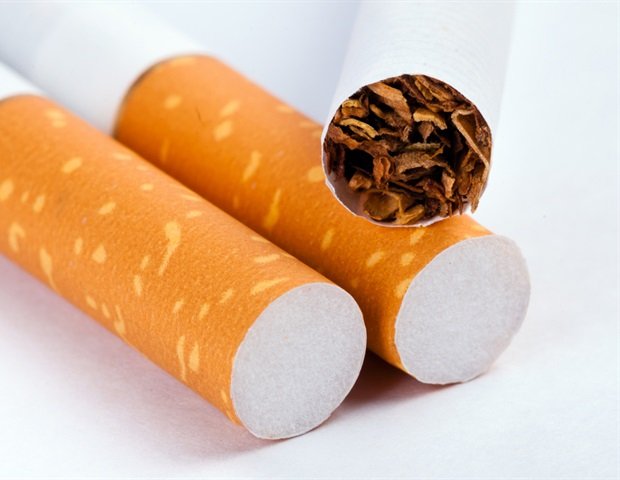
    Quitting tobacco could boost incomes for millions of Indian families

    healthadminBy healthadminApril 10, 2026No Comments4 Mins Read
    Quitting tobacco could boost incomes for millions of Indian families
    Share
    Facebook Twitter Reddit Telegram Pinterest Email


    An economic analysis published in an open access journal suggests that quitting tobacco could bring a significant economic boost to the incomes of more than 20 million households in India. BMJ Global Health.

    The biggest impact will be felt in rural areas and the poorest households, but 7 million middle-income households will also benefit, estimates suggest.

    About 80% of tobacco users live in low- and middle-income countries, where a significant portion of household income is spent on tobacco products, the researchers said.

    They added that the treatment of tobacco-related diseases and associated lost productivity due to illness and premature death collectively cost the world more than $1 trillion in economic costs each year. And they explain that the money spent on cigarettes has little value on basic necessities such as food, education and health care.

    They wanted to quantify the long-term economic benefits of quitting smoking for households in low- and middle-income countries, and estimate how many households could be lifted out of poverty by doing so.

    They extracted data from the 2022-23 Household Consumption and Expenditure Survey (HCES) of the National Sample Survey of India (NSS) for the period July 2022 to June 2023.

    The survey included 261,746 nationally representative households, of which 59% lived in rural areas of the country. It is structured according to household characteristics. Groceries. Consumables including taxes (pot), cigarettes, alcohol, and services. And durable items.

    Household consumption of tobacco products was recorded for 7 days and included bidis, cigarettes, gutka, zarda, kiman, suri, leaf tobacco, cheroot, snuff, and other types.

    Monthly household expenditures were estimated using Deaton’s equivalence scale, a rigorous economic framework that measures how household needs vary with resident size and age.

    The data showed that among the poorest households, the highest monthly per capita expenditure was on tobacco (6.4%), as well as rural households (6.6%).

    And as household income increased, the proportion of spending on tobacco decreased. Among poor households, the rate was 4.4%. 3.6% for middle-income households. 2.8% for wealthy families. and 2% for the wealthiest tier.

    Rural households allocate a greater proportion of their income to tobacco across all economic groups, suggesting the influence of specific cultural, social and accessibility factors in rural areas, the researchers said.

    A comprehensive analysis of the economic mobility potential after quitting smoking shows that 20.5 million households (11%) in India will receive a significant economic boost and move up one economic class.

    Geographic disparities are significant, with rural areas offering greater potential for economic improvement, with 17 million households (12%) benefiting compared to 3.5 million households (just over 7%) in urban areas.

    Estimates show that an additional 129,841 (0.1%) households could move up into two economic categories and 10,781 households could move up into three economic categories.

    Middle-income households would also benefit, with 5 million people (13%) moving into the wealthier category. Again, more rural households (14%) are likely to benefit than urban households (9%).

    This is an observational study and is based on estimates. Therefore, no definitive conclusions can be drawn about the actual economic benefits of quitting tobacco use. The researchers also point out that just because money isn’t spent on cigarettes doesn’t necessarily mean it’s spent on necessities like food and education.

    Nevertheless, they suggest that their results show that “tobacco consumption acts as a significant barrier to economic development for millions of households.

    “The finding that 20.49 million households could move into a higher economic class provides unprecedented evidence of the direct economic constraints of tobacco and the potential relief of quitting,” the researchers wrote.

    “Our results show that smoking cessation is not only a health imperative, but also a powerful economic tool for poverty reduction,” the researchers added.

    “In the Indian context, where childhood malnutrition remains a significant challenge, the economic benefits of smoking cessation could contribute significantly to improved health outcomes for children, especially in rural households where the economic impact is most pronounced,” the researchers said.

    “The significant resources released by tobacco cessation (on average 6.6% of (monthly per capita expenditures) for the poorest rural households) represent meaningful opportunities to improve child nutrition, access to health care, and investment in education,” the researchers continued.

    They conclude that “international development agencies should consider smoking cessation assistance as a poverty reduction strategy, rather than just a health intervention, given that it is particularly effective in rural areas (in low- and middle-income countries) and has the potential to achieve the dual objectives of improving health outcomes and economic development.”

    sauce:

    Reference magazines:

    Bose, M. others. (2026). The economics of smoking cessation: Estimating the potential for improving Indian households by quitting smoking. BMJ Global Health. DOI: 10.1136/bmjgh-2025-019903. https://gh.​bmj.com/content/11/4/e019903


    Source link

    Visited 1 times, 1 visit(s) today
    Share. Facebook Twitter Pinterest LinkedIn Telegram Reddit Email
    Previous ArticleGoodbye colonoscopy? New stool test detects 90% of colorectal cancers
    Next Article Two new tuberculosis vaccines show safety but limited protection
    healthadmin

    Related Posts

    Dynamic AI models detect tipping points in the body and predict disease before symptoms appear

    April 10, 2026

    New CellCelector CLD takes you from thousands of candidates to top clones faster

    April 10, 2026

    Large US study finds unmarried adults at increased risk of most major cancers

    April 10, 2026

    Barrow Neuroanalysis Center grows to advance neuroscience research

    April 10, 2026

    DARC-NESS model provides insight into children’s persistent nightmares

    April 10, 2026

    Two new tuberculosis vaccines show safety but limited protection

    April 10, 2026
    Add A Comment
    Leave A Reply Cancel Reply

    Categories

    • Daily Health Tips
    • Discover
    • Environmental Health
    • Exercise & Fitness
    • Featured
    • Featured Videos
    • Financial Health & Stability
    • Fitness
    • Fitness Updates
    • Health
    • Health Technology
    • Healthy Aging
    • Healthy Living
    • Holistic Healing
    • Holistic Health & Wellness
    • Medical Research
    • Medical Research & Insights
    • Mental Health
    • Mental Wellness
    • Natural Remedies
    • New Workouts
    • Nutrition
    • Nutrition & Dietary Trends
    • Nutrition & Superfoods
    • Nutrition Science
    • Pharma
    • Preventive Healthcare
    • Professional & Personal Growth
    • Public Health
    • Public Health & Awareness
    • Selected
    • Sleep & Recovery
    • Top Programs
    • Weight Management
    • Workouts
    Popular Posts
    • the-pros-and-cons-of-paleo-dietsThe Pros and Cons of Paleo Diets: What Science Really Says April 16, 2025
    • Improve Mental Health10 Science-Backed Practices to Improve Mental Health… March 11, 2025
    • How Healthy Living Is Transforming Modern Wellness TrendsHow Healthy Living Is Transforming Modern Wellness… December 3, 2025
    • Kankakee_expansion.jpgCSL releases details of $1.5 billion U.S.… March 10, 2026
    • urlhttps3A2F2Fcalifornia-times-brightspot.s3.amazonaws.com2Fc32Fcd2F988500d440f2a55515940909.jpegA ‘reckless’ scrapyard with a history of… October 24, 2025
    • Healthy Living: Expert Tips to Improve Your Health in 2026Healthy Living: Expert Tips to Improve Your Health in 2026 November 16, 2025

    Demo
    Stay In Touch
    • Facebook
    • Twitter
    • Pinterest
    • Instagram
    • YouTube
    • Vimeo
    Don't Miss

    GAO report shows gaps in enforcement against illegal e-cigarettes

    By healthadminApril 10, 2026

    Thousands of illegal e-cigarettes are sold in the United States, and the Trump and Biden…

    Procurement bottlenecks increase risk of U.S. drug shortages: report

    April 10, 2026

    Scientists think there may be two forms of dark matter

    April 10, 2026

    Dynamic AI models detect tipping points in the body and predict disease before symptoms appear

    April 10, 2026

    Subscribe to Updates

    Get the latest creative news from SmartMag about art & design.

    HealthxMagazine
    HealthxMagazine

    At HealthX Magazine, we are dedicated to empowering entrepreneurs, doctors, chiropractors, healthcare professionals, personal trainers, executives, thought leaders, and anyone striving for optimal health.

    Our Picks

    Dynamic AI models detect tipping points in the body and predict disease before symptoms appear

    April 10, 2026

    The surprising relationship between loneliness, status, and shopping habits

    April 10, 2026

    This new chip could reduce energy waste in data centers

    April 10, 2026
    New Comments
      Facebook X (Twitter) Instagram Pinterest
      • Home
      • Privacy Policy
      • Our Mission
      © 2026 ThemeSphere. Designed by ThemeSphere.

      Type above and press Enter to search. Press Esc to cancel.