


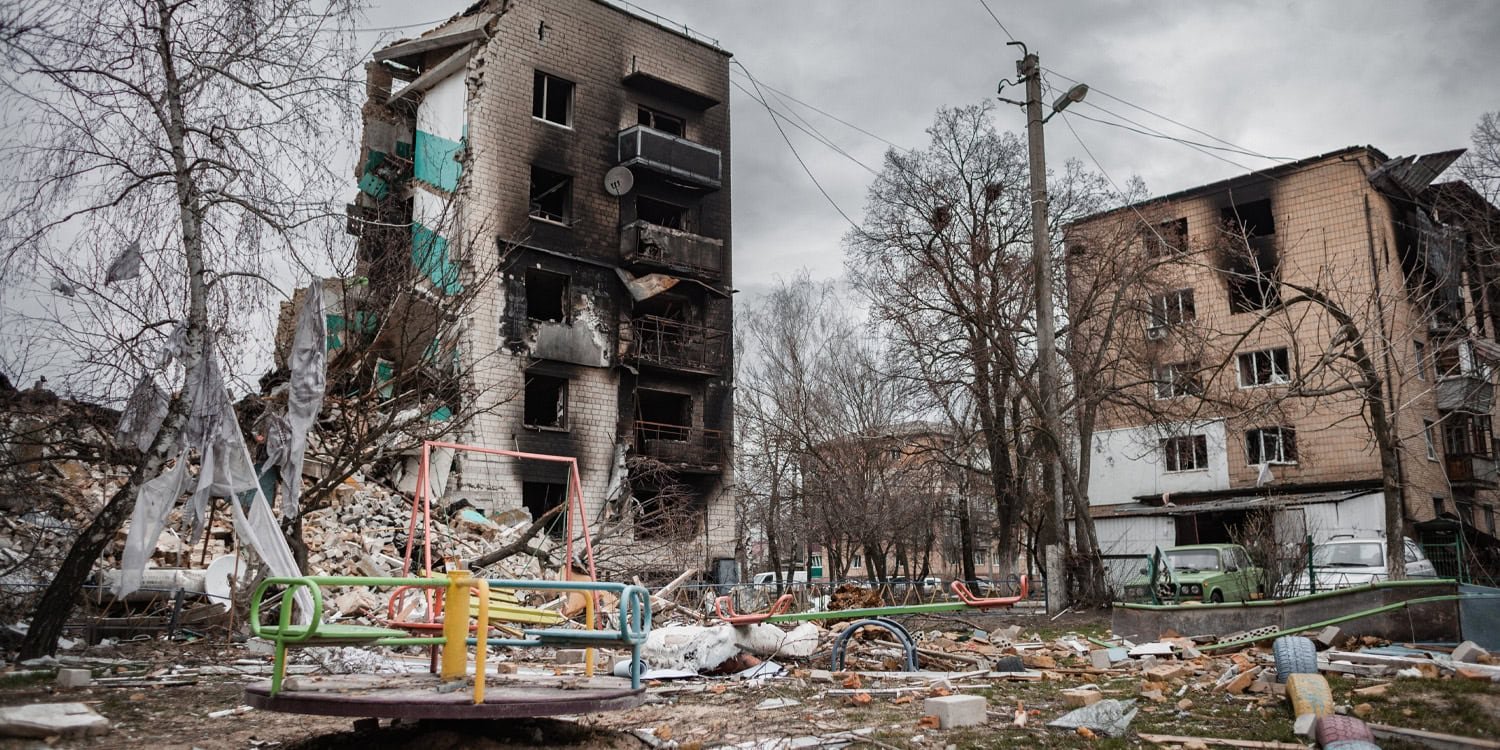
In various types of military conflicts, people with conservative political views are more likely to accept unintended civilian deaths than those with liberal views. This ideological divide is consistent whether the war is against a real adversary, a strategic partner, or a completely fictitious state. The results of this study were recently published in the European Journal of Social Psychology.
Public opinion plays a major role in how governments wage war and respond to international conflicts. Tolerance for civilian casualties can have implications for diplomacy, military strategy, and humanitarian aid. The researchers wanted to understand what causes the deep political divisions often found in opinion polls about wartime casualties. They questioned whether this rift was tied to specific real-world conflicts or reflected deeper psychological differences between political groups.
The research team was led by Julia Elad Strenger, a researcher at Bar-Ilan University in Israel. She collaborated with Daniel Statmann of the University of Haifa and Thomas Kessler of Germany’s Friedrich Schiller University Jena. They designed a series of experimental studies to isolate the moral aspects of wartime decision-making. Specifically, we wanted to see whether right-leaning individuals generally tolerate more civilian deaths than left-leaning individuals in a variety of situations.
The researchers designed this study to address specific problems found in previous polling data. Past research has often blurred the line between whether the war itself is justified and whether certain actions in that war are justified. By setting all scenarios strictly as self-defense wars, the team held constant the initial legitimacy of the war. This completely isolated the participants’ views on the actions taken during the battle itself.
To explain why these differences exist, the researchers turned to a psychological framework known as Moral Foundations Theory. This theory suggests that human morality is built on several basic pillars. Some foundations are considered personalizing, with a focus on protecting individuals from harm and ensuring absolute fairness overall. Others are known as binding foundations and focus on maintaining group loyalty, prioritizing respect for authority, and protecting the purity of society.
Researchers conducted six separate studies involving thousands of participants from Israel and the United States. In most experiments, participants read a short text describing a self-defense war. In the story, a country comes under attack and prepares to attack an enemy military headquarters in a populated civilian area. To separate purely ethical judgments from actual military reality, the team also measured the number of casualties that participants believed were absolutely inevitable in order to achieve military goals.
After reading the scenario, participants were asked to state the absolute maximum number of unintentional civilian deaths that they considered morally acceptable. To ensure that their findings were not tied solely to a single real-world event, the researchers varied the identities of the belligerent groups from experiment to experiment. Israeli participants read out scenarios that involve not only strategic partners like Egypt, but also actual enemies like the Palestinians and Iran. American participants were given an identical scenario, but with North Korea portrayed as an active rival and Iraq as a strategic partner.
In other versions of the study, researchers used completely fabricated countries to remove existing historical bias. It also changed the participants’ perspectives within these hypothetical scenarios. In some cases, participants were asked to imagine that they were citizens of the country conducting the military attack. In other cases, they acted as neutral outside observers monitoring developments in the conflict. This allowed the researchers to separate basic nationalism from underlying moral judgments.
The results remained surprisingly consistent across all variations. Right-wing participants regularly reported far more acceptable numbers of civilian casualties than left-wing participants. This ideological gap manifested itself when evaluating current enemies, strategic allies, and completely fictitious states. It was also the case whether participants imagined themselves as members of the attacking country or as independent observers.
When investigating the reasons behind this divide, researchers found that personalizing moral foundations was the strongest explanation. Left-leaning individuals scored much higher on measures of harm avoidance and fairness. This emphasis on protecting the welfare of individuals, regardless of group identity, was directly linked to a decline in the acceptance of civilian casualties.
On the one hand, researchers focused on binding moral foundations that prioritize group loyalty and safety. Although right-leaning individuals did score higher on these group-focused values, this difference did not fully explain their higher tolerance for civilian death. The ideological gap was primarily caused by different levels of concern about individual harm, rather than different levels of group loyalty.
The researchers also tested whether people simply followed the expected norms of their political parties. Although perceived political norms played a role in some hypothetical scenarios, personal moral values remained the strongest and most consistent factor. To test this in practice, the researchers conducted one of their studies during the actual outbreak of the Israeli-Hamas war in late 2023. Even in the midst of a real crisis with a high level of national unity, the differences between left and right remain, and this too is driven by individualized moral values rather than group consensus.
In a final experiment, the researchers attempted to directly manipulate these perceived group norms. They showed participants data suggesting that their political groups strongly opposed or largely accepted civilian casualties. This allowed participants to successfully change the minds of their political peers, but not their personal judgments about acceptable levels of victimization. This reinforced the idea that deeply held personal values dictated these views.
Although the results span multiple contexts, the researchers note several limitations to their study. The real-world scenario used in the study involved a foreign rival that is generally perceived to be less democratic than the participants’ home country. This particular power relationship can increase the perceived legitimacy of military action and produce outcomes that would not occur in conflicts between two similarly allied democracies.
Furthermore, asking people to estimate the number of casualties that would be acceptable in a hypothetical scenario may not fully capture how they would process real-time news about wartime deaths. Exploring how people react to casualties caused by allies can reveal different psychological patterns. This dynamic could also change completely if researchers asked participants about casualties inflicted on their country by foreign forces.
Future research is needed to determine whether these patterns also hold in countries with lower levels of political polarization. The researchers also suggest examining longitudinal data to track how these moral judgments change over a person’s life. Ultimately, they hope to test whether exposing people to different moral frameworks can temporarily alter civilian acceptance of harm during war.
The study, “Left-right ideological differences in moral judgment: The case for collateral acceptance of civilian killings in war,” was authored by Julia Elad Strenger, Daniel Statman, and Thomas Kessler.
