


Researchers at China’s Xi’an Jiaotong Liverpool University (XJTLU) have developed a streamlined process that facilitates the production of small therapeutic particles, called exosomes, that are released from cells and are being studied as a new type of medicine. By using nanoparticle-based systems, researchers were able to overcome major barriers that have slowed the medical and industrial deployment of these treatments. Their findings were published in the magazine cutting edge science.
Exosomes are naturally released by cells and transmit signals that help repair tissues and regulate the immune system. Exosomes do not divide or mutate over time, making them safer than live cell therapies and less likely to cause side effects such as tumor growth. Scientists can also manipulate exosomes to design enhanced versions that are more effective in treatments.
“The field of cell therapy is really starting to change medicine,” explains study leader Dr Gan Ruan from the Wisdom Lake Academy of Pharmacy at Xi’an Jiaotong Liverpool University. “We have had success with stem cells repairing damaged tissue and immune cells fighting cancer. Engineered exosomes are like an enhanced version of natural exosomes. You can think of them like Iron Man or Captain America, an engineered version of humans.”
Despite their promise, genetically engineered exosomes are difficult to produce efficiently as the process involves multiple steps. This means that first cells need to release exosomes, therapeutic substances such as drugs need to be loaded into the cells, exosomes need to be separated from the fluid in which they have grown, and finally they need to be stored to remain stable. Many existing technologies improve only one or two of these steps, making production slow, costly, and difficult to scale.
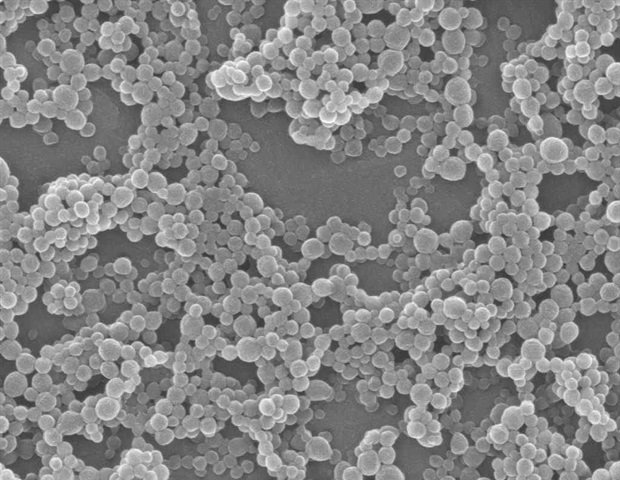
To overcome this challenge, the team developed a specially designed nanoparticle-centered platform. When mesenchymal stem cells, a type of stem cell commonly used in research, are grown with these nanoparticles, the cells release far more exosomes than normal, and the drug and magnetic particles are automatically packed into the exosomes as they are formed.
We have built a production system that improves four processes at once. It works because it combines three new ideas: a new interaction between nanoparticles and cells, a new type of nanomaterial, and a new design of the manufacturing equipment. This is the first time the entire process has been integrated in this way. ”
Dr. Xiaowei Wen from Jiangsu Higher Education Cell Therapy Nanoformulation Key Laboratory at XJTLU, co-first author of this study
Exosomes are isolated using a new magnetic technique called mobile internal magnetic separation (MIMS). Unlike traditional methods, which slow down as production scale increases, MIMS allows for rapid and efficient collection of exosomes even at large scales. Engineered exosomes are stable during storage and remain structurally intact even after freeze-drying and subsequent rehydration.
This product has a special “Russian doll” structure, consisting of nanoparticles containing drugs inside exosomes. This special structure allows each exosome to hold a very large amount of drug molecules without compromising exosome stability. Nanoparticles within exosomes also enable imaging and tracking in biological environments, which has previously been difficult for exosomes.
Researchers tested the technology in models of Parkinson’s disease, pulmonary fibrosis, wound healing, heart failure, and polycystic ovary syndrome. “We found that this approach is effective across multiple diseases,” says Dr. Luan, who is also director of the aforementioned Jiangsu Provincial Key Laboratory of Cell Therapy Nanoformulation. “Not only is it practical and scalable, but it also maintains consistent quality, which is essential for industrial applications, and has the potential to provide patients with faster access to safer and more effective engineered exosome therapies.”
“Making this project a reality took years of interdisciplinary teamwork in key laboratories in Jiangsu Province, as well as collaboration with clinical partners such as the Fourth Affiliated Hospital of Dongzhou University and the Seventh Affiliated Hospital of Southern Medical University.”
sauce:
Xi’an Jiaotong University – University of Liverpool
Reference magazines:
Wen, X. others. (2026). A complete manufacturing pipeline for chemically modified exosomes integrating nanoparticles. cutting edge science. DOI: 10.1002/advs.202516075. https://advanced.onlinelibrary.wiley.com/doi/10.1002/advs.202516075
