


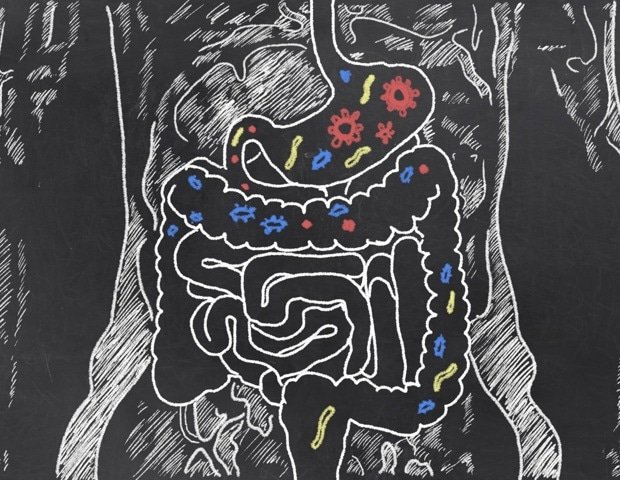
A new research paper has been published in Volume 18. Aging-United States Published on March 12, 2026, entitled “Neural Network Model of Blood Biochemistry and Gut Bacteria to Predict Human Biological Age.”
Led by Anastasia A. Kobelyatskaya of the Institute of Gerontology Clinical Research Center of the Russian National Research Medical University of Pirogov and the Institute of Aging Biology with the Preventive Medicine Clinic of the Petrovsky Russian Surgical Research Center, and Alexey Moskarev of the Institute of Aging Biology with the Preventive Medicine Clinic and Preventive Medicine Clinic of the Petrovsky Russian Surgical Research Center as the corresponding author, this study will build on the following: A sex-specific biochemical model (seven routine clinical markers and a sex-specific set such as cystatin-C, IGF-1, and DHEAS) and a microbiome model (45 species measured by full-length 16S sequencing). Both models were trained and tested on the same dataset of 637 people and achieved an average absolute error of approximately 6 years and an R² value of greater than 0.8.
The research team focused on interpretability. SHAPley Additive exPlanations (SHAP) is applied to transform each model from a “black box” into a more interpretable tool, and allows for the analysis of individual predictors (e.g., DHEAS, cystatin C, NT-proBNP, and Blautia obeum Microbiome models change the predicted age of a given individual. The biochemical clock has generated a small (clinically usable) predictor set (7 markers) to facilitate clinical translation. On the other hand, the microbiota clock used a 45-species signature and highlighted microbiota taxa whose abundance gradients correlated with predicted microbial age.
“The proposed model has both global and local explainability and therefore has future potential for application in monitoring the effectiveness of different interventions in clinical trials.”
The authors note limitations and next steps. The cohort is limited to a Caucasian population, and the microbiome model requires sequencing resources, which may limit immediate clinical deployment. They call for external validation in larger, ethnically diverse cohorts, prospective testing to link model predictions to health outcomes, and application of explainable models to monitor response in intervention trials (e.g., lifestyle, dietary, drug studies) where predicted changes in biological age signal early, interpretable benefit.
sauce:
Reference magazines:
Kobelyatskaya, A.A. others. (2026). A neural network model of blood biochemistry and gut bacteria to predict human biological age. aging. DOI: 10.18632/Aging.206360. https://www.aging-us.com/article/206360/text
