

Close Menu

    Subscribe to Updates

    Get the latest creative news from FooBar about art, design and business.

    What's Hot

    Scientists finally discover atomic defects hidden inside computer chips

    March 6, 2026

    Scientists discover hidden powers that help wire the brain

    March 6, 2026

    Humpback whale recovery results in new father of calf

    March 6, 2026
    Facebook X (Twitter) Instagram
    Facebook X (Twitter) Instagram
    Health Magazine
    • Home
    • Environmental Health
    • Health Technology
    • Medical Research
    • Mental Health
    • Nutrition Science
    • Pharma
    • Public Health
    • Discover
      • Daily Health Tips
      • Financial Health & Stability
      • Holistic Health & Wellness
      • Mental Health
      • Nutrition & Dietary Trends
      • Professional & Personal Growth
    • Our Mission
    Health Magazine
    Home » News » New microscope captures 3D blood flow and oxygenation at single-cell resolution
    Discover

    New microscope captures 3D blood flow and oxygenation at single-cell resolution

    healthadminBy healthadminMarch 5, 2026No Comments4 Mins Read
    Share
    Facebook Twitter Reddit Telegram Pinterest Email


    The brain relies on a real-time supply of oxygen and nutrients through the microvasculature, which runs like electrical wires through nerve tissue. Modern imaging techniques allow researchers to track the activity of individual neurons in the brain, but they have not yet advanced enough to dissect microvascular function at comparable spatial scales. This gap impedes our understanding of cerebral small vessel disease and its contribution to cognitive impairment and dementia.

    To address this challenge, a research team at Washington University in St. Louis and Northwestern University, led by Song Hu, professor of biomedical engineering in the McKelvey School of Engineering, developed super-resolution functional photoacoustic microscopy (SR-fPAM). SR-fPAM allows researchers to image blood flow and oxygenation in the mouse brain at single-cell resolution by tracking the movement and oxygenation-dependent color changes of red blood cells. This fills a critical gap in functional microvascular imaging and has the potential to provide new insights into microvascular health and diseases such as stroke, vascular dementia, and Alzheimer’s disease.

    The research results will be published on March 3, 2026. Light: Science and Applications.

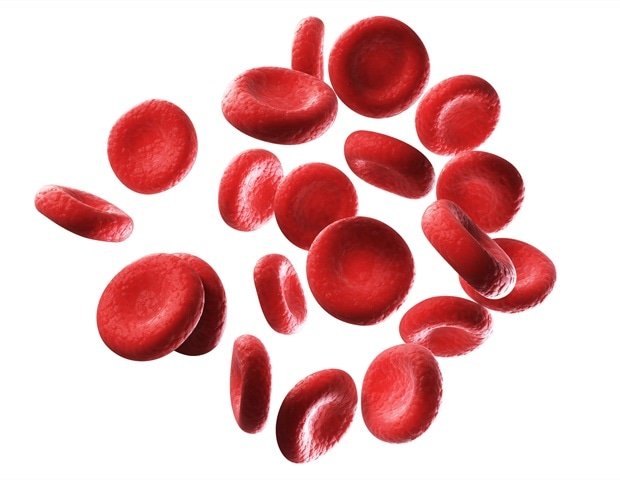
    Red blood cells, which are abundant in blood vessels, naturally absorb light through hemoglobin, a molecule responsible for oxygen transport. When exposed to short laser pulses, hemoglobin emits ultrasound waves. This is a phenomenon known as the photoacoustic effect. Conventional photoacoustic microscopy can image blood vessels without labeling, but does not provide single-cell resolution in 3D.

    Hu’s team addressed this limitation by developing a high-speed photoacoustic microscope that can repeatedly image the same brain region every millisecond, allowing the movement of red blood cells to be tracked in single files in capillaries and in groups in larger blood vessels. By tracking these cells over a series of frames and computationally accumulating their trajectories, the researchers were able to reconstruct 3D microvascular structures at single-cell resolution.

    Similar to super-resolution fluorescence and ultrasound imaging, SR-fPAM leverages high-speed imaging to track dynamics and uses that information to identify features smaller than traditional resolution limits. Condense multiple spatiotemporally acquired frames into a single frame with significantly improved resolution. ”


    Song Hu, Professor of Biomedical Engineering, McKelvey School of Engineering

    In their experiments, SR-fPAM revealed how blood flow and oxygen supply are redistributed across a 3D microvascular network in the brain after an induced stroke. When a single microvessel was occluded, the flow patterns of nearby blood vessels instantly changed, allowing red blood cells to redirect and maintain oxygen supply to the affected tissue.

    “If one blood vessel becomes clogged, red blood cells take another route to continue blood flow and oxygen delivery,” Hu said. “With SR-fPAM, we can observe not only structural changes in 3D microvasculature, but also how fast red blood cells move, how their direction of flow changes, and how red blood cells release oxygen to surrounding tissues in response to stroke-induced ischemia.”

    Looking to the future, Hu and his team hope to combine SR-fPAM with two-photon microscopy to be able to simultaneously image both red blood cells and neurons at single-cell resolution.

    “This will allow us to study how neurons and microvessels are spatiotemporally regulated and how their dynamic coupling is disrupted during disease,” Professor Hu said. “It may also help better interpret clinical neuroimaging techniques, such as functional MRI, which infer brain activity from vascular signals.

    Hu said this research could have significant translational implications.

    “Cerebral small vessel disease is increasingly recognized as a major cause of cognitive impairment and dementia, and WashU is at the forefront of this in both basic and clinical research,” said Hu. “A better understanding of how microvascular oxygenation and blood flow change during the early stages of disease could help develop early detection strategies and therapeutic interventions.”

    sauce:

    Washington University in St. Louis

    Reference magazines:

    Zon, F. others. (2026). Super-resolution functional photoacoustic microscopy with label-free cell tracking. Light: Science and Applications. DOI: https://doi.org/10.1038/s41377-026-02235-3. https://www.nature.com/articles/s41377-026-02235-3


    Source link

    Visited 1 times, 1 visit(s) today
    Share. Facebook Twitter Pinterest LinkedIn Telegram Reddit Email
    Previous ArticleUnderstanding Indigenous Health
    Next Article Study reveals hidden challenges for women with gestational diabetes
    healthadmin

    Related Posts

    Researchers propose that Parkinson’s disease may start in the gut, not the brain

    March 6, 2026

    Study reveals hidden challenges for women with gestational diabetes

    March 5, 2026

    Understanding Indigenous Health

    March 5, 2026

    Study reveals disease-relevant role of tunny sites in neurodegeneration

    March 5, 2026

    Scientists call for physical activity to be incorporated into psychiatric treatment

    March 5, 2026

    Virtual reality system supports social skills training for autistic people

    March 5, 2026
    Add A Comment
    Leave A Reply Cancel Reply

    Categories

    • Daily Health Tips
    • Discover
    • Environmental Health
    • Exercise & Fitness
    • Featured
    • Featured Videos
    • Financial Health & Stability
    • Fitness
    • Fitness Updates
    • Health
    • Health Technology
    • Healthy Aging
    • Healthy Living
    • Holistic Healing
    • Holistic Health & Wellness
    • Medical Research & Insights
    • Mental Health
    • Mental Wellness
    • Natural Remedies
    • New Workouts
    • Nutrition
    • Nutrition & Dietary Trends
    • Nutrition & Superfoods
    • Nutrition Science
    • Pharma
    • Preventive Healthcare
    • Professional & Personal Growth
    • Public Health
    • Public Health & Awareness
    • Selected
    • Sleep & Recovery
    • Top Programs
    • Weight Management
    • Workouts
    Popular Posts
    • the-pros-and-cons-of-paleo-dietsThe Pros and Cons of Paleo Diets: What Science Really Says April 16, 2025
    • Improve Mental Health10 Science-Backed Practices to Improve Mental Health… March 11, 2025
    • How Healthy Living Is Transforming Modern Wellness TrendsHow Healthy Living Is Transforming Modern Wellness… December 3, 2025
    • daily vitamin D needsWhy Sunlight Is Crucial for Your Daily Vitamin D Needs June 12, 2025
    • Healthy Living: Expert Tips to Improve Your Health in 2026Healthy Living: Expert Tips to Improve Your Health in 2026 November 16, 2025
    • The Science Behind Keto Diets: Is It Right for You?The Science Behind Keto Diets: Is It Right for You? April 11, 2025

    Demo
    Stay In Touch
    • Facebook
    • Twitter
    • Pinterest
    • Instagram
    • YouTube
    • Vimeo
    Don't Miss

    Scientists finally discover atomic defects hidden inside computer chips

    By healthadminMarch 6, 2026

    Researchers at Cornell University have used high-resolution 3D imaging to identify atomic-scale defects in computer…

    Scientists discover hidden powers that help wire the brain

    March 6, 2026

    Humpback whale recovery results in new father of calf

    March 6, 2026

    Researchers propose that Parkinson’s disease may start in the gut, not the brain

    March 6, 2026

    Subscribe to Updates

    Get the latest creative news from SmartMag about art & design.

    HealthxMagazine
    HealthxMagazine

    At HealthX Magazine, we are dedicated to empowering entrepreneurs, doctors, chiropractors, healthcare professionals, personal trainers, executives, thought leaders, and anyone striving for optimal health.

    Our Picks

    Researchers propose that Parkinson’s disease may start in the gut, not the brain

    March 6, 2026

    Tylenol orders for pregnant women drop after Trump links to autism

    March 5, 2026

    Long-term use of ADHD drugs is unlikely to cause lasting changes to the developing brain

    March 5, 2026
    New Comments
      Facebook X (Twitter) Instagram Pinterest
      • Home
      • Privacy Policy
      • Our Mission
      © 2026 ThemeSphere. Designed by ThemeSphere.

      Type above and press Enter to search. Press Esc to cancel.