


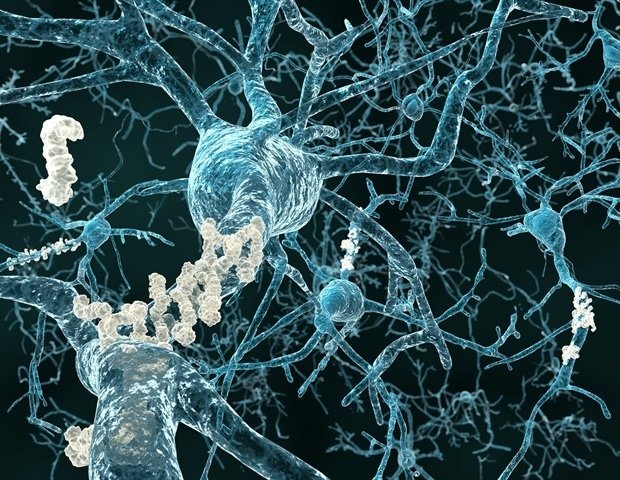
A team from the University of Barcelona has designed an innovative compound with a pioneering mechanism of action for the treatment of Alzheimer’s disease and tested it in animal models. Unlike current drugs, which primarily remove beta-amyloid plaques that accumulate in the brain, this new experimental drug reprograms the neuroepigenome by correcting changes in gene expression that contribute to disease progression. The results of this study are molecular therapyopening the door to epigenetics-based therapeutic strategies to combat Alzheimer’s disease.
The compound FLAV-27 represents an innovative and promising approach to Alzheimer’s disease, with the potential to modify the disease process as it acts not only on its symptoms or single pathological biomarkers, but directly on its underlying molecular mechanisms. ”
Aina Berber, researcher at UB Neuroscience Institute (UBneuro) and first author of the paper
The study was led by Professor Christian Grignan and Professor Mercé Pallas from the Faculty of Pharmaceutical and Food Sciences, and also included researchers from UBneuro and the CIBER Neurodegenerative Diseases Division (CIBERNED), as well as national research institutes such as the UB Institute of Biomedical Research (IBUB), the Institute of Nutrition and Food Safety (INSA-UB) and the Auguste Pie Suniya Institute for Biomedical Research (IDIBAPS). and international organizations.
Beyond beta-amyloid protein: new epigenetic targets
Drugs currently approved to treat Alzheimer’s disease, such as lecanemab and donanemab, are monoclonal antibodies that work to clear beta-amyloid protein plaques from the brain. “Although they are a breakthrough, their effectiveness is limited because they only slow cognitive decline by 27% to 35%, have some side effects, and only address part of the pathology caused by beta-amyloid accumulation,” the researchers explain.
In contrast, FLAV-27 works in a completely different way. FLAV-27 is the first inhibitor in its class to affect the G9a enzyme. The G9a enzyme is essential for epigenetic regulation of the brain, as it helps silence genes essential for neuronal development, synaptic plasticity, and memory consolidation.
To inhibit G9a, the new drug blocks access to the natural molecule S-adenosylmethionine (SAM), which the enzyme needs to modify DNA. Therefore, it can slow down the epigenetic dysregulation that characterizes Alzheimer’s disease and allow neurons to regain normal function.
Functional cognitive recovery in animal models
This study shows in various models that inhibiting G9a with FLAV-27 not only reduces classic pathological markers such as beta-amyloid protein and phosphorylated tau that accumulate in the brains of Alzheimer’s disease patients, but also restores cognitive function, social behavior, and structure of neuronal synapses. in vitro Worm-mediated assay nematode Improves mobility, life expectancy, and mitochondrial respiration in mouse models of late-onset and early-onset Alzheimer’s disease. “There is evidence of improved short- and long-term memory, spatial memory, and sociability in these models, demonstrating not only effects on molecular markers but also functional cognitive recovery,” the researchers highlight.
According to the authors, these results confirm that epigenetic dysregulation (changes in the chemical mechanisms that determine which genes are activated or not without changing the DNA sequence) is not just a side effect of Alzheimer’s disease, but is an active and controllable mechanism that links the disease’s main pathological features, such as beta-amyloid and tau proteins, neuroinflammation, and synaptic dysfunction, through a common epigenetic axis.
This opens the door to a new category of therapies: epigenetic disease-modifying treatments that can complement or even replace current strategies based solely on beta-amyloid removal.
Blood biomarkers for monitoring treatment
A key discovery that enhances the breakthrough value of this treatment is the identification of biomarkers that can be measured both in the patient’s brain and plasma. The research team found that epigenetic markers H3K9me2, SMOC1 protein, and p-tau181 molecules were significantly elevated, and their blood levels were directly correlated with symptoms such as tau protein accumulation, neuroinflammation, and the degree of cognitive impairment. When FLAV-27 is administered to animal models, these indicators return to normal levels in parallel with the recovery of cognitive function.
The availability of these peripheral bioindicators is one of the key aspects that distinguishes FLAV-27 from other drugs in development. “This has important implications for future clinical trials, as a simple blood test can select the right patients, monitor treatment, and demonstrate that the drug does indeed modify the therapeutic target,” the authors highlight.
Towards human clinical trials: Spin-off Flavii Therapeutics
Despite these promising results, FLAV-27 still needs to go through further steps before human clinical trials can begin. Currently in an advanced preclinical stage, next steps include regulatory toxicity studies in at least two animal species, obtaining a formulation, and preparing regulatory documents to apply for clinical trial approval from relevant agencies, a process that will take several years.
This new phase will be led by Flavii Therapeutics, a spin-off from UB founded in 2025 and holding an exclusive license to FLAV-27. The company will be responsible for the preclinical and clinical development of the drug, as well as intellectual property management and financing, with the aim of translating the knowledge gained from UB into new treatments for central nervous system diseases such as Alzheimer’s disease.
This study is the result of a collaboration between UB and several international centers and universities, including the Autonomous University of Barcelona, the University of A Coruña, the International University of Catalonia, the Department of Physiology and Pathology of Obesity and Nutrition (CIBEROBN), the University of Santiago de Compostela, the Santa Creu y Sant Pau Hospital, and the Center’s Southern Headquarters. He has contributed to research and advanced research at Mexico’s National Institute of Technology (Simbestaf), University of Colorado Anschutz Medical Campus (USA), University College London (UK), Quaid-e-Azam University (Pakistan), and Central University of Rajasthan (India).
sauce:
Reference magazines:
Berber Sanchis, A. others. (2025). First-in-class SAM-competitive G9a inhibitor FLAV-27 as a disease-modifying therapy for Alzheimer’s disease. molecular therapy. DOI: 10.1016/j.ymthe.2025.12.038. https://www.cell.com/molecular-therapy-family/molecular-therapy/fulltext/S1525-0016(25)01061-5
