


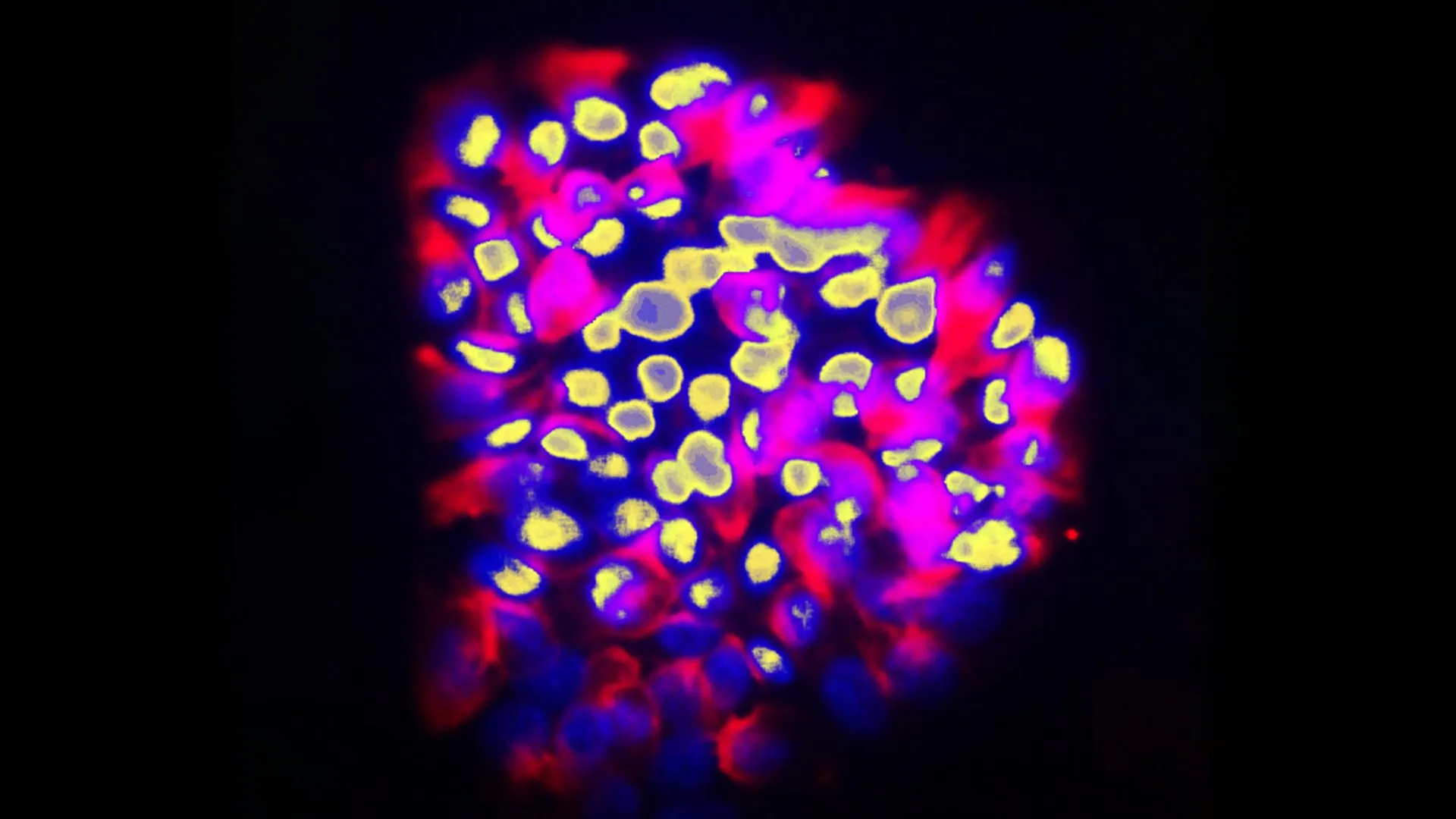
Why do some tumors spread while others stay local? Scientists still don’t fully understand what controls cancer cells’ ability to metastasize, but answering this question is essential to improving patient care. Researchers at the University of Geneva (UNIGE) studied colon cancer cells and identified key factors that influence whether a tumor has the potential to metastasize. They also revealed specific gene expression patterns that can be used to estimate that risk.
Based on these findings, the team developed an artificial intelligence tool (MangroveGS) that translates these genetic signals into reliable predictions across multiple cancer types. This study cell reportcould lead to more personalized treatments and aid in the discovery of new therapeutic targets.
Cancer as a distorted developmental process
“The origins of cancer are often traced to ‘disorganized cells,'” explains Professor Ariel Ruiz y Altaba of the Department of Medical Genetics and Embryology at UNIGE’s Faculty of Medicine, who led the study. “But cancer should rather be understood as a distorted form of development.” Genetic and epigenetic changes can reactivate biological programs that are normally turned off after early development, ultimately promoting tumor formation.
Cancer is not random and appears to follow structured biological rules. “The challenge, then, is to find the key to understanding its logic and morphology, and in the case of metastases, identifying the characteristics of cells that separate from the tumor to create another tumor elsewhere in the body.”
Tracking metastatic cancer cells
Metastases are the cause of most cancer deaths, especially colon, breast, and lung cancers. By the time cancer cells are detected circulating in the blood or lymph system, the disease has often already begun to spread. Although scientists understand many of the mutations that lead to tumor formation, no single genetic change can explain why some cells move away and others stay in place.
“The challenge is to be able to determine the complete molecular identity of a cell, an analysis that destroys the cell, while still observing the functions that the cell needs to stay alive,” explains Professor Luis y Altaba. To overcome this, researchers isolated, cloned, and grew tumor cells in the lab. “These clones were evaluated in vitro and in mouse models to observe their ability to migrate through real biological filters and generate metastases,” added Arwen Conod.
Genetic signatures associated with cancer prevalence
The research team analyzed the activity of hundreds of genes in about 30 cell clones taken from two primary colon tumors. This revealed distinct gene expression patterns that closely matched each cell’s ability to migrate and spread. Importantly, metastatic potential is not determined by the profile of a single cell, but by how groups of related cancer cells interact.
AI tools predict metastasis risk
The researchers integrated these genetic signatures into an artificial intelligence system. “The great novelty of our tool, called ‘Mangrove Gene Signatures’ (MangroveGS), is that it leverages dozens or even hundreds of gene signatures, which makes it particularly resilient to individual differences,” explains Aravind Srinivasan.
After training, the model was able to predict metastasis and colon cancer recurrence with almost 80% accuracy, outperforming existing methods. The same gene signature from colon cancer also proved useful in predicting metastatic risk in other cancers, including stomach, lung, and breast cancer.
Aiming for more personalized cancer treatment
MangroveGS can directly process tumor samples collected at hospitals. The cells are analyzed, their RNA sequenced, and a metastasis risk score is rapidly generated and securely shared with doctors and patients through an encrypted platform.
“This information will prevent overtreatment of low-risk patients, thereby limiting side effects and unnecessary costs, while enhancing surveillance and treatment of high-risk patients,” says Ariel Ruiz y Altaba. “It also offers the potential to optimize the selection of participants in clinical trials, reduce the number of volunteers needed, increase the statistical power of studies, and deliver therapeutic benefits to patients who need them most.”
