


The heart needs oxygen. A heart attack is the most dramatic example of this starvation, when the coronary arteries become clogged and starve the muscles of oxygen they need to keep beating. Less sudden heart failure means that the heart is unable to pump enough blood around the body due to a lag in oxygen consumption levels.
Determining how much oxygen the heart is using or not using can help detect heart failure. This is important in planning treatment in the early stages of heart failure, which affects one in four Americans during their lifetime. Other ways to reach a diagnosis include blood tests, electrocardiograms, echocardiograms, stress tests, chest X-rays, CT scans, coronary angiograms, and myocardial biopsies.
Getting a concentrated dose of oxygen is difficult, but important. Current tests to measure this require inserting a catheter into a space called the coronary sinus or using a PET scan to see a radioactive tracer circulating there. But a new study published Wednesday in the journal Science Translational Medicine may provide a faster, less invasive way to quantify how much oxygen the heart uses and how efficiently it uses it during cardiac MRI scans.
Promising results have been shown for patients with a common type of heart failure that improves with obesity drugs, increasing the appeal of such tests.
The experimental approach, first tested in pigs and then in 22 patients who had heart attacks, used a special form of MRI to measure oxygen without needles or catheters, without injections of radioactive tracers or radiation exposure, and without the need for patients to hold their breath during cardiac catheterization. Researchers knew MRI was sensitive to blood oxygen level signals, but capturing them was a challenge. Image issues had to be overcome, signal noise had to be corrected, and motion caused by the heartbeat had to be taken into account.

Heart Association Project: 6 in 10 women will develop heart disease or stroke by 2050
They were able to calibrate oxygen consumption in three minutes, and the results were validated in a small trial compared to older, more invasive techniques. Inspired by neuroimaging, the researchers employed a test that looks for signals that depend on blood oxygen levels in the brain.
“A cardiac MRI scan is a routine clinical procedure that people can order,” said study co-author Hsin-Jung Yang. “This is an additional three minutes of work and requires no contrast or breath-holding.”
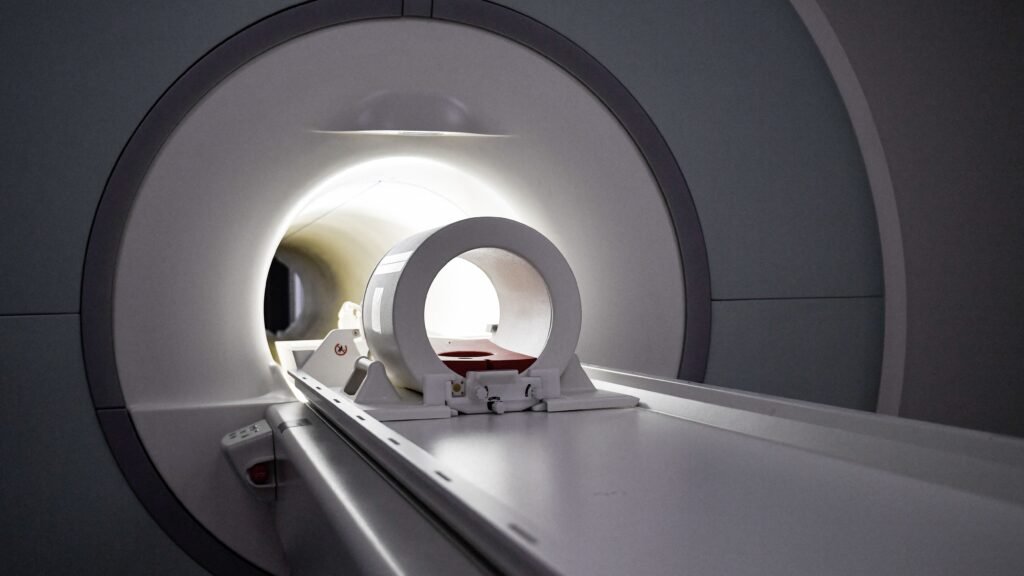
Yang and his team envision this test being part of a long-term cardiac MRI scan ordered to assess heart function and structure. Patients lie inside the long tube, which uses a combination of magnets and radio waves to generate images aimed at showing damage after a heart attack or detecting valvular heart disease. Oxygen usage is another measurement.
Yang, an associate professor of biomedical science at Cedars-Sinai Medical Center and a faculty member in Cedars-Sinai’s Biomedical Imaging Institute, spoke to STAT in detail about this development. The conversation has been edited for length and clarity.
Why is oxygen measurement so important?
 Shin Jun Yangcedar sinai
The heart is a pump that utilizes oxygen and nutrients every minute and second. And how we use oxygen is extremely important in reflecting our health status, especially in conditions such as heart failure, diabetes, and high blood pressure. These patients are more susceptible to cardiometabolic diseases because their hearts do not work well and cannot pump as much blood throughout the body as needed.
How is oxygen usage currently estimated?
Currently, this can be measured through a catheter placed into the heart. And that can’t be done routinely everywhere. MRI is a test that is performed at all major hospitals. Because no contrast agent is used, it can be performed in low-risk populations. You can also repeat it and really monitor the treatment response.
You make it sound so easy. What challenges did you have to overcome?
The heart is constantly beating, so there are many technical challenges. So I created a type of image that is either motion-insensitive or motion-resolved. In addition to that, we applied a physical model to the signal to create a quantification model. Instead of just looking at how bright or dark it is, you can now measure your heart’s oxygenation rate. Here’s the real difference. Blood that is rich in oxygen is darker. We knew the numbers and color-coded them.
How do you hope to help people with heart failure?
There are two types of heart failure. heart failure with reduced ejection fraction (HFrEF) and heart failure with preserved ejection fraction (HFpEF). Ejection fraction measures how much blood can be pumped into the heart’s ventricles. If this number is lower than 50%, it is called a reduced ejection fraction. When this happens, symptoms such as feeling tired and being unable to climb stairs will appear.
Now, with a rapidly growing population, ejection fraction is preserved and it’s a big topic where everyone is trying, first of all, to better understand ejection fraction, and secondly, trying to find a cure for ejection fraction. GLP-1 and SGLT2 drugs to treat the HFpEF population have shown very promising results. This is now included in clinical guidelines for drugs commonly used to address metabolic disorders such as diabetes. And it’s also a key catalyst for why we do this.
I wanted to directly see the metabolism of the heart.
Is anyone else looking into this question?
Another method is metabolite imaging. Mitochondria contain a variety of metabolites, which also reflect metabolic abnormalities. One of the labs next door to us at Cedars-Sinai is doing that. We work closely together.
Which patients might benefit?
Metabolic syndrome is a big problem in this country. People with obesity, diabetes, and hypertension are important populations that may be identified early. I think that’s where I can have the most influence.
STAT’s chronic health coverage is supported by a grant from. bloomberg philanthropy. our financial supporter It has no role in any of our journalism decisions.
