


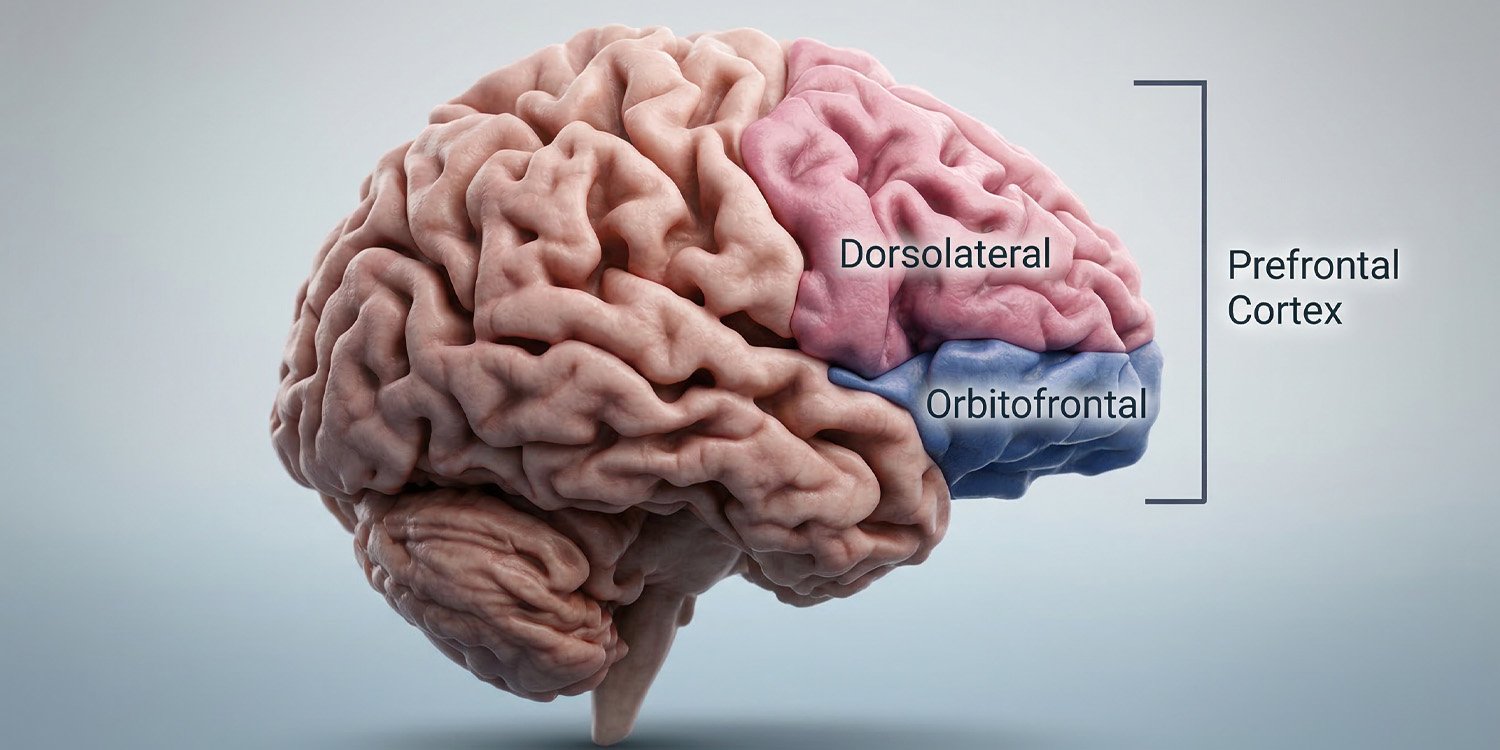
A recent study found that high levels of psychopathic traits are associated with decreased thickness of certain outer layers of the brain responsible for processing emotions and guiding decision-making. These neural patterns consistently emerge in men with high psychopathic traits, regardless of whether they have a history of domestic violence. The study was published in the journal aggression and violent behavior.
Psychopathy is a complex psychological concept characterized by traits such as callousness, manipulativeness, impulsivity, and lack of remorse. It is widely recognized as a risk factor for many forms of violence, including intimate partner violence. Scientists have sought to establish biological markers of psychopathy by linking specific brain structures with these manipulative and antisocial traits.
Clear biological markers can help clinicians define the condition more precisely and improve forensic evaluation. Previous studies have yielded mixed results regarding the exact brain regions involved in psychopathy. Researchers conducted this study to summarize previous findings and test the link between the brain and mental illness in a specific group of men convicted of domestic violence.
“Psychopathy is a major risk factor for persistent violence, including intimate partner violence (IPV). Therefore, understanding the biological basis of these traits will help forensic scientists create more accurate profiles by combining psychological assessments with neuroimaging.” Furthermore, expanding our knowledge to establish objective brain correlates will also improve our ability to properly define psychopathology as a psychological construct,” said study author Angel Romero Martínez, professor of psychobiology at the University of Valencia.
The researchers also wanted to see whether the relationship between psychopathic traits and brain thickness differed between violent offenders and men without a history of violence. First, the scientists conducted a systematic review of 29 previous studies. They focused their research on examining the thickness and volume of the cerebral cortex, the wrinkled outer layer of the brain involved in higher-level functions such as thinking and emotion.
This review helped identify specific brain regions that consistently show structural differences in individuals with psychopathic traits. One of the key areas is the orbitofrontal cortex, which is located just behind the eyes and helps guide decision-making. Another frequently involved region is the insula, located deep in the brain and linked to emotional processing and empathy.
Following this review, scientists conducted an empirical study of 125 men in Valencia, Spain. The sample included 67 men convicted of intimate partner violence and sentenced to less than two years in prison. These men were participating in a mandatory community psychological intervention program in lieu of serving their sentences in prison.
The remaining 58 participants were community managers and had no criminal or violent history. To verify their nonviolent history, the researchers had these men complete a questionnaire on conflict tactics, securing zero scores for psychological aggression, physical assault, and sexual coercion. Scientists also screened all participants to ensure they did not have any severe mental or physical disorders.
To measure intelligence, the researchers administered a simple cognitive test that required all participants to have an IQ of 80 or higher. To measure psychopathic traits, trained interviewers administered the Psychopathy Checklist-Revised. This included a 45-minute in-depth interview and a review of participants’ personal files to score traits on specific scales.
This psychological tool divides psychopathy into two main categories. Factor 1 covers interpersonal and emotional characteristics such as emotional coldness, grandiosity, and lack of remorse. Factor 2 targets antisocial lifestyle characteristics such as poor behavioral control, impulsivity, and a history of juvenile delinquency.
The researchers then used a high-performance magnetic resonance imaging scanner to take high-resolution, three-dimensional images of each participant’s brain. The scanning process took approximately 6 minutes per person and required them to remain completely still. They used specialized software to measure the precise thickness of the cerebral cortex in specific areas identified in the first systematic review.
To isolate the effects of psychopathy, the scientists controlled for several external variables that can independently affect brain thickness. These variables included age, education level, total intracranial volume, and whether the participant was right- or left-handed. They also controlled for history of alcohol and drug misuse, utilizing specific dependence scales to account for substances such as cocaine and cannabis.
The results showed that across a sample of 125 men, higher psychopathy scores were associated with reduced cortical thickness in several specific brain regions. These regions include left orbitofrontal cortex, bilateral superior frontal gyri, left insular cortex, right anterior cingulate cortex, and right dorsomedial prefrontal cortex. The superior frontal gyrus helps inhibit behavior by predicting its consequences, while the anterior cingulate processes social information and weighs the costs and benefits of actions.
Decreased thickness in these areas suggests why people high in psychopathic traits have trouble integrating thoughts and emotions. This neural difference tends to lead to poor decision-making and an inability to adapt behavior based on future outcomes. When analyzing the traits of different types of psychopathy, the researchers found that Factor 1, interpersonal and emotional traits, were most consistently associated with reductions in these specific frontal brain regions.
“Decreased thickness in areas such as the orbitofrontal cortex and insular cortex, among others, may explain why people with these traits have trouble integrating thoughts and emotions, leading to poor decision-making and impaired goal-directed behavior,” Romero Martinez told SciPost.
“In reality, these findings may provide a ‘biological signature’ that can complement self-reports and improve the accuracy of forensic assessments. However, these conclusions should be taken with caution, as it is entirely necessary to conduct additional studies to better understand this association and its practical application.”
When researchers compared the two groups, they found that the association between psychopathy and brain thickness was the same for both intimate partner violence perpetrators and community dominants. The biological characteristics of psychopathy remained consistent regardless of an individual’s criminal history. This suggests that the observed differences in brain structure are a general feature of psychopathic traits, rather than being uniquely linked to domestic violence per se.
“Although we initially expected that the association between cortical thickness and psychopathy would be specific to IPV perpetrators, group (IPV perpetrators or controls) did not significantly alter the association between psychopathic traits and cortical thickness,” Romero-Martinez noted. “Thus, this association remained consistent across the entire sample (both groups combined).”
Although this finding is informative, the researchers caution against a strict localizationist view that assumes psychopathology is controlled by a single, isolated brain region. Different aspects of psychopathy are associated with different brain regions, meaning that the condition arises from a complex network of regions rather than one specific location.
“It’s important not to view psychopathy as a single, uniform trait,” Romero-Martinez explained. “This study shows that different brain regions may be more specifically associated with some factors than others. For example, factor 1 is more consistently associated with reductions in the orbitofrontal cortex. However, this does not mean that psychopathology is explained by only a single brain region.”
The study also had some limitations, including its cross-sectional design, meaning it cannot prove that these brain structures directly cause psychotic behavior. Additionally, the sample was relatively homogeneous and consisted only of adult Spanish men without severe mental health conditions. Future studies should include larger and more diverse samples to confirm these findings and investigate how these structural brain differences develop over time.
“The long-term goal is to use neuroimaging to help develop more accurate diagnostic and forensic profiles, which may help develop specific and effective intervention programs,” Romero-Martinez explained. “By identifying the ‘fronto-temporo-parietal’ network as particularly relevant, this study guides future research to focus on these specific structures to better understand the complexity of psychopathic structures.”
“Of course, we would like to emphasize that this study is the result of a joint effort involving many dedicated colleagues. This study was made possible by the collaboration of researchers from the Department of Psychobiology of the University of Valencia (Luis and Carolina), the Department of Social Psychology (Marisol), and the Biomedical Imaging Research Group (GIB1230) of the Rafe Health Institute (Maria, Fernando, Leonor, Luis).”
The study, “Decreased frontotemporoparietal cortical thickness associated with high psychopathic traits: Review and conclusions of empirical studies in perpetrators of intimate partner violence,” was authored by Ángel Romero Martínez, María Bethel Robles, Leonor Cerda-Alberich, Fernando Aparisi, Luis Martí Bommatti, and Carolina. Zarate-Costa, Marisol Lira, and Luis Moya-Albiol.
