


Microplastics are usually discussed as an ocean problem. But they also accumulate in agricultural soils, and a new scientific review claims their effects go beyond physical contamination.
A research team led by Jiangsu University focuses on what happens at the microscopic level on the surface of plastic particles, where microorganisms meet, compete and exchange genes.

These interactions can affect soil fertility, ecosystem recovery and the long-term sustainability of agriculture, they say.
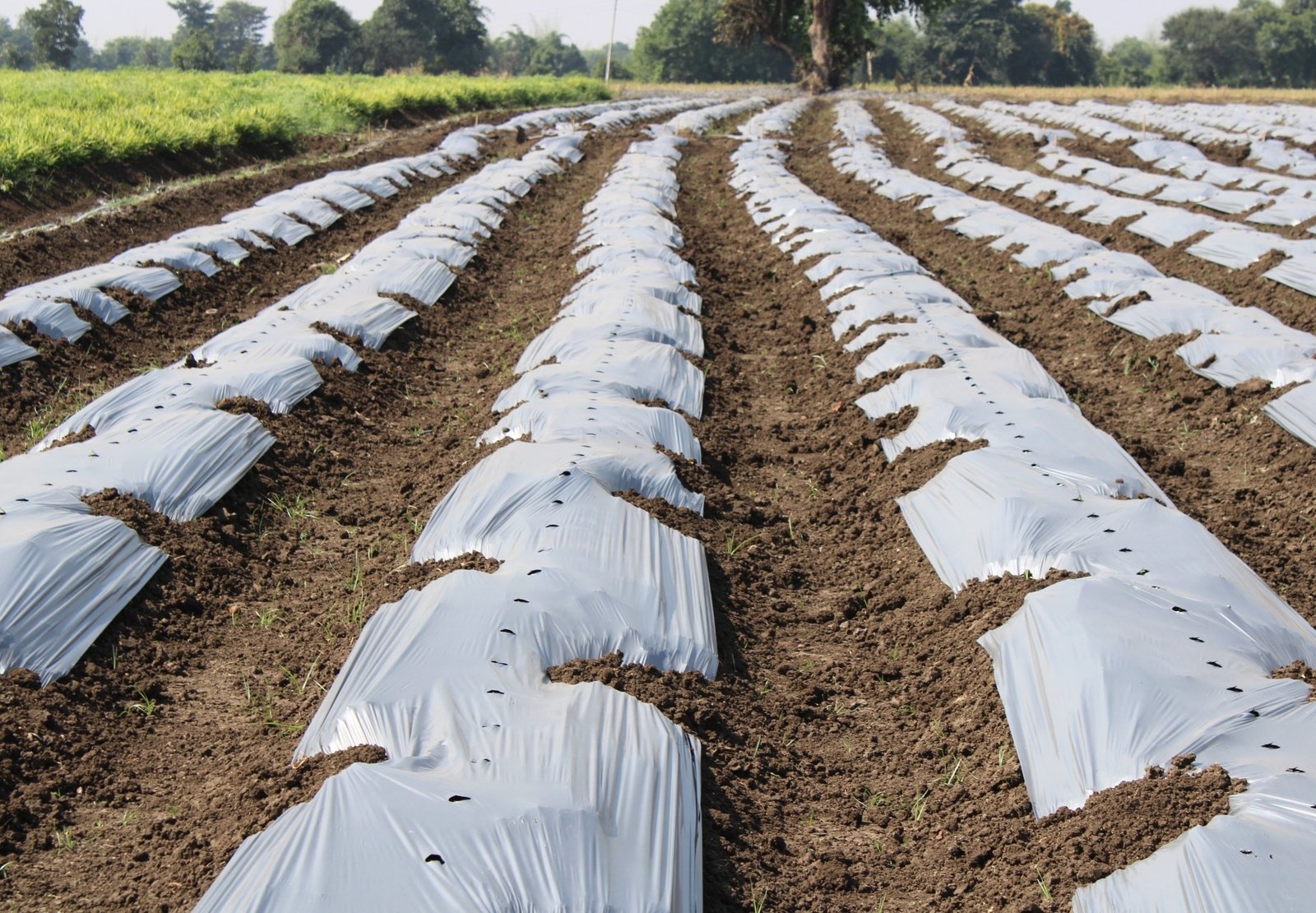
Microplastics are pieces of plastic smaller than 5 millimeters. In agricultural environments, they can arrive through the decomposition of plastic mulch, sewage sludge, irrigation water, and larger plastic waste.
Once in the soil, they can change soil structure, disrupt nutrient cycling, and affect the organisms that keep soil ecosystems functioning.
This review highlights an overlooked detail: each particle of microplastic can become its own tiny habitat.
New microhabitats in the soil
Researchers explain that microplastics create unique microenvironments called plastispheres in the soil. These are biofilm communities where microorganisms attach to plastic surfaces and form dense and active networks.
As microorganisms collect on the plastic, interactions can be more intense than in the surrounding soil.
This review argues that these plastispheres do more than just collect microorganisms. These can change how microbial communities behave, how nutrients move through the soil, and how resilient the soil is after stress.
“Microplastics are not the only physical contaminants in soil,” the researchers wrote.
“They can also act as environmental stressors that change how microbes and viruses interact, ultimately affecting soil fertility and agricultural sustainability.”
In other words, plastic debris could act as tiny “meeting points” where new biological dynamics unfold.
Viruses play an important role
A central theme of this review is the role of bacteriophages, which are viruses that infect bacteria. In soil, these viruses can infect cells, causing them to rupture and repopulating the bacterial population.
This process does more than just remove bacteria. They can change which microbial groups are dominant and can influence nutrient cycling by releasing cellular contents into the environment.
The authors also highlight a second role for viruses: gene transfer. When viruses move between microorganisms, they can carry genetic material. It can spread traits through the microbial community and change what the community can do.
This review suggests that the impact of viruses may be even more significant on the surface of the plastosphere, where microorganisms are densely populated.
Gene exchange can be helpful or harmful
This review shows that viral genetic exchange is a double-edged sword. In the best-case scenario, the virus could spread genes that help microbes break down plastic materials more effectively.
It may support natural biodegradation, even if it occurs slowly. But the same process can also spread antibiotic resistance genes and other traits that are harmful in the long run.
If the plastisphere becomes a hotspot for genetic exchange, it could accelerate changes in microbial communities in ways we cannot fully control.
“Viruses may function both as ecological regulators and genetic messengers in soil ecosystems,” the authors write.
“Understanding this dual role is important if we want to utilize microbial processes for environmental remediation while minimizing potential risks.”
This message is prudent. The same mechanisms that make viruses interesting tools also make them potential risks.
Accelerate the decomposition of plastic
This review also considers emerging concepts for using virus-associated systems to promote plastic degradation in soil.
Although these ideas are still in their infancy and mostly theoretical, the authors outline some directions researchers are considering.
One is the use of phages to augment microbes, potentially using phages to guide microbial communities toward those that more effectively degrade plastic.
The other contains virus-like particles loaded with catalytic nanoenzymes designed to deliver enzymes directly to plastic surfaces and accelerate polymer degradation.
Although these approaches are said to be innovative, they are not yet ready for real-world deployment.
The authors warn that attempts to use viruses as tools pose serious problems, including biological safety, unintended gene transfer, and the difficulty of predicting what will happen in complex natural soils.
Lack of long-term field evidence
A major limitation of current science is that most research is based on laboratory experiments and short-term observations.
Experts argue that soil evolves over time and seasons, and the relationship between viruses, microbes and microplastics can change in ways that are missed in short-term studies.
The lack of long-term field data is a significant impediment. Without that, it’s hard to know whether plastiphia will become a stable ecosystem, a temporary hotspot, or something that changes with moisture, temperature, farming practices, and time.
further research is needed
This review promotes collaboration across disciplines such as microbiology, virology, soil science, environmental engineering, and policy.
Scientists noted that understanding the soil plastosphere requires combining ecological knowledge with new methods that can uncover hidden interactions.
They point to tools that may help reveal these networks more clearly, including single-cell viromics, AI-driven host prediction, and advanced multi-omics approaches.
The goal is to map not only which microorganisms are present, but also which viruses they interact with and which genes are moving through the system.
Ultimately, this study suggests that the soil virome, the community of viruses in the soil, deserves far more attention in the discussion about plastic pollution.
“Recognizing the role of the soil virome provides new perspectives on how ecosystems respond to pollution,” the researchers wrote.
“With careful study and collaboration, these microscopic interactions could become a powerful tool for rebuilding resilient soils in a world increasingly challenged by plastic pollution.”
The central idea of this review is a simple but disturbing one: microplastics are not passive waste. Soils can become miniature biological arenas where microbes and viruses reshape each other and, in doing so, potentially reshape the shape of the land we depend on for food.
The research will be published in a journal Agroecology and environment.
—–
Like what you read? Subscribe to our newsletter for fascinating articles, exclusive content and the latest updates.
Check us out on EarthSnap, the free app from Eric Ralls and Earth.com.
—–
