


Light plays a big role in plant growth, but scientists still don’t understand how light works. Researchers at Osaka Metropolitan University have identified a previously unknown mechanism that helps explain how light affects plant development.
A research team led by Professor Koichi Soga of the Graduate School of Science focused on young pea stems. They used a special technique to measure how tightly the epidermis (the outermost layer) adheres to internal tissues. Their results showed clear differences depending on the light exposure.
Plants grown in the light had much stronger adhesion between these layers than plants grown in the dark.
Professor Soga said, “Compared to plants grown in the dark, plants grown in the light have a stronger bond between the epidermis and internal tissues.” “This phenomenon has never been reported before, making it a particularly interesting finding.”
Identification of the important compound p-coumaric acid
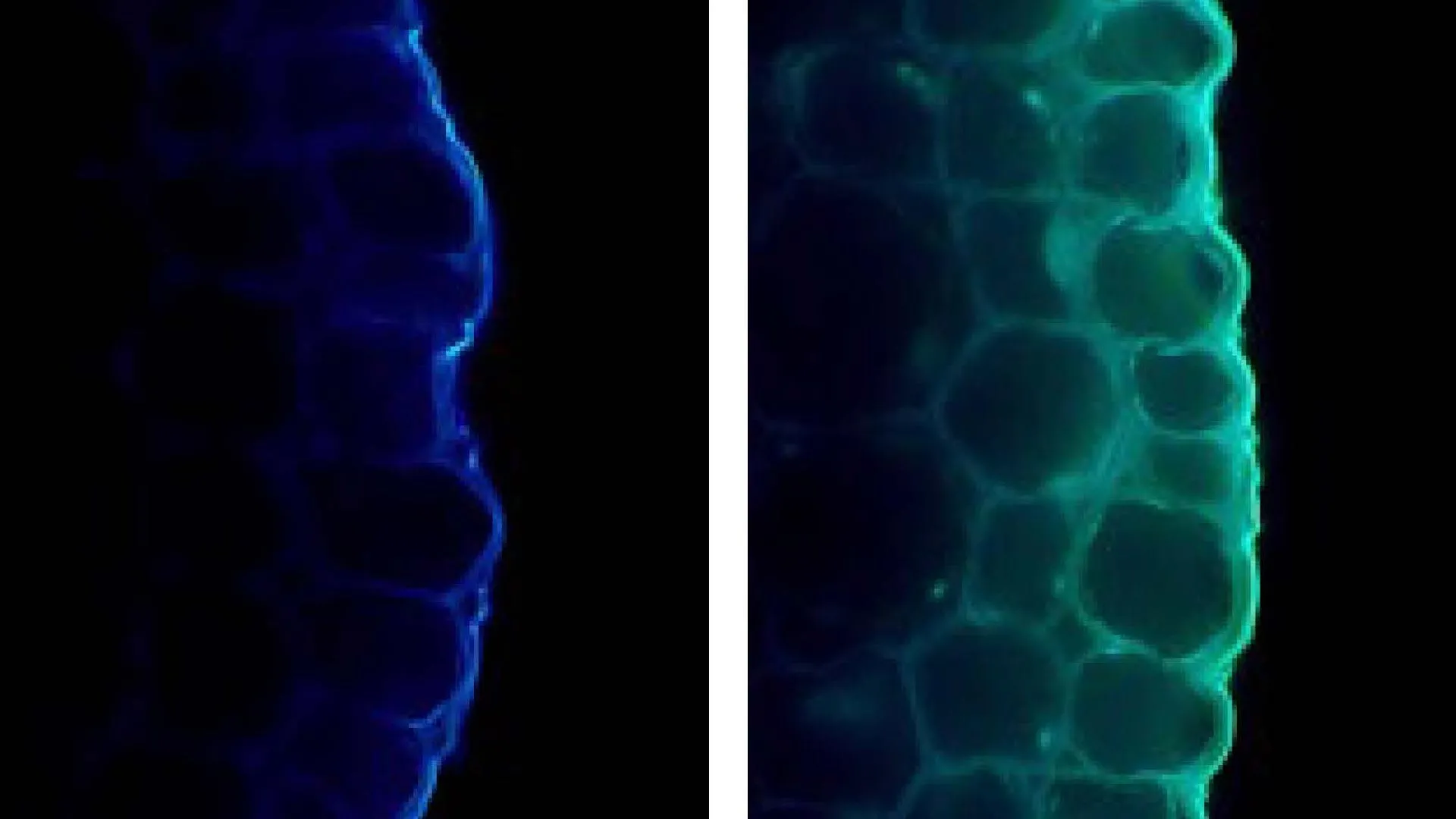
To understand the cause of this strong binding, the researchers used fluorescence microscopy to examine plant cells. They observed that stems exposed to light emitted signals associated with high levels of a compound called p-coumaric acid.
This phenolic acid is known to help strengthen plant cell walls. Its presence suggests that exposure to light increases the production of this compound, which strengthens structural bonds within the plant.
“This provided strong evidence that the accumulation of p-coumaric acid is a key element that strengthens the adhesion between the epidermis and internal tissues,” explained Yuma Shimizu, graduate student and first author of the study.
Stronger structures may limit plant growth
The findings revealed an interesting trade-off. Stronger adhesion makes the plant structure more stable, but also reduces its ability to grow.
If the outer and inner tissues are tightly connected, the inner tissues cannot expand easily. This limits overall stem growth. This means that light not only supports plant development, but can also slow down plant development under certain conditions.
Impact on agriculture and crop resilience
The researchers believe this mechanism may be part of a broader pattern in plant biology. By continuing to study how adhesion forces change as plants respond to different conditions, they hope to determine whether this is a universal way plants regulate their growth.
“By measuring the adhesion between the epidermis and internal tissues as stem growth changes in response to various factors, we hope to determine whether growth control through changes in adhesion is a universal mechanism,” Professor Soga concluded. “These findings could be very important for plant cultivation. If we can control attachment, it may be possible to breed plants with improved tolerance to environmental stress.”
The survey results are plant physiology.
